
The articlegameplay, story, development, reception
Gameplay
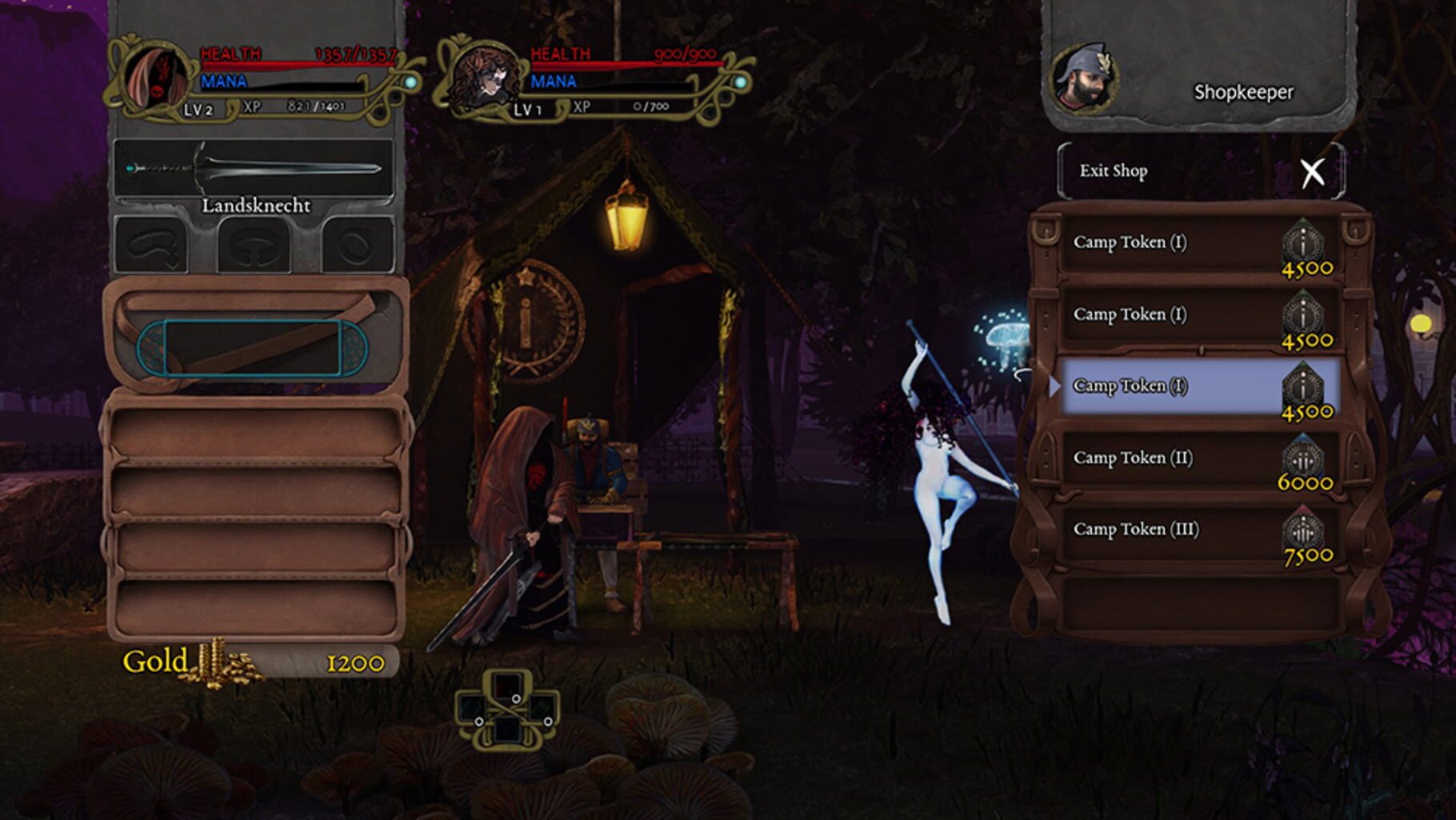
The gameplay has a fusion of elements from a number of gaming genres. The player controls an avatar who battles enemies and advances through dungeons to reach the conclusion of the stage. The game's levels are procedurally generated, providing a new experience on each. The player only has one life but may be revived. If the player character dies, the player is put in control of a much weaker human who tries to avenge their death and can revive the player at specific altars.
The game's fighting system combines elements of the Super Smash Bros. and Street Fighter franchises, and rewards players for timing their blocks and attacks at the right moment. Players can capture the souls of enemies they encounter—once collected, a player can then assume the form and abilities of the enemy in-game. Abyss Odyssey uses a community-based unlock system; upon its launch, only the first "phase" of the game was available. After a certain number of players defeat the game's final boss, the Warlock, the next phase of the game is unlocked for all players.
Development
Developer ACE Team revealed Abyss Odyssey on their blog on 4 March 2014. The developers were inspired by the Art Nouveau movement and they used Harry Clarke as a direct reference for much of the game's art and atmosphere. The developers intended the game to be extremely replayable and designed the combat mechanics to be simple to understand, after initially considering a more complicated fighting layout.
An Enhanced Edition titled Abyss Odyssey: Extended Dream Edition introduced competitive multiplayer as well as new types of enemies and bosses to the game and was released for the PlayStation 4 in July 2015. A "nightmare" difficulty mode is included in the Enhanced Edition.
Reception
The game received "mixed or average reviews" on all platforms according to the review aggregation website Metacritic. Critics praised the game's art style and atmosphere, but were disappointed by some of its game mechanics and its repetitive nature.
Eurogamer's Dan Whitehead praised the PC version's visuals and new ideas in a positive review, but felt that there was a "... sense that in straddling so many genres, the game has spread itself a little thin." IGN's Richard Cobbett compared the same PC version's roguelike elements unfavorably to The Binding of Isaac and Spelunky, but noted that "the soundtrack is fantastic, and the art is even better." Hardcore Gamer's James Cunningham likened the art style to "playing a Grateful Dead album cover" and called it "a quirky little gaming gem."


