The articlegameplay, story, development, reception
Gameplay
In the game, which is somewhat similar to its predecessor, the player is the CEO of a start-up international airline. The player competes with three other such companies (either AI-controlled or other players) for dominance in the worldwide travel industry. Such dominance is obtained by purchasing slots in various airports around the world, and flying routes to and from those slots. Once a route is created, the player has control of what type of planes fly the route, the price of airfare, and numerous other variables.
The winning conditions for the player's airline are evaluated at the end of each year. These are to have a regional hub in every region, have the highest passenger total of all airlines during the given year in four to seven regions (depending on difficulty level), one of which must be the player's home region, and have a profit during the given year.
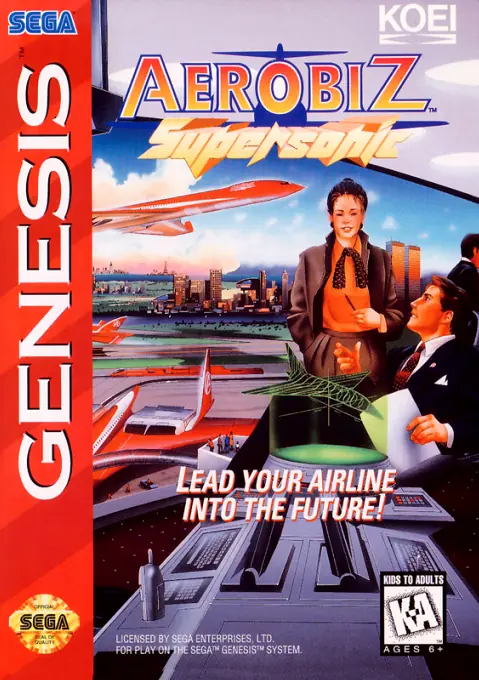
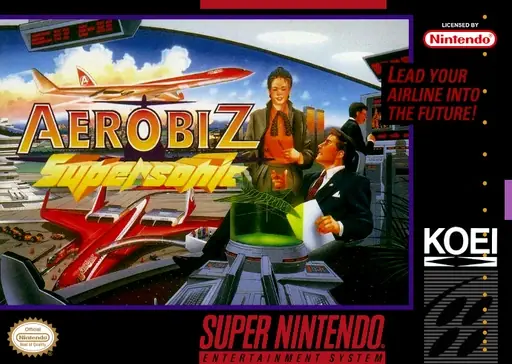
The game includes numerous historical events that can help or hinder airline performance. Four different eras of play are available for the player to choose. They include 1955–1975 (which depicts the dawn of jet airplanes), 1970–1990 (which depicts a period of instability, oil crises, and the end of the Cold War), 1985–2005 (which depicts the present day of economic prosperity and relative stable peace), and 2000–2020 (which depicts the replacement of jet planes with supersonic airplanes, the European Union extending to Russia, and countries trying to get airlines to fund alternative fuel research). This futuristic era was chosen by SG and Koei to be illustrated by San Francisco illustrator Marc Ericksen for the packaging art, showing two executives conferring over a holographic aircraft design in a futuristic airline terminal.
Airlines must be able to achieve the goals assigned to them within 20 years; only one airline can achieve this victory with no draws permitted. If none of the airlines can achieve the goal, then all airlines lose because stalemates are not permitted at the end of the game. Tiebreakers are also not permitted because games are not usually designed to be in ties at the end of the 20-year contest. In the rare instance that all airlines go bankrupt simultaneously, then all airlines would also lose.
Reception
Electronic Gaming Monthly gave the Super NES version a 7.2 out of 10, deeming it a different type of game that is more geared towards to strategy. They gave the later Genesis version a 6.6 out of 10 and opined that Koei managed to make a unique strategy game while also being entertaining.
Next Generation gave the Genesis version of the game three stars out of five, and said that sim fans will be pleased with the level of detail in the game.
VideoGames selected it as a runner-up for 1994's Best Strategy Game award, which was won by Equinox.