The articlegameplay, story, development, reception
Gameplay
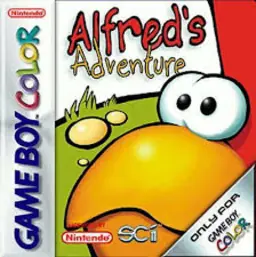
The player takes the role of a chicken named Alfred who must find his way through bizarre levels full of balloons, telephones, cheese, and other strange elements. While he is on the ground, Alfred can walk, jump, and peck balloons and ground switches. While he is in the air he can dive bomb enemies or springs. Dive bombing enemies will destroy them.
Dive bombing springs will bounce Alfred much higher so he can reach platforms well above his normal jumping ability. If he does not hit an enemy or a spring, Alfred will get stuck in the ground for a short time.
To complete a level, Alfred must find and peck all the balloons. The last balloon will take him to a boss fight. If Alfred dies, he starts as an egg located at the last balloon pecked. In the Super NES version, finding the big balloon results in a Stage Clear.
Alfred can receive a few power-ups during the game. For one power-up, he must answer a telephone in secret areas to make Mr. Pekles (a giant flower) give him a pot of jam. The jam gives Alfred the ability to shoot a bomb (about the size of Alfred himself) which bounces around the screen collecting items and hurting enemies.
Another power-up is a worm that spins around Alfred destroying enemies that it touches. The player must find a can of worms to get this power-up.
Reception
6 out of 10, calling it "a slow-moving game requiring more strategy than being able to run, jump and grab items! It takes a while to get into the swing of it, though." They gave the NES version a 5 out of 10, explaining that it retains the large levels and good controls of the Super NES version, but that the drastically lower quality graphics and sounds make the game less enjoyable. Reviewing the NES version, GamePro praised the challenging gameplay, the "cartoony" graphics, the "bouncy, loopy audio", and the "crisp controls", and determined the game to be a must-have for NES fans in light of how few games were being released for the system at that point.
On release, Famicom Tsūshin scored the Game Boy version of the game a 22 out of 40. In Nintendo Power, the NES version was scored a three out of five. While they did like the big sizes of each level and occasionally comical graphics, they ultimately found it to be just another typical platformer.