
The articlegameplay, story, development, reception
Gameplay
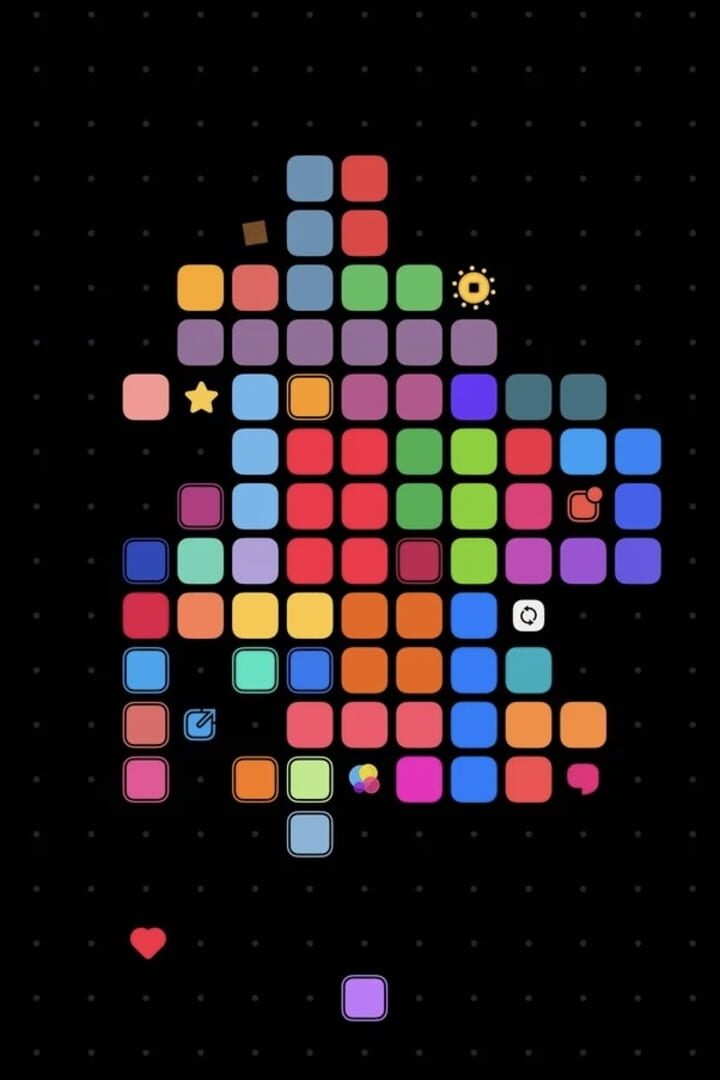
In Blackbox, the player attempts to turn on “lights” by solving their associated challenge. Once a challenge is solved, its light is turned on permanently. Lights are displayed on a “home grid” and are grouped in sets by challenge type (each represented by a unique color). Each set of challenges has a unique minimalistic visual and sonic representation that helps player understand and solve its puzzles.
The game's grid and non-linear level sequence let players of varying skill and thinking styles to play and explore at their own pace. Each challenge has hints of varying degrees of helpfulness that can be revealed using an in game currency of hint credits which can be bought or earned in different ways.
Development
Blackbox was developed over 12 months beginning in late 2014 by Ryan McLeod. Its visual style was inspired by indie games such as Threes, Monument Valley, Letterpress, and Grow. Its puzzles were inspired by indie apps and games Machinarium, Fez, Braid, Portal, Limbo, Hatch, Clear, Peek, and Inception as well as augmented real world games, geocaching, and physical puzzles. After a closed beta test, it was released for iOS on February 25, 2016; the game is under active development with new puzzles and features added regularly.
On February 1, 2024, Blackbox was released for the Apple Vision Pro.
Reception
The game received favorable reviews from critics and players. Reviewers found the game “unlike anything”, “devilishly clever”, and “utterly diabolical” with many noting its novel breadth of mechanics using device sensors and system features. It won a 2017 Apple Design Award, was named a Breakthrough Moment in Gaming, and was downloaded over 4.0 million times as of July 2017. According to McLeod, the game had reached more than 14 million players as of 2026. Blackbox for the Apple Vision Pro won the Apple Design Award for Spatial Computing in 2024.


