The articlegameplay, story, development, reception
Gameplay
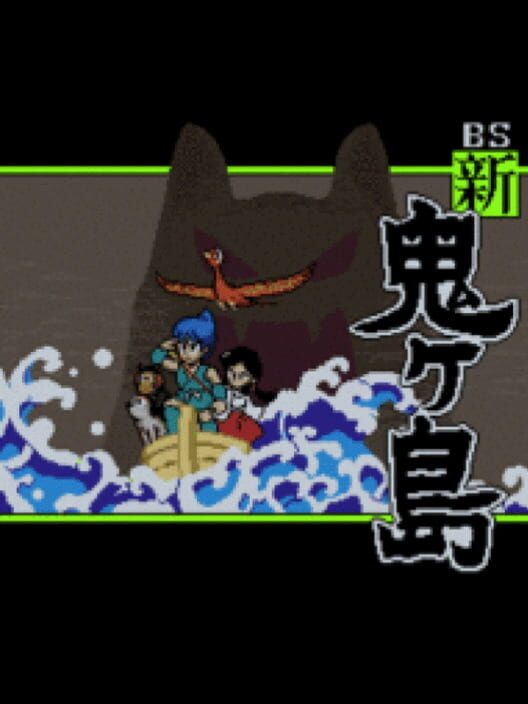
The game is played by selecting commands which make the characters talk to, use, or examine various objects or characters. Progress is marked by changes in the illustrative image in the top-right corner of the screen. One of the most distinctive features of the game is the "Change Character" command, used to switch between the two main characters (Donbe, the boy, and Hikari, the girl). The characters can move through the story separately at times, and may be called upon to do tasks that the other main character cannot accomplish on their own.
The use of this command in certain situations can trigger dialogue particular to each character, bringing out the peculiarities of each. This is essentially a form of zapping, but a similar command was implemented in the 1995 visual novel EVE Burst Error.
The game also utilizes the Disk System's feature of being able to exchange game disks while the device is powered on. The game is divided into two disks, and the player must exchange disks while the Disk System is still powered on in order to activate the second disk (note: Disk 2 is not playable without the first). This format was also used in the game's sequel Yūyūki and the Famicom Detective Club series.
Story
Once upon a time, there was an elderly couple living in Nagakushi village, a small village located far up in the mountains. The couple had no children, until one day, they were entrusted with the care of an infant boy and girl, as prophesied in a dream. The years went by, and when the two children were 8 years old, there was a terrible occurrence in the western capital. A dragon suddenly appeared in the city, turning humans into oni, ogres that suck away the souls of other humans.
The oni advanced as far as Nagakushi village, stealing away the souls of the elderly couple. Fortunately the two children were left unharmed, and they set out on a quest to save their adopted parents, not realizing that this adventure would reveal the secret of their true origins...
Development
Shin Onigashima borrows heavily from traditional Japanese fairytales such as Momotarō and Princess Kaguya. Most text-based adventure games of the time were written in the style of mystery novels, where the player had to solve a murder or crime of some sort, but Shin Onigashima's fairytale-like plot gave a much softer and accessible feel to the genre.
A conversion of the game was included as part of Heisei Shin Onigashima, released for the Super Famicom in 1997 and 1998. It was also redone for the Game Boy Advance as part of the Famicom Mini series on August 4, 2004. The Virtual Console release came on June 19, 2007. The game was never released outside Japan.
Reception
The game's difficulty is rather high, as very few hints are given in solving mysteries, and many circumstances can lead to the "game over" screen. Even so, the game's warm graphics and plot consisting of numerous interwoven Japanese fairytales was positively received by fans and critics alike. The in-game music, written by Koji Kondo, is regarded in equally high esteem, and the game is considered a success as Nintendo's first text-based adventure game.
The 1989 "All Soft Catalog" issue of Famicom Tsūshin (now Famitsu) included Shin Onigashima in its list of the best games of all time. In particular, they gave it the award for the best "Adventure" game of all time. In 2013, IGN noted similarities to later adventure games such as Famicom Tantei Club, Nakayama Miho no Tokimeki High School, 999: Nine Hours, Nine Persons, Nine Doors, and Zero Escape: Virtue's Last Reward.