The articlegameplay, story, development, reception
Story
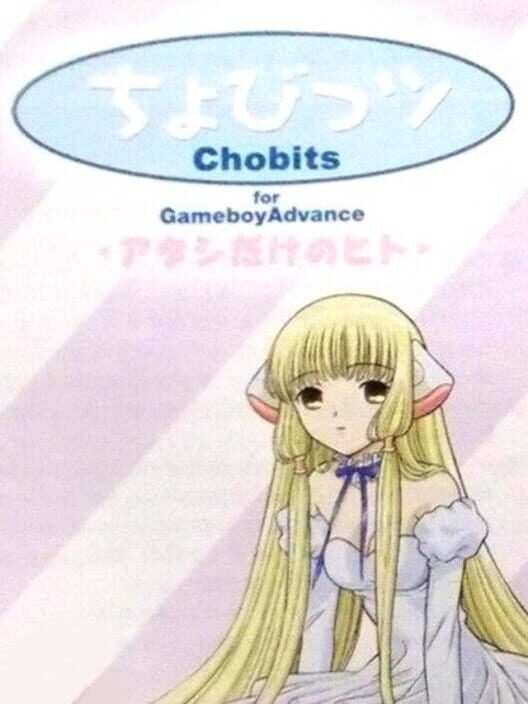
The series centers on the life of Hideki Motosuwa, a held-back student attempting to qualify for university by studying at Seki prep school in Tokyo. Besides a girlfriend, he dreams of having a persocom (パソコン): an android used as a personal computer, which is expensive. On his way home one evening, he stumbles across a persocom in the form of a beautiful girl with floor-length hair lying against a pile of trash bags, and he carries her home, not noticing that a disk fell on the ground. Upon turning her on, she instantly regards Hideki with adoration.
The only word the persocom seems capable of saying is "chi" (ちぃ, Chii), thus he names her that. Hideki assumes that there must be something wrong with her, and so the following morning he has his neighbor Hiromu Shinbo analyze her with his mobile persocom Sumomo. After Sumomo crashes during the attempt they conclude that she must be custom-built.
Shinbo introduces Hideki to Minoru Kokubunji, a twelve-year-old prodigy who specializes in the field of custom-built persocoms. Minoru's persocoms, including Yuzuki, a fairly exceptional custom-built persocom, are not able to analyze Chi either, and thus they conclude that she may be one of the Chobits, a legendary series of persocoms rumoured to have free will and emotions. Although this is a possibility, Minoru is confident that it is only rumour. Yuzuki also adds that she does not resemble any persocom model in any available database and so she must be custom made after all.
A major part of the plot involves Hideki attempting to teach Chi words, concepts, and appropriate behaviours, in between his crammed schedule of school and work. At the same time, Chi seems to be developing feelings for Hideki, at an emotional depth she is not supposed to possess, and Hideki struggles with his feelings for her. The need to figure out more about Chi and her mysterious functions and past becomes a pull for the characters in the series.
Hideki's feelings intensify for Chi regardless of her being a persocom and despite his friends' painful experiences involving other persocoms. Chi becomes aware of her purpose through a picture book series called A City with No People which she finds in a bookstore. The books speak about many different things involving human and persocom relationships: persocoms and their convenience as friends and lovers, how there are things that they cannot do and questioning whether a relationship between a persocom and a human is really one-sided. It also speaks about the Chobits series; that they are different from other persocoms, and what they are incapable of doing unlike other persocoms.
These picture books awaken Chi's other self, her sibling Freya who is aware of their past and helps Chi realize what she must do when she decides who her "person just for me" is. Together, Chi and Hideki explore the relationship between human beings and persocoms, as well as their friends' and their own.
Development
Clamp—a creative team consisting of Satsuki Igarashi, Ageha Ohkawa, Tsubaki Nekoi and Mokona—wrote and illustrated Chobits, which is the first of their manga to be targeted towards older male readers (seinen manga). The idea for Chobits originated from the group's experiences with computers, which would present indecipherable error messages when experiencing difficulties, to which they added a "sexier spin" to the concept. After completing their previous manga series Cardcaptor Sakura, the group successfully pitched Chobits to the Japanese manga magazine Weekly Young Magazine. Clamp completed fourteen pages per week for Chobits's weekly serialization, totaling fifty-six pages a month. The title of the manga has its origins in "Chobi", the name of a cat at the place of Nekoi's former employment, which the group made into "Chobits", as the characters Elda and Freya were twins.
Ohkawa designed Hideki and Chi first. Chi's design as a personal computer resulted from Ohkawa's wish to increase the sense of "emotional discomfort" around becoming emotionally involved with something considered to be merely a lifeless machine. The characterization of the protagonist Hideki proved to be difficult for her; in the beginning, she considered an "aloof" man who gradually warms up emotionally or a sex-obsessed man. She decided that neither characterization would be a good fit for Chi and settled on one of a penniless and benevolent student.
In keeping with the conventions of the romantic comedy genre, the group had planned to introduce conventional characters, such as an older female neighbor and a physically attractive friend from childhood; in the case of Chobits, the "childhood friend" never appeared. The artwork was done in ballpoint pen to evoke the sense of "rough" lines, and colored pages were done in acrylic gouache.
Reception
Reviews have been mixed. Shaenon K. Garrity of Anime News Network criticized the series' description of persocoms as "obedient" and "perfect," writing, "The persocoms are perfect women, stripped clean of everything that makes real women less than perfect servants to men—that is, one might say, everything that makes women human."
The adaptation was criticized for shifting the focus from Hideki to Chi, in particular for having episodes devoted to Chi "doing cute things" and providing fanservice. Helen McCarthy in 500 Essential Anime Movies stated that the OVA's main strength is "its questioning of how we use technology, and whether it can be a substitute, rather than a support, for real life".
The Encyclopedia of Science Fiction described Chobits as a good but flawed anime that engages with questions about people's relationships with technology, particularly its potential to substitute artificial companionship for relationships with other people. It criticized the series' depiction of the predominantly female persocoms as adolescent male wish-fulfilment figures who are obedient, non-threatening and sexually available, arguing that this sits uneasily with a work that otherwise appears interested in interrogating such attitudes. The encyclopedia noted that a critique of male fantasies can be inferred but is rarely made explicit, comparing this ambiguity unfavourably with The Stepford Wives. It also considered the first half of the series burdened by "cringe" elements and fan service, while noting that the original manga treated its themes more seriously and in greater depth.