
1977 · Exidy · Arcade · Adventure
Circus
Atari console exclusive
The classic 2600 game revamped and reimagined.
- Released
- 1977
- Platforms
- ArcadeAtari 2600Commodore 64
- Genres
- ArcadeAdventure
- Developers
- Exidy
- Publishers
- ExidyData EastElcon IndustriesIPMMidwaySegaSubelectroTaitoUniversal Co., Ltd.Venture Line, Inc.
- Modes
- MultiplayerSingle-player
- Themes
- Action
- Country
- United States
- Languages
- English, Japanese
About
Circus is a block breaker arcade video game released by Exidy in 1977, and distributed by Taito in Japan. The game is a re-themed variant of Atari's Breakout, where the player controls a seesaw and clown in order to pop all the balloons in the level. The game has been copied and released under different names by numerous other companies in both the United States and Japan.
Keywords
- digital distribution
- clowns
The articlegameplay, story, development, reception
Gameplay
Three rows of triangular balloons move along the top part of the screen, each overlaid with blue, green, and yellow (colors used in the original version), counting from the top row. A clown appears from the edge of the screen where there is a jumping board, and the player must move the springboard located at the bottom of the screen so that the clown can bounce back off the seesaw once he jumps off from his starting position. However, it is impossible to make contact with the clown with the seesaw in certain locations. The four jumping boards located on the sides of the screen serve to decrease the area where it is impossible to make contact.
If the player successfully gets the clown onto the seesaw, the clown on the other side shoots off into the air towards the three rows of balloons on the top of the screen. The clown may not have enough speed to reach the balloons if the first clown does not land squarely on the seesaw. Clowns bounce off of balloons, walls, and jumping boards, but will pass directly through multiple balloons if they are moving quickly enough. They will only bounce off the jumping boards when they are heading downwards and will pass straight through the boards while moving upwards.
Development
The game was developed by Howell Ivy. He developed the idea for the game when working at the Ramtek Corporation when he was developing his first video game titled Clean Sweep which had a similar approach to Circus with eliminating objects on a screen. Wanting to make something different and appealing, he decided on making a game that was cute and had begun incorporating the tetter-totter and which led to eliminating balloons and then became the idea for Circus.
Circus was developed at Exidy. Exidy was founded in 1973 and first made video games that were variants on Pong and found success with their game Death Race (1976). Circus was the second game for Exidy to solely use a Microprocessor as games prior to this had been created in hardware using discrete integrated circuits. This change allowed for much more flexibility with Ivy stating he could add "more "intelligence": to the game. It was much simpler for you to make the game easier or harder for the player responding to his or her reactions."
Legacy
Clowns (licensed release by Midway)
Acrobat (licensed release by Taito). It was the seventh highest-earning arcade video game of 1978 in Japan.
Editions and related releases
- Ported as
- Circus Atari
- Basis for
- Clowns and Balloons
- Built on it
- Circus Atari
Games like this
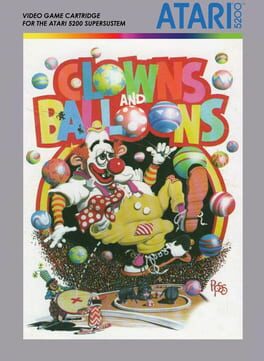
Clowns and Balloons
— · TRS-80 Color Computer
Clowns · Often paired
 SNK exclusive
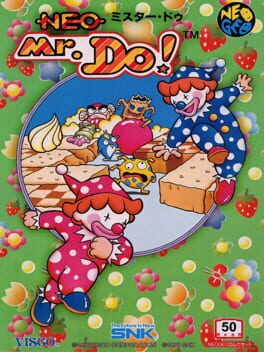
Neo Mr. Do!
1996 · Neo Geo
Arcade · Clowns

Harlequin
1992 · Amiga, Atari ST +1
Arcade · Clowns
Madness: House of Fun
1992 · Amiga, Atari ST +1
Arcade · Clowns
 Nintendo exclusive65
Kid Klown in Crazy Chase
1994 · Game Boy Advance, SNES +1
Clowns
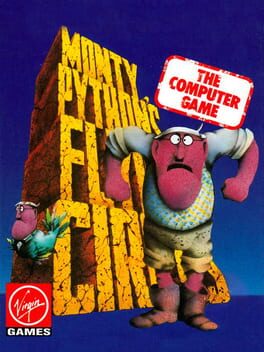
Monty Python's Flying Circus: The Computer Game
1990 · Amiga, Amstrad CPC +6
Arcade · Clowns

Big Top
1983 · MS-DOS
Arcade · Clowns
 PlayStation exclusive40
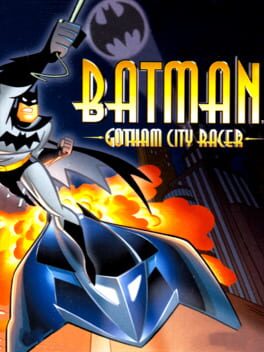
Batman: Gotham City Racer
2001 · PlayStation
Clowns
Collections2 collections
Platform libraries
- Atari 2600 gamesRetail game releases
Publishers
Description adapted from its source, CC BY-SA 4.0.