Ludography
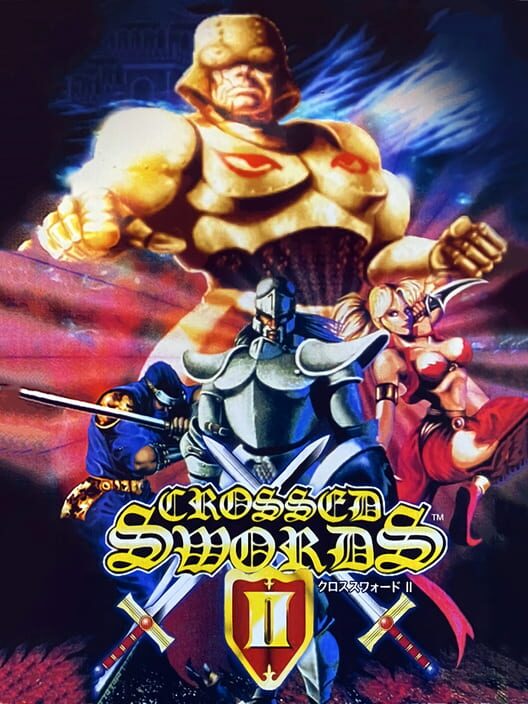
Crossed Swords II cover

1995 · ADK · Beat 'em up · First-person shooter

Crossed Swords II

SNK exclusive

Crossed Swords is a hack & slash action RPG arcade game developed by Alpha Denshi and published by SNK for the Neo Geo arcade system in 1990 and Neo Geo console in 1991. Its gameplay was similar to SNK's earlier 1990 first-person shooter and beat 'em up game, The Super Spy, but with role-playing game elements and hack & slash combat instead of shooting and fist-fighting.

The game allowed cooperative gameplay with up to two players on the same screen.[1] As only the player characters' silhouettes are visible on screen as wire-frame models, much like Punch-Out!!,[2] the game's perspective may be considered either first-person or third-person.[citation needed] The game was later cited as an inspiration for the 2010 first-person fighting game Rage of the Gladiator. A sequel of the game entitled Crossed Swords 2 was released in Japan on May 2, 1995 for the Neo-Geo CD, and was one of the few games designed specifically for the Neo-Geo CD, rather than being an arcade port.

Crossed Swords requires correct timing and movement to progress. The basic rule for the game is to defend first before striking. The player wields both a weapon and shield and can strafe, as well as guard the upper or middle part of the body. Two different weapon strikes are available, a regular attack and a thrusting attack.

Weapon-based magic can also be used. Multiple paths through the game are available and the player has an option to skip the first and second chapters freely.

In the enchanted land of Belkana all was well until plagues of creatures started rampaging through. But it didn't stop there, from deep within the mountains of Graisia, the Demon Warlord Nausizz arose and led the attacks wiping out settlement after settlement. However a brave warrior called "The Knight of the Journey" came a long way on a quest to stop these monstrosities. After aiding the Poor Village of Dio from the Caterdragon, the knight heads to the Castle Pulista, but as he is briefed by the king of the problems they face, an elite dark knight appears and kidnaps the princess.

The knight fights his way through the enemy lands in the Matius Tower, the Gauda Fortress, the Land Battleship and finally passes the Entrance to the Devil World. Along his way, he is helped by loyalties of the kingdom. The knight battles through the Castle Graisia and comes face to face with Nausizz. As a demon with honour, Nausizz is so impressed with the knight's progress, that he has sent the princess back to Pulista.

As the knight defeats Nausizz, he transforms into a fiendish demon dragon. The knight slays him and escapes the collapsing castle. Back in Castle Pulista the knight is offered to come and live with the king. Peace can proceed once more in Belkana.

Released
2 May 1995
Platforms
Neo Geo CDNeo Geo
Genres
Beat 'em upFirst-person shooterPlatformerRole-playing
Developers
ADK
Publishers
SNK
Themes
Action
Country
Japan
Languages
EnglishJapanese

About

Crossed Swords II is a 1995 action role-playing video game developed and published by ADK exclusively for the Neo Geo CD. The sequel to the original Crossed Swords, It is one of the few exclusive titles to be released for the console, as it was never officially released for either Neo Geo MVS (arcade) and Neo Geo AES (home) platforms. SNK currently owns the rights to the game after acquiring ADK.

Taking place several decades after the events of the original game, the story follows a crew of three adventurers on a journey across the kingdom of Belkana to slay the returning demon warlord Nausizz, whose castle rises from hell once again and his servants are threatening to conquer the land by bringing chaos and destruction with his reign.

Keywords

  • ninja
  • magic
  • sequel

The articlegameplay, story, development, reception

Gameplay

Crossed Swords II is a hack and slash action role-playing game that is primarily played in a third-person perspective like its predecessor where players take control from either of the three warriors, each with their own unique advantages and disadvantages, on a quest to slay the returning demon warlord Nausizz who returns from the underworld after his previous defeat in order to conquer the kingdom of Belkana with his army of monstrous creatures across twelve acts in total. The sequel expands upon the original gameplay further by adding new elements and mechanics such as experience points to increase the experience level of their respective player character, a new button dedicated for jumping and dashing, giving the players extra abilities and the ability to dodge incoming enemy attacks, among other abilities to master. After completing each act, players can buy recovery items and new magic attacks, as well as increasing their experience level, via a shopkeeper with the gold collected. If the players are killed in action, a limited number of continues to keep playing are present for use before the game is over. In addition to the regular campaign, there is a survival mode where an endless array of monsters with different levels of strengths must be fought against until the players are defeated.

Development

Crossed Swords II was one of the few games designed specifically for the Neo Geo CD, rather than being a Neo Geo MVS/AES port and it was released exclusively in Japan on May 2, 1995. Although the game was not released in western regions, the game will display English text if played on non-Japanese consoles. Despite never receiving an official MVS/AES release, the game was unofficially converted to both platforms in 2015 by homebrew developer Neobitz.

Reception

In 2014, HobbyConsolas identified Crossed Swords II as one of the twenty best games for the Neo Geo CD.

Releases by platformdates and regions as published

Releases by platform
PlatformReleasedRegions
Neo Geo CD2 May 1995Japan

Title IDsone per regional release, with its latest update

Title ids and disc serials by release
PlatformTitle IDRegionLatest update
Neo Geo CDADCD-102Japan—

Games like this

Collections1 collection

Platform libraries

Description adapted from its source, CC BY-SA 4.0.