
The articlegameplay, story, development, reception
Gameplay
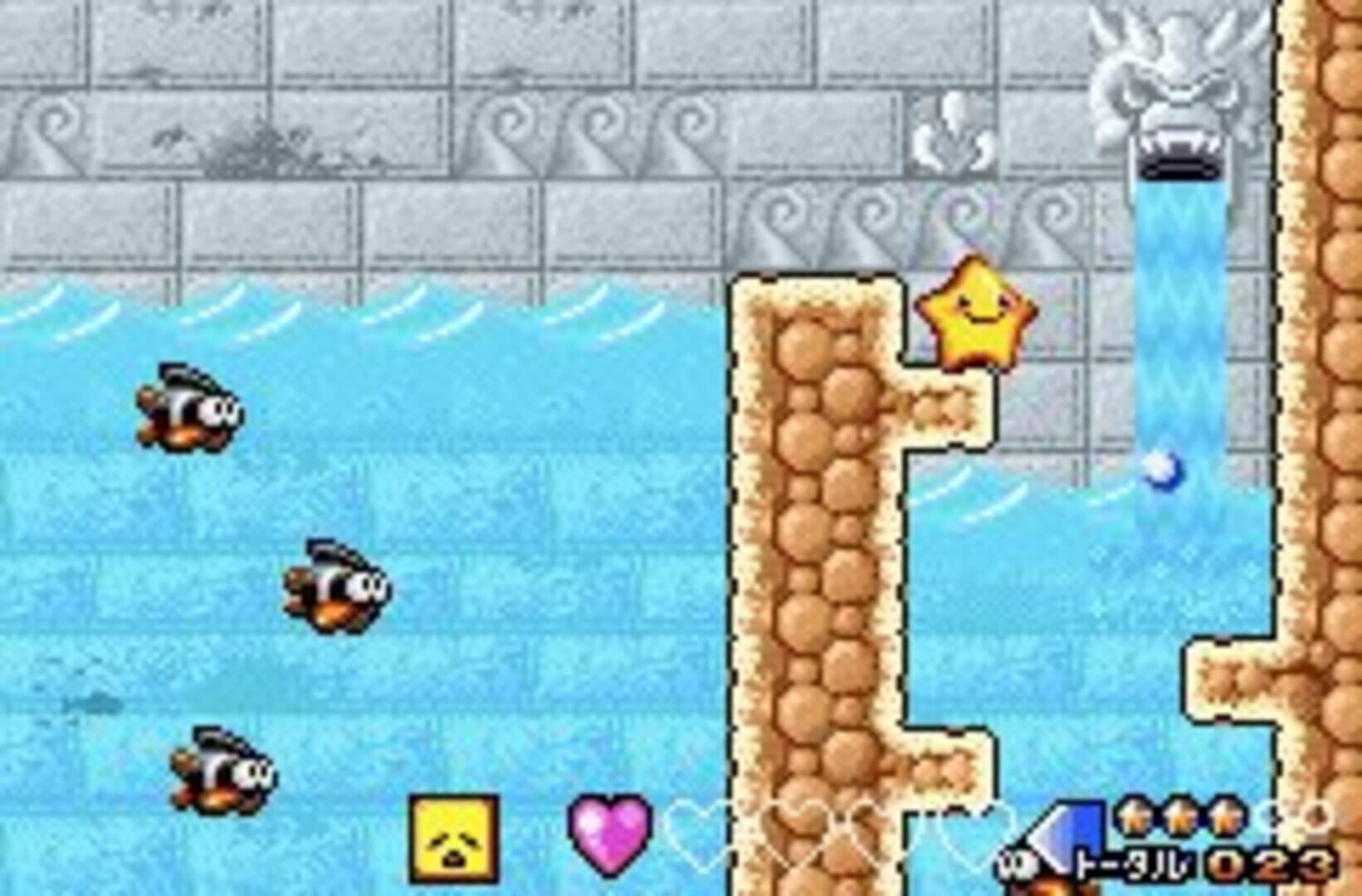
Starfy can run, jump, and attack via spinning; he also gains access to various transportation objects and animal familiars as the games progress. The game usually consists of multiple stages or worlds, with each stage split up into four sub-stages. Boss characters hide at the end of each world's final sub-stage. Most of the other sub-stages' goals are centered on retrieving a lost or stolen item for another character.
The main task is to meet characters and find their missing items. There are many items to collect and many enemies to defeat. Players can move Starfy on land by running and jumping, but when Starfy is in watery areas, they can move him much more freely, make him push obstacles, and so on. The game also includes minigames, some of which are similar to Atari's Breakout series.
Story
In Pufftop Palace, prince Starfy accidentally drops the Magic Jar, falling into the ocean. In the jar, an evil entity named Ogura escapes and summons tornadoes towards Starfy, where he falls in the ocean. He is rescued by Old Man Lobber and discovers Ogura has set chaos through the ocean. Determined to stop Ogura and return home, Starfy follows his trail, befriending a clam named Moe along the way.
Reaching an underwater temple, Starfy discovers that a prohecy may help him bring peace to the ocean. However, Ogura steals it and runs to Pufftop. Following him, Starfy defeats Ogura and imprsions him in the jar, bringing the ocean and Pufftop to peace.
Development
Back in November 1995, Nintendo's producer Hitoshi Yamagami received a directive from Tose's producer, Yasuhiro Minamimoto, asking if Hitoshi could come up with a kind of floaty platformer, then started developing it. Six months of work later, Hitoshi thought of a floating character being pushed through a maze. They tried developing a balloon-lifting game, but Hitoshi and Yasuhiro were having difficulties moving the balloon toward wherever they wanted, making the project uninteresting and annoying in their opinions. Hitoshi asked if they could take control of the floating character as opposed to just pushing it around.
As long as things were floating around, Hitoshi and Yasuhiro decided a water-based character would be a decent idea. They thought as far as a character that would fit that environment, perhaps a jellyfish or starfish would be a good character. They also changed direction on the project a bit, and it was then that the project went through a period of trouble, and it wasn't until March 1998 that the project began to come to fruition.
Later in 1998, Hitoshi and Yasuhiro were going through the process of changing over from the Game Boy to the Game Boy Color, so orders came down that Nintendo wanted Hitoshi and Yasuhiro to sort of revamp this prototype of the series to work on the Game Boy Color. Then Hitoshi and Yasuhiro had to go through and do that work, until 1999, as they were approaching the release of the game, Hitoshi and Yasuhiro were told by Nintendo that the Game Boy Advance would soon be released and turn the Game Boy Color into a handheld of the past, making everyone cancel their Game Boy Color software projects. Therefore, Hitoshi and Yasuhiro went through another period of reflection and began rethinking the game yet again. Several things, such as its official logo, artworks, and some names were changed for unknown reasons.
", and the company policy is to respond that he is neither. Hitoshi's response is simply, "Starfy is the Prince of Pufftop".
Reception
On release, Famitsu magazine scored the game a 30 out of 40, and by the end of 2002 Densetsu no Starfy had sold a total of 291,616 copies in Japan.