
The articlegameplay, story, development, reception
Gameplay
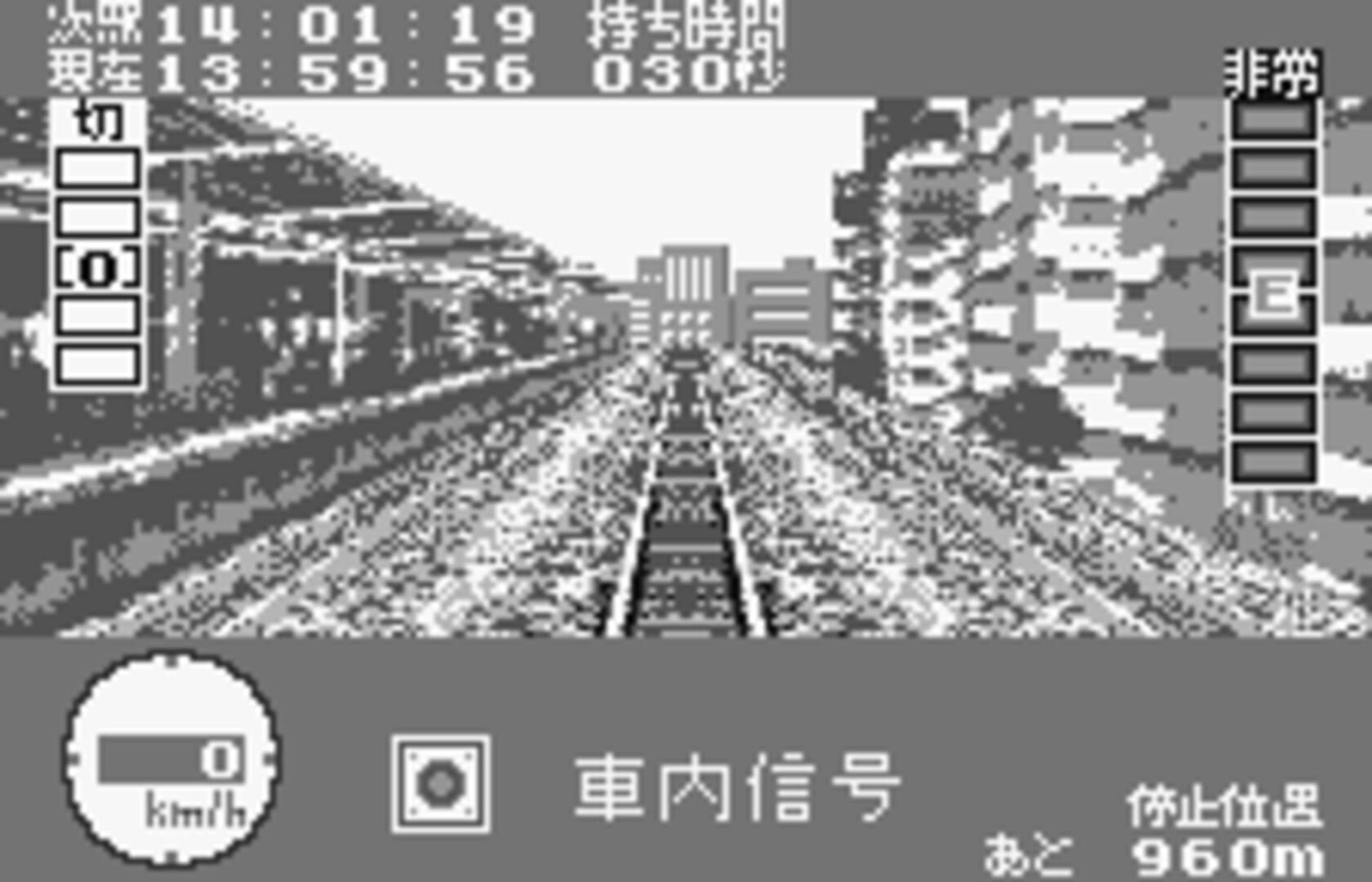
Each Densha de Go title contains actual train (or tram) routes based on real services in Japan. For the most part, the user's task is to drive the train and adhere to a very exacting timetable, including stopping at stations to within as little as 30 cm of a prescribed stopping point, ideally within half a second of the scheduled arrival time. While the specifics vary slightly between versions, the user is expected to obey speed limits and other posted signs, sound a warning for work parties along the track, arrive at between-station waypoints on time, and perform similar tasks.
Densha de Go differ from Ongakukan's Train Simulator series primarily in that while the Ongakukan series uses video taken from cameras mounted to the front of real-world trains for its graphics, Densha de Go titles rely upon computer-drawn graphics.
Development
The concept for a train-based video game originated at Taito around 1991–1992, but was initially shelved because management considered trains "plain and boring." Programmer Akira Saito developed the idea based on his observations of the popular Yamanote Line simulation machine at Tokyo's Transportation Museum in Akihabara, which consistently drew crowds of all ages. When Saito formally proposed the concept around 1996, Taito was divided between supporters and skeptics who questioned the appeal of train simulation in an arcade market dominated by fighting and racing games. Support from train enthusiast employees within Taito helped secure approval for the project.
Official development began in July 1996 with a compressed timeline of three to four months. The small team consisted of Akira Saito as lead programmer and planner, Masayuki Kikuchi and Masaya Kinoshita as programmers, Yukihiro Moriyama handling graphics, and Tetsuyu Yamaro creating the opening demo. The team decided early to use real Japanese train lines and stations rather than fictional locations, and invested heavily in an authentic control panel despite management cost concerns. Saito argued the control panel represented "80% of the game" and insisted on functional elements like working pressure gauges and authentic lever mechanisms.


