
The articlegameplay, story, development, reception
Gameplay
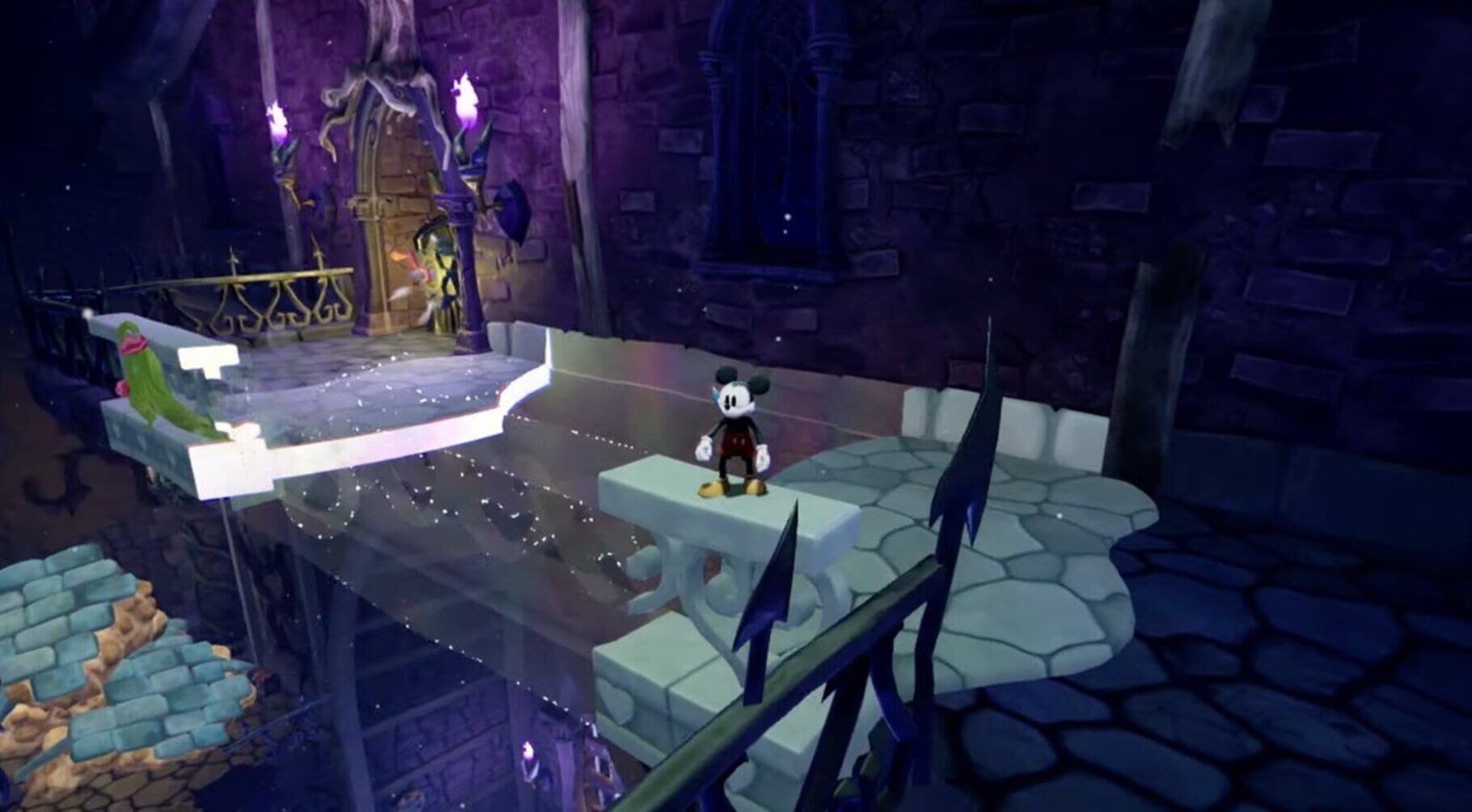
Epic Mickey is primarily a platform game and allows players to use their own solutions for getting through the levels. Epic Mickey features a morality system similar to games like Infamous, Spider-Man: Web of Shadows and Shadow the Hedgehog. Different alliances, side-quests and power-ups are made available depending on the choices of the player. It is also possible to avoid mini-bosses if specific actions are taken. The in-game currency "E-tickets" are important to these boss fights.
The game's key feature is a magic paintbrush, which Mickey wields, that has the ability to draw or erase objects using paint and thinner. For example, obstacles can be erased from physical existence with thinner and then restored with paint or enemies can be befriended by revitalizing them with paint or destroyed completely using thinner. The two fluids have little effect on "Beetleworx" enemies, which require being taken down physically. Mickey is also able to materialize objects from sketches, which have various effects.
Story
The game is set in the Wasteland, a pen-and-paper stylized world, created in the game's narrative by the sorcerer Yen Sid, as a place for "forgotten things", namely disused or obscure Disney characters and attractions. It is physically inspired by Disneyland and appears as an intricate model in Yen Sid's workshop. However, Mickey Mouse inadvertently causes mass damage to the model, ravaging Wasteland. The world is now tormented by the Shadow Blot, a monstrous entity loosely based on the Phantom Blot, an antagonist to Mickey in the comic strips created by Floyd Gottfredson, as well as the Mad Doctor, who chose to betray Oswald and join the Blot's side in his thirst for power.
Wasteland is split into several locations based on various areas from Disneyland and other Disney theme parks. Dark Beauty Castle, located at the center of Wasteland, is based on the Disneyland Paris version of Sleeping Beauty Castle. , where Horace Horsecollar and Pete live, though other incarnations of the latter appear throughout the game. The Gremlin Village is inspired by Fantasyland, based primarily around It's A Small World.
Development
The creative development team at Buena Vista Games formed the original concept for Epic Mickey in 2003. When the concept was pitched to Bob Iger, then-president and COO, he lamented that Disney didn't own the rights to Oswald the Lucky Rabbit and could not produce the game. Upon becoming CEO, he made it a goal to put Oswald under Disney's ownership. His chance came in 2006 when television sportscaster Al Michaels expressed interest in joining NBC (which had merged with Oswald owner Universal Pictures by this time) to call play-by-play for Sunday Night Football, even though he had just signed a long-term deal with Disney-owned ESPN to continue on Monday Night Football.
Iger initiated a trade with NBC Universal that would allow Michaels to be released from his contract in exchange for the rights to Oswald and other minor assets. Disney Interactive Studios was unable to secure a developer for the game until 2007 when Disney acquired Junction Point Studios, Warren Spector's company. Around 130 people from Junction Point worked on the game. Another 150 people contributed to the project from around the world.
Reception
Epic Mickey received "mixed or average reviews" according to review aggregator Metacritic.
IGN gave it a score of 8/10, criticizing its camera, control issues and lack of voice acting, but praised its charm, story, art design, and lasting appeal for the players. Australian video game talk show Good Game's two presenters gave the game a 6 and 7 out of 10. They compared the paintbrush abilities to that of the water jet pack from Super Mario Sunshine and found it frustrating how the levels reset back to their original state after leaving. On a positive note, they said it "isn't as 'dark' or 'adult' as the hype made it out to be...


