The articlegameplay, story, development, reception
Gameplay
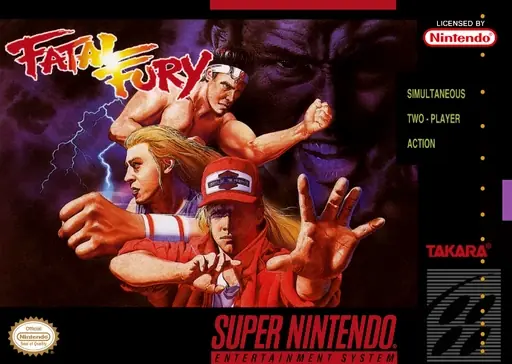
The original Fatal Fury is known for the two-plane system in which characters fight from two different planes. By stepping between the planes, attacks can be dodged with ease. Later games have dropped the two-plane system, replacing it with a complex system of dodging, including simple half second dodges into the background and a three plane system. Characters have moves that can attack across the two planes, attack both planes at once, or otherwise attack dodge characters. The plane system was fully abandoned from later releases beginning with Garou: Mark of the Wolves.
Later Fatal Fury games have experimented with various mechanical changes. "Ring-outs" allow a character to lose the round if the character is thrown into the edges of the fighting backdrop; single-plane backdrops, where dodging is eliminated altogether, causing moves that send opponents to the opposite plane to do collateral damage. The "Deadly Rave" is a super combo used by several characters, where after execution, a player had to press a preset series of buttons with exact timing for the entire combo to execute. The "Just Defend" is a type of protected block in which players regained lost life, did not wear down the player's guard crush meter and removed all block stuns making combo interruptions smoother.
Story
Fatal Fury and its sister series, Art of Fighting, are set in the same fictional universe; while Art of Fighting takes place in the late 1970s, the story of Fatal Fury begins over a decade later in the early 1990s. The two series are set primarily in the same fictional city of "South Town", loosely based on the real-life city of Miami. The Wolves sub-series takes place in the neighboring city of "Second Southtown".
Many characters from both Fatal Fury and Art of Fighting appear in The King of Fighters series, which is set in its own universe that ignores the continuity established in the Fatal Fury and Art of Fighting games so that the characters from both series could battle without having to age any of them.
As with most fighting games, the Fatal Fury series has an extensive cast of characters that increases with each installment. The series' primary protagonists include martial artists Terry Bogard, Andy Bogard and Joe Higashi, all introduced in the original game, and female ninja Mai Shiranui, introduced in Fatal Fury 2; these four characters have appeared in every series entry since their debut, with the exception of Garou: Mark of the Wolves. The series' most prominent antagonist is Geese Howard, a crime lord in South Town responsible for the death of the Bogard brothers' father, who is often accompanied by his right-hand man Billy Kane. Other members of Geese's family have appeared as major antagonists throughout the series, including half brother Wolfgang Krauser; distant relatives the Jin brothers; and brother-in-law Kain R. Heinlein.
Garou: Mark of the Wolves acts as a soft reboot of the series, taking place ten years after the previous games and featuring an almost entirely new cast of fighters, with the story primarily focusing on Rock Howard, son of Geese Howard and protégé of Terry Bogard. Terry, now completely redesigned, is the only returning character in Mark of the Wolves; however, other legacy Fatal Fury characters return in its sequel, City of the Wolves.
Certain characters are shared with the Art of Fighting series to more closely establish continuity between the two; for example, Art of Fighting 2 features Geese Howard and depicts his initial rise to power in South Town, while multiple Art of Fighting characters appear in City of the Wolves. Some characters have also made appearances outside the Fatal Fury series, particularly in The King of Fighters.
In 1981, ten years prior to the events of Fatal Fury: King of Fighters, Terry and his brother Andy are adopted by Jeff Bogard, only for Jeff to be killed in front of them by his former rival Geese Howard. Determined, the brothers spend the next decade training to become stronger, meeting new allies Joe Higashi and Mai Shiranui, before returning to South Town to participate in the "King of Fighters" fighting tournament being held by Geese. After winning the tournament, Terry and Geese have a showdown at the top of Geese Tower, and Geese is sent falling from the building, believed to be dead. One year later in Fatal Fury 2, Geese's half brother Wolfgang Krauser hosts a new global King of Fighters tournament in a bid to draw out Geese's killers and prove himself stronger. At the end of the tournament, Terry defeats Krauser, who is believed to have taken his own life in shame.
In Fatal Fury 3, set three years later, Terry and his friends learn that Geese survived his fall using a magic scroll, and now seeks to recover the three legendary Sacred Scrolls of Jin, said to imbue their user with great power. With the scrolls spotted in South Town, Terry and the others race to recover the scrolls before Geese while also contending with Jin Chonshu and Jin Chonrei, two Chinese orphans possessed by the spirits of their ancestors that seek to use the scrolls to resurrect themselves. Geese recovers the scrolls, but chooses to destroy them so they cannot be used against him. In Real Bout: Fatal Fury, to assert his power, Geese holds another "King of Fighters" tournament, which culminates in a final battle between him and Terry.
Geese is once again knocked from his tower, and though Terry tries to save him, Geese refuses and willingly falls to his death. Seeking to end the cycle of violence, Terry decides to raise Geese's now orphaned young son, Rock Howard.
The story continues in Garou: Mark of the Wolves, taking place ten years later. Terry and the now grown up Rock are invited to participate in the new "King of Fighters: Maximum Mayhem" tournament. The two later learn that it was organized by Rock's maternal uncle, Kain R. Heinlein, who seeks to use Geese's legacy to make Second Southtown an independent city-state.
When Kain reveals that Rock's mother Marie is still alive, Rock leaves Terry to go with Kain in order to learn the truth and save his mother. One year later in Fatal Fury: City of the Wolves, Kain's investigations determine Marie has been held captive by Mr. Big, who demands Geese's legacy in exchange for her freedom. Billy Kane reveals to Rock that Geese's legacy includes the Sacred Scrolls, which Billy had preserved and given Geese fakes of to destroy.
Before Billy can give Rock the legacy, all of it is stolen by an unknown figure. Days later, a new King of Fighters tournament is announced by Krauser's son, Franz Stroheim, with the stolen legacy offered as the prize. Rock, Kain, Billy, Terry, and several others enter the tournament to retrieve the legacy and rescue Marie. While Marie is successfully rescued, an accident causes Rock to become possessed by the Sacred Scrolls' curse due to being a distant descendant of the Jin family.
Terry and the others free Rock from his possession and destroy the scrolls. Six months later, Krauser returns, having faked his death, and begins a plan to take revenge on Terry and seize control of South Town.
Several other Fatal Fury games have been released, though these games' stories are not a part of the main series canon. These include Fatal Fury: Wild Ambition, which retells the st
Development
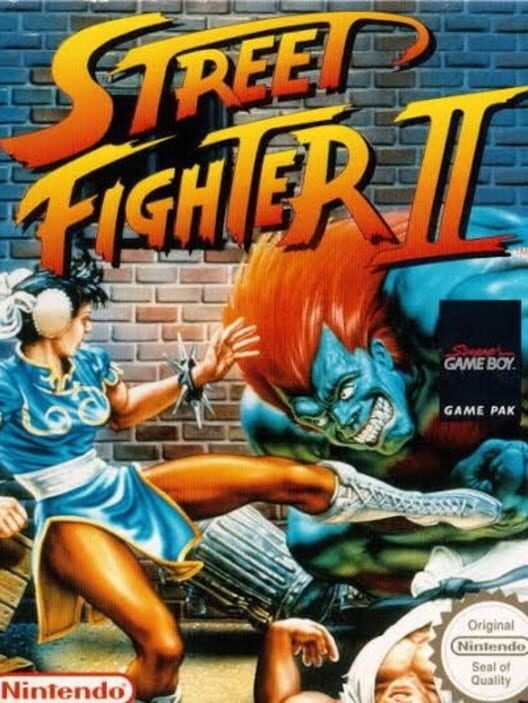
Series producers Takashi Nishiyama (Fatal Fury~Real Bout Fatal Fury 2) and Hiroshi Matsumoto (Fatal Fury 3~Mark of the Wolves), were the planners of the original Street Fighter (where they were credited as Piston Takashi and Finish Hiroshi). Matsumoto is also the creator of the Art of Fighting series. Developed at the same time as Capcom's own Street Fighter sequel, Nishiyama referred to Fatal Fury as "my Street Fighter II." Veteran developer Yasuyuki Oda believes the detailed facial expressions and 2D backgrounds were the secret behind Fatal Fury's fame. Oda also believes the fact that the cast does not look like actual fighters left a major impact.
Nishiyama originally created Terry for Street Fighter as a Caucasian man wearing a leather jacket; they decided to make the main playable character a dougi-clad karateka name Ryu instead. They still wanted to use this concept in a game; after their move to SNK, they implemented him as a playable character in Fatal Fury. Terry's original appearance was made with the intention that he did not look like a martial artist, contrasting the looks of his brother Andy. In the making of the series, Terry and his brother Andy were characterized as the heroic leads, contrasting with the comical Joe Higashi.
Although Geese was not modeled after any famous person or fictional character, SNK based him on Italian mafia. Geese became famous for his special moves which allows him to interrupt the player's attacks and counterattack in a grab. Sub-boss Billy Kane obtained similar fame with both Geese and him having The Godfather-like influences that were expanded on later games. SNK was surprised by Geese's popularity in the Fatal Fury series, topping Terry Bogard in terms of fan response in regard to what players wanted as playable character.
Oda reflected that both Art of Fighting and the other IP, Fatal Fury, seemed to appeal to fans of male-oriented series like Fist of the North Star and Dragon Ball. The inclusion of several macho fighters led to the dilemma of including more female characters, with Mai Shiranui standing out as SNK's first female fighter. With Mai's high popularity in Fatal Fury, SNK decided to include Yuri Sakazaki in Art of Fighting 2 as a playable character, which received a similar response.
In the planning stage of Fatal Fury Special, bringing Ryo Sakazaki to the installment was elaborated by planner planner Oda; He believes Ryo fits the cast due to how the franchise borrowed Desperation Moves from Art of Fighting and how it revolutionized the idea of the crossover concept that would conceptualize The King of Fighters. However, as Ryo was announced at the Tokyo Game Show, Oda found such an unpredicted reveal awkward; Fatal Fury Special had several issues at launch in every single console and unlocking Ryo as a hidden boss was too challenging. Real Bout Fatal Fury was originally created with the goal of putting an end to the series' story with Geese Howard's death in the ending, but Geese's high popularity resulted in Real Bout Special having him again. SNK redesigned the controls and battles, and improved the sense of exhilaration and ease of use by adding two health bars and flashy effects.
To achieve this, they made the decision to bring most of the processing that was highly praised in Fatal Fury 3 to the foreground in Real Bout. In retrospect, Yasuyuki Oda believes Real Bout was a masterpiece.
Garou: Mark of the Wolves' development team was formed during the NeoGeo era of SNK. Several artists worked on it, as SNK was developing two new installments based on the Fatal Fury series: the 3D fighting game remake of the first game, Fatal Fury: Wild Ambition and Garou: Mark of the Wolves. Hiroaki Hashimoto was a minor artist, as he moved to become the main artist of Wild Ambition and the new game Buriki One, while Tonko remained as the main illustrator for the sequences and character illustrations. Meanwhile, Shinkiro did not return to work on either of these installments because he was busy illustrating The King of Fighters.
Multiple changes to Garou: Mark of the Wolves were made to show a bigger difference from previous games, due to most characters being new. The King of Fighters is commonly associated with Kyo Kusanagi and Iori Yagami from the series with the same name, rather than Fatal Fury characters. As a result, the new tournament was dubbed "Maximum Mayhem King of Fighters" to give a new tension to associate the new characters by giving the city of Southtown more emphasis to the narrative. Rock's character and entire personality served as the main basis for the game.
This led to the creation of supporting characters like B. Jenet or Terry Bogard's redesign. Since Rock was the protagonist, the cast gave full attention to him. Nobyuki Kuroki tried giving him his own style of cool which he hoped would attract gamers.
The character of Rock Howard was created by Nobuyuki Kuroki in 1998. Both he and Yasuyuki Oda wondered what type of hero would succeed Terry Bogard in Fatal Fury's latest game, Garou: Mark of the Wolves. While they were not confident with Rock, they still decided to make him as the new protagonist. The story was written with a cliffhanger from the get go, thus leaving open the possibility for a potential sequel.
New moves were created for both Rock and B. Jenet before development was put on hold. Ideas for a sequel were revealed in June 2016; SNK revealed artwork and sprites of the cast of the cancelled Neo Geo version. SNK director Nobuyuki Kuroki stated in February 2020 that he was personally interested in 'reviving' the Fatal Fury series.
Reception
Paul Rand of Computer and Video Games called Fatal Fury one of the best Neo Geo games available in 1992 and compared it favorably with Street Fighter II, stating Fatal Fury was a "brilliant feast of fighting" with "huge and excellently drawn" character sprites, great animation, and unique special attacks "giving the game more variety." It went on to be Japan's fourth highest-grossing arcade game of 1992, below Street Fighter II (two versions) and Captain Commando. Fatal Fury 2 was generally very well-received by Western game critics upon its release. GamePro review of the Neo Geo version praised the "action-packed" gameplay, "Street Fighter-tough" challenge, "great" character graphics and animation, "slick scrolling" backgrounds, and "fantastic" sound, concluding it to be an "awesome sequel" that "ranks up there with the Numero Uno fighting game."
Reviewing the SNES version of the game, EGM called it "one of the better fighting games ported to the SNES" and awarded it Game of the Month. During the mid 1990s, The King of Fighters was SNK's most popular IP as their other famous works like Art of Fighting 3 and Fatal Fury 3 were poorly received by the gamers. Though Fatal Fury saw a revival through Real Bout Fatal Fury and Garou: Mark of the Wolves, these two games were released during the time SNK went bankrupt leaving the company to mainly focus on KOF.
GameSpot reviewer Frank Provo comments that Geese's introduction in Fatal Fury is one of the biggest accomplishments from the game as he notes how Geese continues appearing in other games. com noted that Geese was the hardest character of the series to defeat and jokingly commented that even though he fights "while wearing a wristwatch, he pulls out all the tricks possible". IGN writer Ryan Clements agreed with Avi Krebs saying that Geese is "almost physically impossible to beat". He also mentioned that due to how difficult Geese is, almost twelve different IGN people had to help Clements to win, being only able to defeat him "resorting to the cheapest, most absurd tactics possible".
Eric Bratcher from GamesRadar commented that Geese is "the big hook" from the series along with Terry Bogard, labelling Geese as "nearly un-killable". The Gamer commented that while Geese dies in Real Bout Fatal Fury, his returns in The King of Fighters with XV retaining scrolls with potential for immortality have potential to revive him like other villains in gaming who die several times like Dracula from Castlevania. Red Bull regarded Geese as one of the "cheapest" fighting game characters for the challenges he gives the players enough to annoy them. The animation of Mai's breasts in Fatal Fury 2 has been cited as one of the earliest examples of breast physics in video games, a conception that later games have steadily tried to refine, though Mai has remained the most prominent example in 2D animation of the concept.
Brett Elston of GamesRadar+ emphasized that while female fighting game characters were prominent in the 1990s, with each new game often trying to out-sexualize the others, gaming periodicals were "abuzz with commentary on what Mai's bobbing bosom meant for the industry", with Elston comparing it to "witnessing (half-naked) women entering the workplace for the first time".
Ryo Sakazaki has also been popular for his crossover appeal in Fatal Fury and The King of Fighters. Rolling Stone said Ryo's popularity in Fatal Fury Special was so famous that it inspired the concept of The King of Fighters whereas the Capcom VS. SNK was also popular for making the Art of Fighting duo be able to face their own parody, Dan Hibiki. Den of Geek regarded his debut in Fatal Fury Special as the "first real fighting game crossover".
In GameSpot's article "The History of SNK", Garou and The King of Fighters '99: Evolution were described as one of the best fighting games on the Dreamcast.