The articlegameplay, story, development, reception
Gameplay
In Final Fantasy IV, the player controls a large cast of characters and completes quests to advance the story. Characters move and interact with people and objects on a field map, which may represent a variety of settings, such as towers, caves, and forests. Travel between areas occurs on the overworld. The player can use towns to replenish strength, buy equipment, and discover clues about their next destination.
Conversely, the player fights monsters at random intervals on the overworld and in dungeons. In battle, the player has the option to fight, use magic or an item, retreat, change character positions, parry, or pause. Certain characters have special abilities. The game was the first in the series to allow the player to control up to five characters in their party; previous games had limited the party to four.
Player characters and monsters have hit points (HP), with the characters' HP captioned below the main battle screen. Attacks reduce remaining HP until none are left, at which point the character faints or the monster dies. If all characters are defeated, the game must be restored from a saved game file. The player can restore the characters' hit points by having them sleep in an inn or use items in the party's inventory, such as potions, as well as using healing magic spells.
Equipment (such as swords and armor) bought in towns or found in dungeons can be used to increase damage inflicted on monsters or minimize damage received. The player can choose whether characters appear on the front line of a battle or in the back. A character's placement impacts damage received and inflicted depending on the type of attack.
Final Fantasy IV introduced Square's Active Time Battle (ATB) system, which differed from the turn-based designs of previous RPGs. The ATB system centers on the player inputting orders for the characters in real time during battles. The system was used in many subsequent Square games.
Each character has certain strengths and weaknesses; for instance, a strong magic user may have low defense, while a physical fighter may have low agility. Like other Final Fantasy games, characters gain new, more powerful abilities with battle experience. Magic is classified as either "White" for healing and support; "Black" for offense; or "Summon" (or "call") for summoning monsters to attack or carry out specialized tasks. A fourth type, "Ninjutsu", consists of support and offensive magic and is available to only one character.
Magic users, who account for eight of the twelve playable characters, gain magic spells at preprogrammed experience levels or fixed story events. The game includes balanced point gains, items, and rewards to eliminate long sessions of grinding. Due to the Super NES' greater processing power, Final Fantasy IV contains improved graphics when compared to previous Final Fantasy titles, all of which were released on the NES. The game employs the Super NES' Mode 7 technology to give enhanced magic spell visuals and to make airship travel more dramatic by scaling and tilting the ground for a bird's eye view.
Story
Most of Final Fantasy IV takes place on Earth, also known as the Blue Planet, which consists of a surface world (or Overworld), inhabited by humans, and an underground world (or Underworld), inhabited by the Dwarves. An artificial moon orbits the planet, upon which the Lunarians live. The Lunarians are a race of beings originally from a world which was destroyed, becoming the asteroid belt surrounding the Blue Planet, and are identified by a moon-shape crest on their foreheads. They created the artificial moon, resting until a time when they believe their kind can co-exist with humans. A second, natural moon orbits the Blue Planet as well, although it is never visited in the game.
Final Fantasy IV offers twelve playable characters, each with a unique, unchangeable character class. During the game, the player can have a total of five, or fewer, characters in the party at any given time. The main character, Cecil Harvey, is a dark knight and the captain of the Red Wings, an elite air force unit of the kingdom of Baron. He serves the king alongside his childhood friend Kain Highwind, the commander of the Dragoons.
Rosa Farrell is a white mage and archer, as well as Cecil's love interest. The Red Wings' airships were constructed by Cecil's friend, the engineer Cid Pollendina.
During his quest, Cecil is joined by others, including Rydia, a young summoner from the village of Mist; Tellah, a legendary sage; Edward Chris von Muir, the prince of Damcyan who is a bard as well as the husband of Tellah's daughter Anna; Yang Fang Leiden, the head of the monks of Fabul; Palom and Porom, a black mage and a white mage, twin apprentices from the magical village of Mysidia; Edward "Edge" Geraldine, the ninja prince of Eblan; and Fusoya, the guardian of the Lunarians during their long sleep.
Zemus is the main antagonist of the game. He is a Lunarian who wishes to destroy the human race so that his people can populate the earth. He uses evil wizard Golbez to do this by controlling him and Kain with his psychic powers to activate the Giant of Babil, a huge machine created to carry out the genocide and take over the world.
The Red Wings attack the city of Mysidia to steal its Water Crystal and return to the Kingdom of Baron. Afterward, when Cecil, Captain of the Red Wings, questions the king's motives, the king strips him of his rank and sends him with Kain, his friend and Captain of the Dragoons, to deliver a ring to the Village of Mist. There, Kain and Cecil watch in horror as monsters burst forth from inside the ring and lay waste to the village. A young girl, Rydia, is the only survivor and, in anger, summons a monster named Titan.
This monster causes an earthquake, separating Cecil and Kain. Cecil awakens afterward and takes the wounded Rydia to a nearby inn. Baron soldiers come for Rydia, but Cecil defends her, and she joins him on his journey.
It is revealed that Rosa, Cecil's love interest, had followed him and is extremely ill with a fever. Soon after this, Cecil and Rydia meet Tellah, who is going to Damcyan Castle to retrieve his eloping daughter, Anna. However, Anna is killed when the Red Wings bomb the castle. Edward, Anna's lover and the prince of Damcyan, explains that the Red Wings' new commander, Golbez, did this to steal the Fire Crystal for Baron, as they had stolen the Water Crystal from Mysidia.
Tellah leaves the party to exact revenge on Golbez for Anna's death. After finding a cure for Rosa, the party decides to go to Fabul to protect the Wind Crystal. On the way there, they meet Master Yang, a warrior monk serving the kingdom and protecting the crystal. The Red Wings attack Fabul, and Kain reappears as one of Golbez's servants.
He attacks and defeats Cecil; when Rosa intervenes, Golbez kidnaps her and Kain takes the crystal. On the way back to Baron, the party is attacked by Leviathan and separated.
Cecil awakes alone near Mysidia. When he enters the town, he finds its residents deeply resentful of him for the earlier attack on their town. Through the Elder of Mysidia, he learns that to defeat Golbez, he must climb Mt. Ordeals and become a Paladin.
Before embarking on his journey, he is joined by the twin mages, Palom and Porom. On the mountain, he encounters Tellah, who is searching for the forbidden spell Meteor to defeat Golbez. After defeating the fiend Scarmiglione and casting aside the darkness within himself, Cecil becomes a Paladin, while Tellah learns the secret of Meteor. Upon reaching Baron, the party discovers an amnesiac Yang and returns him to his senses.
The party then confronts the King, only to discover that he is an imposter and one of Golbez's minions, Cagnazzo. After defeating him, Cid arrives and takes them to one of his airships, the Enterprise. On the way, the party enters a room booby-trapped by Cagnazzo, where Palom and Porom sacrifice themselves to save Cecil, Tellah, Cid, and Yang.
On the airship, Kain appears and demands Cecil retrieve the final crystal in exchange for Rosa's life, which the party obtains with assistance from a bedridden Edward. Kain then leads the party to the Tower of Zot, where Rosa is imprisoned. At the tower's summit, Golbez takes the crystal and attempts to flee. Tellah casts Meteor to stop Golbez, sacrificing his life in the process, but the spell only weakens Golbez and ends his mind control of Kain. Kain helps Cecil rescue Rosa and defeat Barbariccia, another fiend, before Rosa teleports the party out of the collapsing tower to Baron.
In Baron, Kain reveals that Golbez must also obtain four subterranean "Dark Crystals" to reach the Moon. The party travels to the underworld and encounters the Dwarves, who are currently fighting the Red Wings. They defeat Golbez thanks to Rydia's sudden appearance; she is now a young woman after her time in Feymarch, the home of the Eidolons. However, the party ultimately fails to prevent Golbez from stealing the Dwarves' crystal. With the Dwarves' help, they enter the Tower of Babil to retrieve the
Development
After completing Final Fantasy III in 1990, Square planned to develop two Final Fantasy games—one for the Famicom and the other for the forthcoming Super Famicom, to be known as Final Fantasy IV and V respectively. Due to financial and scheduling constraints, Square dropped plans for the Famicom game and continued development of the Super Famicom version, retitled Final Fantasy IV. A mock-up screenshot of the cancelled title was produced for a Japanese magazine, but little other information exists about it. Kaoru Moriyama, a former public relations publicist and translator for Squaresoft, affirms that no actual coding for the game was done and that "It was only on paperwork".
Series creator and director Hironobu Sakaguchi also concurred at the time. However, Clyde Mandelin has noted that some Japanese blogs claims that Sakaguchi later said in an interview that the Famicom version was actually approximately 80% complete and certain ideas were reused for the Super Famicom version; the interview remains unverified.
Final Fantasy IV was lead designer Takashi Tokita's first project at Square as a full-time employee. Before this, Tokita wanted a career as a theater actor, but working on the game made him decide to become a "great creator" of video games. Initially Hiromichi Tanaka, the main designer of Final Fantasy III, was also involved in the development of the game. However, Tanaka wanted to create a seamless battle system that had no separate battle screen and was not menu-driven, and since Final Fantasy IV was not going in that direction, he changed development teams to work on the action RPG Secret of Mana instead.
According to Tanaka, he originally wanted the title to have a "more action-based, dynamic overworld" but it "wound up not being" Final Fantasy IV anymore, instead becoming a separate project that eventually became Seiken Densetsu 2 (Secret of Mana), which was codenamed "Chrono Trigger" during development. The development team of Final Fantasy IV contained 14 people in total, and the game was completed in roughly one year.
Initial ideas were contributed by Sakaguchi, including the entire story and the name of Baron's royal air force, the "Red Wings". The Active Time Battle (ATB) system was conceived and designed by Hiroyuki Ito when he was inspired while watching a Formula One race and seeing racers pass each other at different speeds. This gave him the idea of different speed values for the individual characters. The system was developed by Kazuhiko Aoki, Ito and Akihiko Matsui.
As the game's lead designer, Tokita wrote the scenario and contributed pixel art. He said that there was a lot of pressure and that the project would not have been completed if he did not work diligently on it. According to Tokita, Final Fantasy IV was designed with the best parts of the previous three installments in mind: the job system of Final Fantasy III, the focus on story of the second game, and the four elemental bosses acting as "symbols for the game" as in the first installment. Other influences include Dragon Quest II.
The themes of the game were to go "from darkness to light" with Cecil, a focus on family and friendship among the large and diverse cast, and the idea that "brute strength alone isn't power". Tokita feels that Final Fantasy IV is the first game in the series to really pick up on drama, and the first Japanese RPG to feature deep characters and plot.
The game's script had to be reduced to one fourth of its original length due to cartridge storage limits, but Tokita made sure only "unnecessary dialogue" was cut, rather than actual story elements. As the graphical capacities of the Super Famicom allowed regular series character designer Yoshitaka Amano to make more elaborate character designs than in the previous installments, with the characters' personalities already evident from the images, Tokita felt the reduced script length improved the pacing of the game. Still, he acknowledges that some parts of the story were "unclear" or were not "looked at in depth" until later ports and remakes. One of the ideas not included, due to time and space constraints, was a dungeon near the end of the game where each character would have to progress on their own—this dungeon would only be included in the Game Boy Advance version of the game, as the Lunar Ruins.
The score of Final Fantasy IV was written by longtime series composer Nobuo Uematsu. Uematsu has noted that the process of composing was excruciating, involving trial and error and requiring the sound staff to spend several nights in sleeping bags at Square's headquarters. His liner notes were humorously signed as being written at 1:30 AM "in the office, naturally". Additionally, the release of ActRaiser and its soundtrack by Yuzo Koshiro heavily inspired the team to completely reassess and rework the game's sound design at the eleventh hour of development to give a more orchestral feel.
The score was well received; reviewers have praised the quality of the composition despite the limited medium. The track "Theme of Love" has even been taught to Japanese school children as part of the music curriculum. Uematsu continues to perform certain pieces in his Final Fantasy concert series.
Three albums of music from Final Fantasy IV have been released in Japan. The first album, Final Fantasy IV: Original Sound Version, was released on June 14, 1991, and contains 44 tracks from the game. The second album, Final Fantasy IV: Celtic Moon, was released on October 24 the same year, and contains a selection of tracks from the game, arranged and performed by Celtic musician Máire Breatnach. Lastly, Final Fantasy IV Piano Collections, an arrangement of tracks for solo piano performed by Toshiyuki Mori, was released on April 21, 1992, and began the Piano Collections trend for each successive Final Fantasy game.
Several tracks have appeared on Final Fantasy compilation albums produced by Square, including The Black Mages and Final Fantasy: Pray. Indepe
Reception
The game received positive reviews upon release. Famitsu's panel of four reviewers gave it ratings of 9, 9, 10, and 8, adding up to an overall score of 36 out of 40, one of the highest scores it awarded to any game in 1991, second only to The Legend of Zelda: A Link to the Past. In its November 1991 issue, Nintendo Power proclaimed it set a "new standard of excellence" for role-playing games. They praised the battles as being "more interesting than in previous RPGs" because the player "must make snap decisions" and the "enemies don't wait for you to make up your mind" and concluded that the "story, graphics, play and sound will keep fans riveted".
Electronic Gaming Monthly' panel of four reviewers gave it ratings of 8, 9, 7, and 8, out of 10. In its December 1991 issue, Ed Semrad, who gave it a 9, wrote that "Square has just redefined what the ultimate RPG should be like", noting the "spectacular Mode 7 effects, outstanding graphics and a quest unequalled in a video game", concluding that it "makes use of all the Super NES has to offer" and is "the best made to date!" Ken Williams (as Sushi-X), who gave it an 8, said that it is "a totally awesome RPG", the "storyline is actually coherent and the plot moves along with a combination of speaking sequences and battles". On the other hand, Martin Alessi, who disliked role-playing games, gave it a 7.
They gave the game an award for 1991's Best RPG Video Game, stating that the "Mode 7 is great here and Square does a spectacular job in using it to zoom in and away from the planet" and that the "quest is huge and also one of the most difficult ever attempted in a video game".
0 out of 5 in all five categories (graphics, sound, control, fun factor, and challenge) in its March 1992 issue. The reviewer Monty Haul stated that it "truly redefines the standards for fantasy adventure games", proclaiming that "one-dimensional characters, needless hack 'em combat, and linear gameplay will be things of the past if other RPGs learn a lesson or two from this cart", concluding that it "is one small step for Square Soft, and one giant leap for SNES role-playing games". In the November 1993 issue of Dragon, Sandy Petersen gave it an "Excellent" rating. He criticized the "stylized" combat system and the graphics as "inferior" to Zelda, but praised how every "spell has a different on-screen effect" and the difficulty for being "just about right" where bosses "nearly beat you every time" unlike other RPGs such as Ultima where enough "adventuring" makes it possible to "trash" enemies "with ease".
He praised the "great" music, preferring it over Zelda, stating what it "lacks in graphics, it more than makes up for in sound". He praised the story in particular, noting that, in a departure from other RPGs where the party always "sticks together through thick and thin", the characters have their own motives for joining and leaving the group, with one that "even betrays" them. He said that it is like "following the storyline of a fantasy novel", comparing it to The Lord of the Rings and Man in the Iron Mask, concluding that, because "the characters often spoke up for themselves", he "got much more attached" to the party "than in any other computer game".
Retrospectively, major reviewers have called Final Fantasy IV one of the greatest video games of all time, noting that it pioneered many now common console role-playing game features, including the concept of dramatic storytelling in an RPG. In a 1997 retrospective, GamePro credited it as "the first game where a turn-based combat system allowed you to change weapons, cast spells, and use items during a battle, and it featured some of the most exciting villains to date". Reviewers have praised the game for its graphics, gameplay and score, and have noted that Final Fantasy IV was one of the first role-playing games to feature a complex, involving plot. However, some retrospective reviews have criticized the game's original English-language translation.
It has been included in various lists of the best games of all time. Nintendo Power included it in the "100 Greatest Nintendo Games" lists, placing it ninth in 1997's issue 100, and twenty-eighth in 2005's issue 200. IGN included it in its top 100 lists of the greatest games of all time, ranking it #9 in 2003, as the highest-ranking RPG, and at #26 in 2005, as the highest rated Final Fantasy title on the list. In 2007, it was ranked at #55, behind Final Fantasy VI and Final Fantasy Tactics.
Famitsu released a reader poll in 2006 ranking it as the sixth best game ever made. It was also listed among the best games of all time by Electronic Gaming Monthly in 2001 and 2006, Game Informer in 2001 and 2009, GameSpot in 2005, and GameFAQs in 2005, 2009 and 2014.
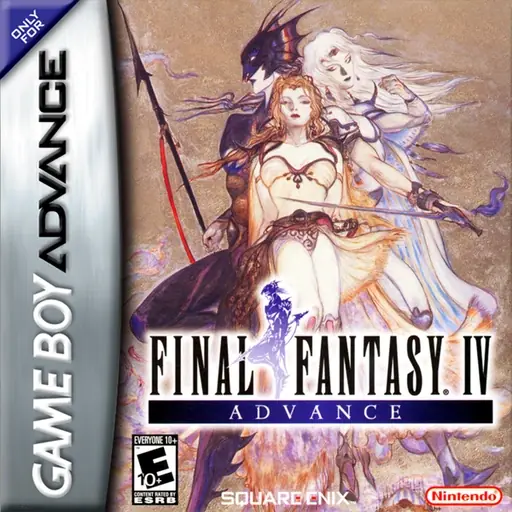
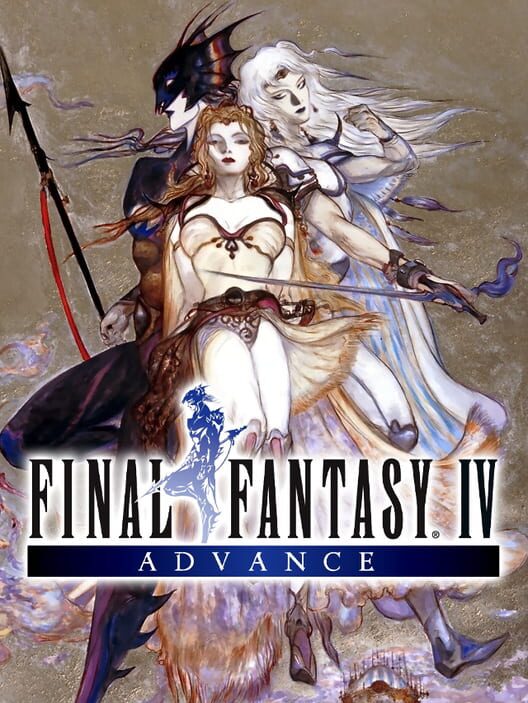
Weekly Famitsu gave Final Fantasy Collection a score of 54 out of 60 points, scored by a panel of six reviewers. The Game Boy Advance version, Final Fantasy IV Advance, was met with praise from reviewers, although a few noted the game's graphics do not hold up well to current games, especially when compared to Final Fantasy VI. Reviewers noted that some fans may still nitpick certain errors in the new translation. The Nintendo DS version of the game was praised for its visuals, gameplay changes and new cutscenes. It was a nominee for Best RPG on the Nintendo DS in IGN's 2008 video game awards.
Upon release in Japan, Final Fantasy IV sold about 200,000 cartridges on its first day, about 4.5 times less than what Final Fantasy V sold on its first day a year later, no doubt because audiences were hoping for more of the same. The Super Famicom version of Final Fantasy IV went on to sell 1.44 million copies in Japan.
The PlayStation version sold an additional 261,000 copies in Japan in 1997. By March 2003, the game, including the PlayStation and WonderSwan Color remakes, had shipped 2.16 million copies worldwide, with 1.82 million of those copies being shipped in Japan and 340,000 abroad. The Game B
Legacy
Final Fantasy IV: The After Years, the sequel to Final Fantasy IV, is set seventeen years after the events of the original. The first two chapters of the game were released in Japan in February 2008 for NTT DoCoMo FOMA 903i series phones, and for au WIN BREW series phones in spring. The game revolves around Ceodore, the son of Cecil and Rosa, with most of the original cast members returning, some of whom are featured in more prominent roles than before, among other new characters. After the mobile release, The After Years was released outside Japan, for Wii's WiiWare service. The first two chapters were released in June 2009, in North America and PAL territories, with the additional chapters being released in the following months.
A two-volume novelization of Final Fantasy IV was released in Japan on December 25, 2008.