
The articlegameplay, story, development, reception
Gameplay
There is no plot within Frontier, nor are there pre-scripted missions (as there are in the sequel First Encounters). Instead, players explore space while trading legally or illegally, carrying out missions for the military, ferrying passengers from system to system, engaging in piracy or any combination of the above. As a consequence, Frontier cannot be completed or "won", and players instead decide what to aspire to and set out to achieve it.
In Frontier, the player begins in the year 3200 and assumes the role of one of Commander Jameson's grandchildren, having inherited one hundred credits and an Eagle Long Range Fighter from him. By the game's standards, these are very modest resources, and are intended as a spur to encourage players to earn money by whatever means they feel is appropriate.
Development
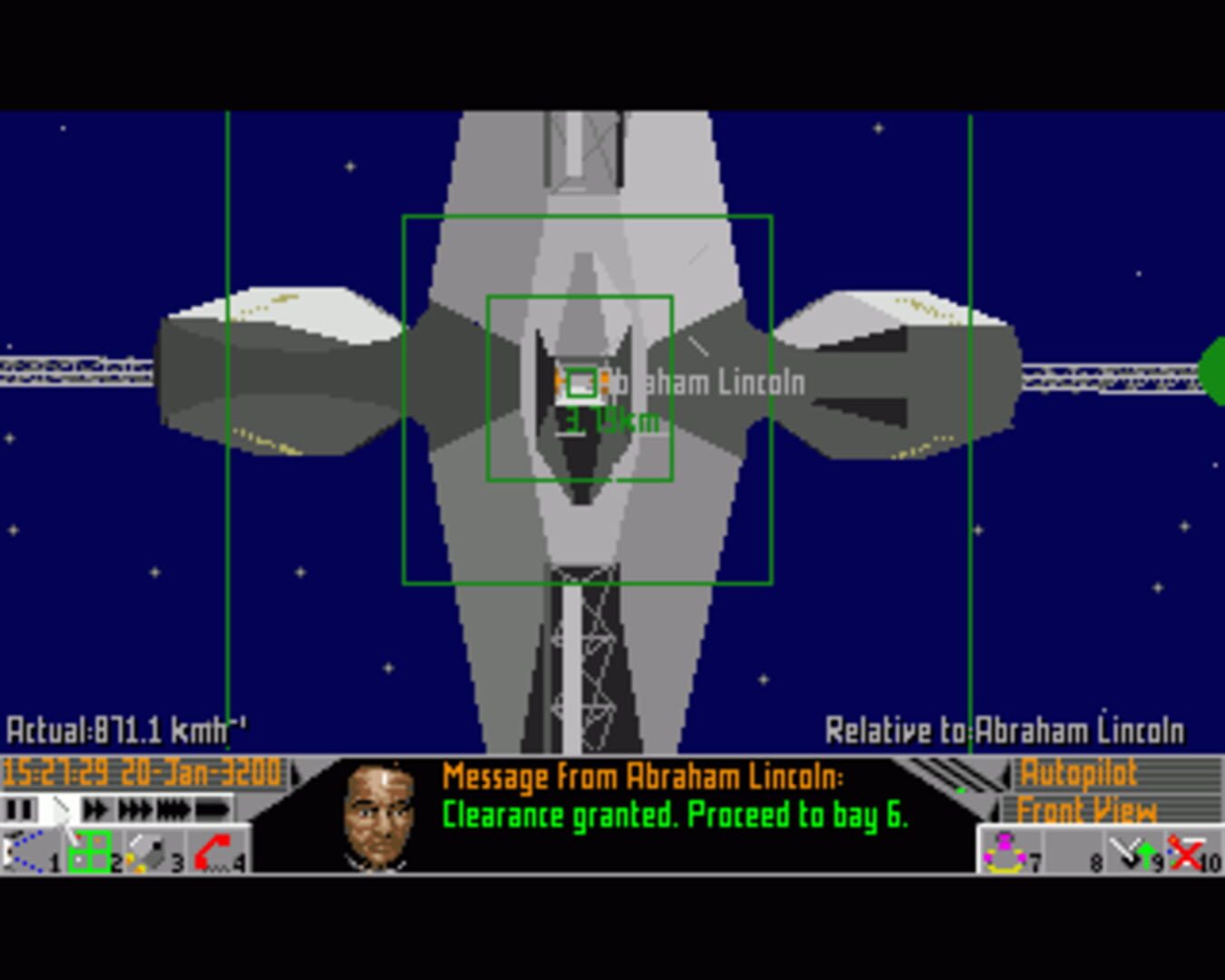
Braben originally programmed the game in 68000 assembly language. It had roughly 250,000 lines of code, which were ported from 68000 assembly to 80286 assembly by Chris Sawyer. Frontier was the only game at the time to do a palette-fit every frame to get best use of colours. It also has 1:1 scale planets and star systems.
Elite II was originally slated to be released in November 1992 for the Atari ST.
Reception
The official Frontier website puts sales at about 500,000 copies sold. Braben received royalties for 350,000 copies.
Frontier received near-universal critical acclaim by the media. Most magazines were awestruck by its sheer scale and accurate depiction of real-world physics, and gave it high ratings. Computer Gaming World in April 1994 favorably discussed the game's "ENORMOUS universe" with "many, many hours of exploratory game play ... less of a game, and more a way of life".
Legacy
Frontier was succeeded in April 1995 by the MS-DOS-only First Encounters. Amiga 1200 and CD32 versions were planned and previewed in magazines, but cancelled. A third sequel, Elite Dangerous was semi-crowdfunded through a Kickstarter campaign and released on 16 December 2014.
Circa 2005, Tom Morton reverse engineered a platform-neutral C version of Frontier, called glFrontier making the game natively and fast playable on modern OSes.


