The articlegameplay, story, development, reception
Gameplay
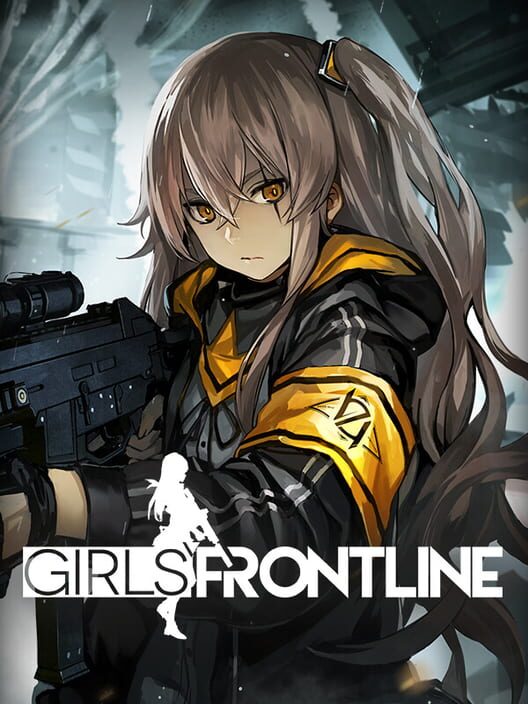
The gameplay involves the acquisition of T-Dolls through gacha game mechanics, where the amount of resources spent on construction can affect the T-Dolls acquired. T-Dolls can then be assembled into squads known as echelons and sent into battle to complete combat missions, simulations, or logistics support tasks. The T-Dolls are moe female androids, each representing a personification of real-world small arms. They are categorised into different classes such as handguns, submachine guns, assault rifles, rifles, machine guns and shotguns.
Missions consist of a turn-based strategic battlefield where the player directs echelons across a map consisting of linked nodes with the goal of fulfilling pre-determined mission requirements, such as capturing an enemy command node or rescuing hostage units. Players are able to deploy and move echelons during their turn by expending action points, which depend on the number of heliports and echelons deployed by the player. The enemy units move during enemy turns based on preset instructions. If a player's echelon meets an enemy unit on the same node, a combat sequence is initiated.
The combat is largely automated, but players can activate offensive and defensive skills specific to each T-Doll in real-time as well as move individual T-Dolls across a formation consisting of a 3×3 square grid. The position of T-Dolls within the echelon's starting formation provide stat enhancements to other T-Dolls, and the individual stats and abilities of the T-Dolls altogether determine the outcome of the battle against the enemy team. Some missions, known as night-time battles, will handicap the player with a limit to the number of turns possible as well as include a fog of war mechanic restricting visibility over the strategic map. A score-based ranking map is unlocked at the end of every major in-game event, where players can compete for rewards based on their highest score relative to other players during the event.
T-Dolls can also be acquired through random drops after battles in addition to the construction component of the game. T-Doll stats can be complemented by equipment, which are also obtained via a gacha-based construction system or from drops in night battles. Tactical fairies are non-combatant support units that can be added to echelons to provide status buffs to T-Dolls and either have in-battle abilities or skills that can affect the map; in-universe, they are described as AI-equipped tactical drones. In later stages of the game, the player will unlock Heavy Ordnance Corps (HOC) units, which are dedicated fire support units such as mortar teams and anti-tank weapons that can provide supporting fire to echelons in combat. The end-game content also introduces the Protocol Assimilation system, where enemy Sangvis Ferri units can be captured and then sent into battle.
Outside of combat, the player is required to manage their supply of in-game resources, level up facilities within the base to gain economic bonuses or access to different features, and improve the combat stats and abilities of T-Dolls through skill training and other character-raising mechanics. Cosmetic items such as T-Doll costumes and furniture used to decorate the dormitories of T-Dolls are obtained through another separate token-based gacha system. Decorating dormitories also increases a T-Dolls' affection stats through collecting hearts daily. Additionally, some cosmetic items for the commander avatar can also be bought using gems that can be purchased through real-world microtransactions or procured via daily login.
When a T-Doll's affection stat reaches 100, the player is able to give them an OATH ring, which may be purchased through gems in the shop. Their affection cap will increase to 150 and they will receive a slight stat boost.
Story
The game is set in a war-torn future where tactical dolls, more commonly known as T-Dolls, are almost exclusively used for combat in place of humans, some having been repurposed from their previous life as civilian androids. The majority of the world is uninhabitable due to contamination from the Collapse Fluid, and much of humankind is dead. In 2062, the artificial intelligence of Sangvis Ferri (SF) spontaneously rebels against humanity, with their T-Dolls and robots killing their human masters and taking over nearby areas. In response, the private military company (PMC) Griffin & Kryuger (G&K) is hired to contain and eliminate Sangvis Ferri forces; the player assumes the role of a recently promoted G&K Commander.
The base storyline focuses on the adventures of this commander and the Anti-Rain (AR) Team consisting of M4A1, ST AR-15, M4 SOPMOD II, M16A1, and RO635. Other important characters include the commander's logistics officer, Kalina, AK-12, AN-94, AK-15, RPK-16 and Angelia of Squad DEFY and Squad 404, made up of UMP45, UMP9, 416, and Gr G11.
Development
MICA Team originally started as a dōjin club consisting of three people, however during the development of Girls' Frontline, gradually expanded into a company of 117 employees. At the time when Sunborn Network Technology (what would become the parent company of MICA Team) was established, owing to the favourable social environment following Chinese premier Li Keqiang's proposal to support domestic entrepreneurship in 2015, the company secured government support and preferential policies such as tax exemptions. The game's premise was inspired by Kantai Collection, but with anthropomorphized warships replaced with that of firearms, based on the team's anticipations that similar moe anthropomorphism games would become popular in China. The difference from Kantai Collection is that rather than having combat sorties fully automated and only having the player take control over resource management and base raising, Girls' Frontline gives players greater control over the outcome of combat.
During the initial stages of the game's development, game producer Huang Chong (黄翀), more commonly known by the pseudonym Yuzhong (羽中), worked in partnership with his former university-era confidant Yao Meng (姚蒙) who was tasked with operations management while Yuzhong handled development. The game was originally planned to be published under Yao Meng's company, Array Network Technology. However, due to personal conflicts, the two parted ways, and Yao Meng would eventually start a new company, Yostar, which would later publish Azur Lane as its first major game. One major cause of the conflict arose as a result of network issues during the game's testing phase, with both parties insisting that the other side was responsible for resolving the outage; while reflecting on this era of development, Yuzhong later explained in a 2016 interview that his team only had prior experience developing dōjin games, and had limited understanding of online games and backend development. Artist Zhong Qixiang (钟祺翔), more commonly known by the pseudonym Haimao (海猫), served as the game's original art director, but later left MICA Team in 2016 to form his own game development company Hypergryph, which would eventually release Arknights as its first game.
2015 saw a large influx of animesque games in the Chinese videogame industry, with many developers and publishers becoming involved in the genre, leading to a wave of investors hoping to profit from the trend; in October 2015, investment firm Yuanqi Capital (元气资本) reached out to Sunborn and began taking an active role in the development project, hiring senior programmers to assist MICA Team and introducing Yuzhong to Chengdu Digital Sky Technology, a limited partner of the investment firm that aimed to obtain operating rights for the game. In a 2016 interview, Yao Meng explained that he was strongly critical of the collaboration with Yuanqi Capital; meanwhile, Yuzhong claimed that Array Network Technology had attempted to licence the game to Hoolai Games for its Android distribution, an allegation that Yao Meng denies. The two sides would eventually part over disagreement regarding whether to work with Digital Sky, formally terminating their contractual agreement on March 9, 2016. The game was originally planned to be released in Japan under the title Shōjo Zensen (少女前線) in Q3 2016; however, due to the disputes over distribution rights, wasn't able to release there until 2018 under the new name Dolls Frontline (ドールズフロントライン).
On March 21, 2018, following the official announcement of K7 as a new playable T-Doll for the game, South Korean players accused the character's illustrator of being a radical feminist, due to her earlier tweets discussing the novel Kim Ji-young, Born 1982. After Sunborn initially responded with a statement explaining that "there has been no evidence that any K7 illustrator belongs to a certain extreme feminist organisation", South Korean players responded negatively to the announcement, and K7's character was subsequently removed from the game by the developers.
In an August 2020 interview, Yuzhong remarked that during the 2014–2015 era of games, many players felt spending 10 to 20 minutes on daily tasks was a chore. Thus, he aims to make game time more fragmented when designing his own games. In the same interview, he also notes that each successful Chinese animesque game developer creates their own specialisation (for instance, MiHoYo focusing on action games while Papergames focuses on games directed at female audiences), and that this "niche partitioning" minimises the effect of larger game companies muscling out smaller studios that have firmly-established niches, with Sunborn's specialisation focusing on animesque strategy games.
The Chinese server shut down on December 31, 2024, due to contractual disputes with the operator Chengdu Digital Sky Technology. The other servers remain unaffected. In January 2025, MICA Team announced a new PC version of Girls' Frontline, which released on Steam on 20 May 2025, and allowed players on the Chinese server to transfer game progress from the mobile version to the Steam version. On September 4, 2025, a Steam release for the Japanese version of the game was announced, which later released on September 26, 2025.
Reception
Girls' Frontline was the 3rd top-grossing game by revenue on Google Play and the 5th top-grossing game on the Apple App Store for the South Korean region in 2017. The perception that the game doesn't force players to use pay-to-win microtransactions compared to other mobile games, along with its encouragement of player interaction during automatic battles, are often-cited reasons for the game's popularity in South Korea, where it is the first Chinese-developed game to be able to compete with domestically created rivals. According to the "2025 China videogame industry trends and future potential analysis report" released by Chinese analytics firm CNG, the game franchise has over 30 million players worldwide.
Prior to 2010, games targeting "otaku" players in South Korea were largely absent; while the introduction of Kantai Collection in Japan during 2013 significantly influenced the trajectory of otaku-focused games there, Kantai Collection had very little impact in South Korea, presumably due to it not having an official release in the country, likely out of concern of the potential for controversy over the game's theme of World War II Imperial Japanese Navy warships. South Korean games media ThisIsGame argues that it was Girls' Frontline which filled the void left by Kantai Collection's absence in South Korea, and that gameplay designs originally introduced by Kantai Collection such as its monetization system and character construction mechanic were well received by Korean players of Girls' Frontline.
Hong Kong Inmedia describes Girls' Frontline as more like a novel that the player needs to clear missions for in order to continue reading, rather than a mobile game, noting that the ultimate focus of the game revolves around the narrative involving the game's characters, and that the storyline serves as the game's most defining strength.
In a 2020 interview between game producer Yuzhong and Youxi Ribao, it was revealed that towards the later years of the game, revenue between the domestic Chinese server and the global servers eventually reached a 1:1 ratio, and Yuzhong attributes this overseas success to a strong gun culture in the United States, in addition to the existence of compulsory national service in South Korea.