Ludography
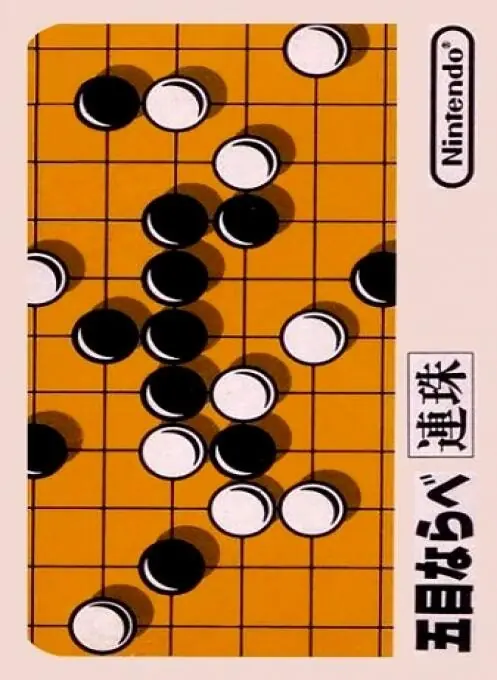
Gomoku Narabe Renju cover

1983 · Nintendo · Board game

Gomoku Narabe Renju

Nintendo exclusive

A board game simulation for the Famicom. The goal is to line up five pieces in a row.

Gomoku Narabe Renju is a video game simulation of a traditional Eastern board game that uses the board and pieces from the popular board game Go. It plays a lot like the American board game Connect Four, in which the goal is to line up a series of five tiles horizontally, vertically or diagonally before the other player can do the same. Two players take it in turns to place a single Go tile on the board, attempting to craft their own lines while strategically placing tiles that blocks the opponent from finishing theirs.

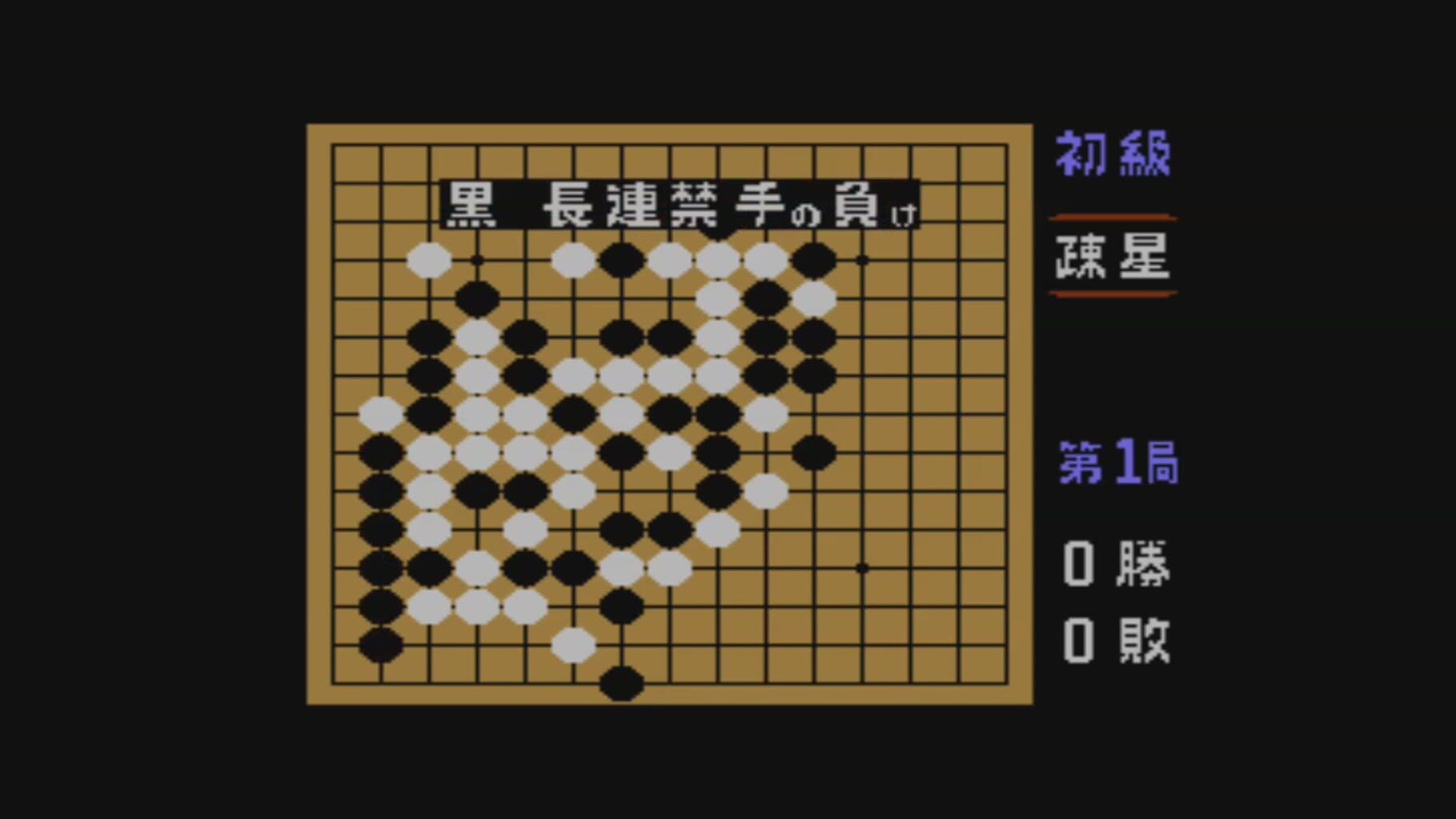
While the normal board game is simply referred to as "Gomoku Narabe" (Five Pieces in a Row, occasionally translated as Gobang), the Renju modifier is an additional rule that makes it harder for the player with the black pieces to win. Because the black player always begins each game (like how the white player always begins each game of Chess), this additional rule is thought to even the playing field. The rule is that the black player will lose if they build a line of six or more pieces: this counts as going "overlong" and counts as a loss.

Gomoku Narabe Renju is the fourth video game ever released on the Famicom, and the first original game produced for the system (the previous three - Donkey Kong, Donkey Kong Jr. and Popeye - were all ports of arcade games). It was released the same day (August 27th, 1983) as the Famicom version of Mahjong, another board game adaptation.

Also known as
Gomoku Narabe
Released
27 August 1983
Platforms
NESWiiWii UFamily Computer Disk System
Genres
Board game
Developers
NintendoNintendo R&D?
Publishers
Nintendo
Modes
MultiplayerSingle-player
Perspective
Bird view / Isometric
Age ratings
CERO A
Languages
Japanese

About

The Nintendo Entertainment System has a library of 1370 officially licensed games released during their lifespans, plus 7 official multicarts and 2 championship cartridges. Of these, 672 were released exclusively in Japan, 187 were released exclusively in North America, and 19 were released exclusively in Phase Alternating Line (PAL) countries. Worldwide, 521 games were released.

Its launch games for the Famicom were Donkey Kong, Donkey Kong Jr., and Popeye. Only first-party titles were available upon launch, but Nintendo started a licensing program the following year that allowed third-party companies such as Namco, Hudson Soft, Taito, Konami, Bandai, and Capcom to create titles and produce their own cartridges for the Famicom in exchange for royalty payments; Nintendo later revised the program to mandate itself as the manufacturer of all cartridges while carrying it with the console outside Japan. The launch games for North America were: 10-Yard Fight, Baseball, Clu Clu Land, Duck Hunt, Excitebike, Golf, Gyromite, Hogan's Alley, Ice Climber, Kung Fu, Pinball, Soccer, Stack-Up, Super Mario Bros., Tennis, Wild Gunman, and Wrecking Crew. The final licensed game released is the PAL-exclusive The Lion King on May 25, 1995.

As was typical for consoles of its era, games for the Famicom were primarily distributed on ROM cartridges, known in Japan as "Cassettes" (カセット, Kasetto); each cartridge features 60 pins, with two pins reserved for external sound chips. Famicom cassettes were intended to be the same size as Compact Cassettes in order to fit into their same standard plastic boxes; however, Nintendo engineers were unable to make the cartridges small enough. 7 in) wide. Referred to as "Game Paks", each NES cartridge sports an increased total of 72 pins, with two pins reserved for the CIC lockout chip and ten pins reserved for connections with the console's bottom expansion port.

However, the two pins for external sound were removed and relocated to the expansion port instead; any Famicom game using them would have its soundtrack recomposed for NES cartridge releases. Though the extra space of the NES cartridge was not utilized by most games, it enabled the inclusion of additional hardware expansions; in contrast, some copies of early NES games like Gyromite merely paired the printed circuit board of the game's Famicom version with an adapter to convert between the different pinouts. Cartridges have storage sizes ranging from 16 KB to 1 MB (8 Megabits), with 128 to 384 KB (1 to 3 Megabit) cartridges being the most commonly used.

Nintendo later released the Famicom Disk System (FDS) in Japan in 1986, intending to have developers distribute all future games on proprietary 2.8-inch (7.1 cm) floppy disks to avoid the cost and size limitations of cartridges; however, developers began re-releasing FDS games on cartridges as advancements in cartridge technology made them feasible again with the limitations of the floppy disks and their ecosystem apparent, pulling support for the FDS by the 1990s.

Keywords

  • digital distribution
  • go
  • nintendo switch online
  • wii virtual console
  • fan translation - english
  • wii u virtual console

Media

Releases by platformdates and regions as published

Releases by platform
PlatformReleasedRegions
NES27 August 1983Japan
Wii2 December 2006Japan
Wii U29 October 2014Japan
Family Computer Disk SystemCancelledUnreleased

Title IDsone per regional release, with its latest update

Title ids and disc serials by release
PlatformTitle IDRegionLatest update
NESHVC-GOJapan—

Box artone per regional release we hold art for
Games like this

Collections3 collections

Platform libraries

Publishers

Description adapted from its source, CC BY-SA 4.0.