
The articlegameplay, story, development, reception
Gameplay
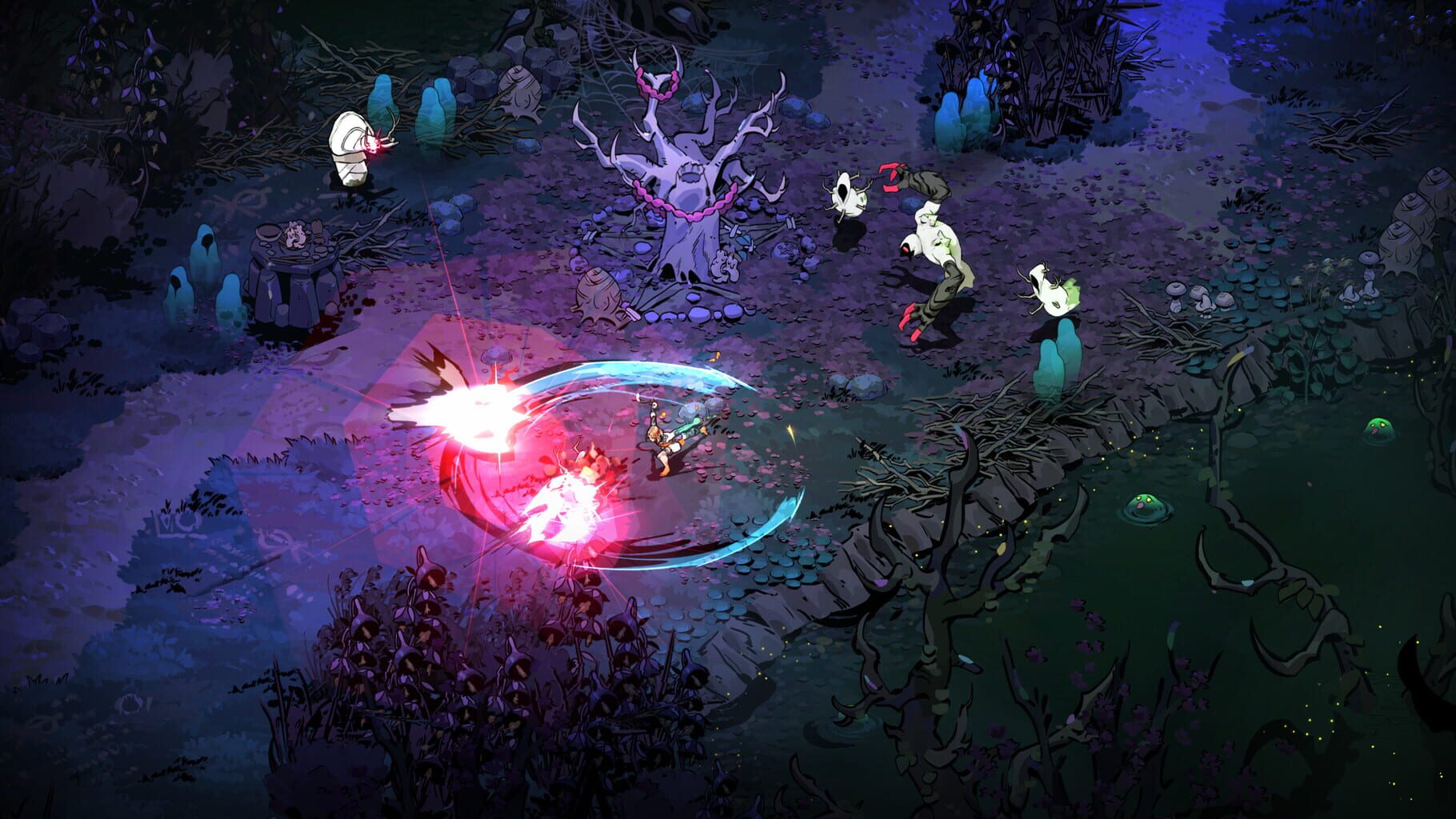
Like the first game, Hades II is a roguelike dungeon crawler game. The player controls Melinoë, Princess of the Underworld and sister to the protagonist of the first game, Zagreus. Alongside her mentor Hecate, she aims to defeat Chronos, the titan of time, who returned to enact revenge on all gods and mortals who opposed him in the past and subsequently imprisons her family. Along her quest, she is supported by the Olympians, who grant her Boons as she battles her way to Tartarus and subsequently Mount Olympus. She is also aided by mythological figures such as Arachne, Narcissus, Echo, Medea, Circe and Icarus.
Unlike the original game, which had a single path from Tartarus to the surface across four different biomes, the sequel introduces two different paths, an "Underworld" path divided between Erebus, Oceanus, the Fields of Mourning, and Tartarus, and a "Surface" path between the City of Ephyra, the Rift of Thessaly, Mount Olympus, and the Summit. Each new region is unlocked upon clearing the previous.
Story
Chronos, the Titan of Time, returns after being overthrown by his children ages ago. He takes over the Underworld and imprisons Hades, Persephone and Zagreus while Hecate escapes with Melinoë, Zagreus' newborn baby sister, to the Crossroads in Erebus. She raises Melinoë and trains her so that she would one day exact revenge on Chronos. After her training is complete, Melinoë descends to Tartarus.
Aided by blessings from the Gods of Olympus, Melinoë eventually defeats Chronos. However, Chronos employs his time powers and comes back to life, despite being repeatedly slain by Melinoë.
Development
Hades, which was released in early access in 2018 and had its full release in 2020, was Supergiant's most successful game by that point, but lead writer Greg Kasavin said the team was undecided as to if the game would receive a sequel. In alignment with Supergiant's development process, after completing a game, the team determines what potential next project excited them the most; it was realized that many on the team felt there were still more stories and mythological characters they could explore that were not included in Hades, which made a sequel the preferred option. However, as this would also be the studio's first sequel, they were aware they wanted to expand on Hades in meaningful ways without losing the core of the original game. Studio head Amir Rao cited examples of Portal 2 and Diablo II as successful sequels they wanted to follow. Work on the sequel began near the start of 2021.
Kasavin said that they knew early on that they did not want to return to Zagreus as the main character. He began researching more into Greek mythology, coming across the Orphic Hymns, one which described Melinoë as the daughter of Hades and Persephone but otherwise had little else written about her. Besides the familial connection to Zagreus, Supergiant had not mentioned her at all within Hades, allowing them to write a fresh story. Melinoë was also tied to the occult side of Greek mythology, allowing them to introduce magic as a gameplay mechanic as well as the figure of Hecate, Melinoë's mentor.
Reception
==== Pre-release ====
When comparing a technical test to the first game, Elijah Gonzalez of Paste commented that Hades' "blend of convincing characterization, witty dialogue, and excellent performances is alive and well here. I loved what I saw of Hades II's gameplay upgrades, but what excites me most is how it builds on this world and its characters". Gonzalez opined that while Melinoë has more initial "clarity of purpose" than Zagreus, she's also "dragged down by self-doubt and the pressures of being a savior, making her a similarly complicated and engrossing protagonist". During the technical test, Kotaku praised the sex appeal of the game's character designs, writing that "sexiness is woven into their personalities."


