
The articlegameplay, story, development, reception
Gameplay
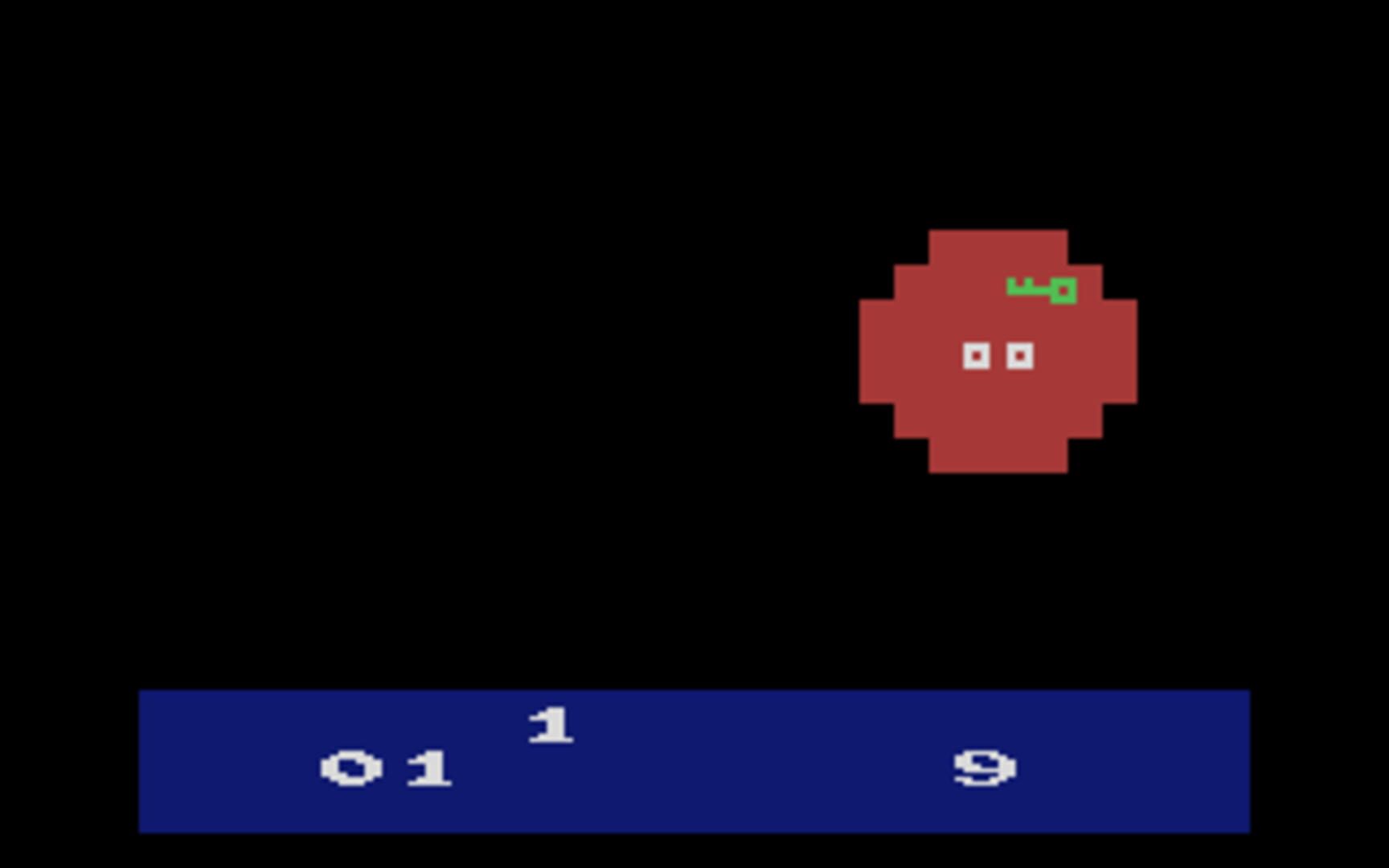
Haunted House is a single-player adventure game in which the player's goal is to recover three pieces of a magic urn that are randomly placed throughout 24 rooms of a mansion and return them to the entrance. The items and some areas within the game are revealed to player via matches which the player can ignite and blow out. The magazine How to Win at Video Games described Haunted House as a "storyline" game, comparing its gameplay as being similar to that of Atari's previous games Superman (1979) and Adventure (1980). Tim Onosko of The Capital Times also compared Haunted House to the two previous games, describing it as an adventure game that requires players to learn rules and requirements and gathering items to reach a goal as they play.
The player has nine lives to attempt this task. The player can only collect one object at a time, and can swap between two objects by touching another one. The mansion is a set of 24 rooms between four floors. The player can traverse through different doors that ascend or descend a level, but none permit the player to go in both directions. Throughout the mansion, the player may encounter such enemies as vampire bats, tarantulas and a ghost, which cause the player to lose a life upon contact.
Development
Haunted House was developed by Atari. It was programmed by James Andreasen, a graduate of the University of Colorado in Boulder who worked as a software engineer at MSI and Atari. Working titles for the game included Mystery Mansion and Graves Manor.
The game was developed for the company's Atari 2600 video game system, then named the Atari Video Computer System. For sound and graphics, the Atari 2600 had its Television Interface Adaptor (TIA) which authors Nick Montfort and Ian Bogost described as a programming challenge, allowing for only a relatively small number of unique features. The Atari 2600 did not allow for such services such as graphic rendering, forcing programmers to draw the entirety of each frame of the game's display. Like other games such as Raiders of the Lost Ark (1982), the environments in Haunted House are hard-designed and loaded into the game, and are small compared to the other games such as Pitfall!
Reception
Cashbox reported the game as one of the top selling video games by July 1982.
Reviews commented on the game's similarity to other titles, graphics and sound, and its difficulty. Arnie Katz and Bill Kunkel of Electronic Games found the game similar to Atari's previous game Adventure (1980). The reviewers commented that it was "much more atmospheric" than Adventure, and found it to be "one of the most intriguing and novel video game cartridges to appear in some time" calling its audio and visuals excellent, while finding the scoring system a bit difficult to parse. Another review from Electronic Games, from the "1983 Software Encyclopedia" issue, gave the game a seven out of ten rating, again finding the audio and visuals as excellent while stating that the game gave the player "the spine-tingling sensation that something spooky is always about to happen".
Legacy
Some video game critics, such as Buecheler of GameSpy and Skyler Miller of AllGame, have cited the game as being one of the earliest in the survival horror genre. Buecheler specifically noted the elements of the genre with its creepy themes, limited item management, and a variety of monsters. In her writings on the genre, Laurie N. Taylor traced the origins of the genre to Alone in the Dark (1992) and that the genre was expanded on by Resident Evil (1996) while stating that survival horror was "Like most genre definitions [...]
a loose category and one unevenly applied by players, journalists, designers and scholars". Matthew Wiese in 2009 similarly said that labeling all horror-themed games as survival horror was problematic due to the term not existing prior to the release of Resident Evil (1996). In Horror Games Magazine (2003), Vim Sical and Remi Delekta found that horror required mise-en-scène, which required visual technical capabilities. Bernard Perron, in his book The World of Scary Video Games, agreed with this statement, stating that Haunted House could not have in mind the mise-en-scène of fear that would become possible in later decades and chose to regard games like Haunted House for "what they were".


