The articlegameplay, story, development, reception
Gameplay
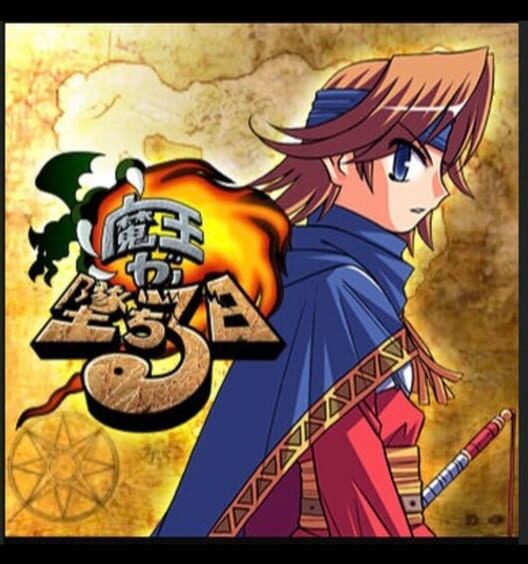
Hero Must Die is a role-playing video game which puts players into the role of an unnamed hero. The game world is navigated through both an overworld map, and town and dungeon environments seen from a side-scrolling perspective. Set within a five-day time limit, which equates to eight to ten hours in realtime, the hero travels through the world after defeating the "final boss", completing quests for various people and races within the world. Battles are initiated upon touching an enemy icon, and battles take place from an angled, third-person view. The battle system uses a turn-based system, where each member of the party is given set commands: they can attack with their weapon, use magic, defend against attacks, or flee the battle.
As time progresses in-game, the hero's stats gradually decrease until he "dies" at the end of the game, and some effects include forgetting abilities. Companions met by the hero during the game aid him in battle during this period. Actions taken by the player, such as the amount of time the hero is active, can cause his stats to decrease faster than normal. The remake carries over the same basic elements as the original, except with some additional elements. All environments and characters are rendered in 3D, and at the end of each five day cycle, the player can save their progress and transfer data across to a new game.
Story
The story of Hero Must Die takes place after the unnamed hero defeats the dark beast Satan. While victorious, the hero is killed in battle. A benevolent angel takes pity on him and decides to grant him five more days of life, during which time he can explore the land he helped liberate and help sort out the problems of others that still linger in the aftermath of Satan's defeat: these include former companions and others who helped him on his quest. At the end of the five days, the hero dies and his soul is taken by the angel to heaven.
Depending on the players actions, differing numbers of people attend the hero's funeral, offering varying elegies. A different heroine with which the hero was intimate also attends to mourn his passing.
Development
Hero Must Die was developed by game developer Pyramid. The staff included designer and story writer Shoji Masuda, producers Kyoko Kawakami and Jun Meishi, the latter of whom worked on Patapon and a video game based on Record of Lodoss War; and production manager Junichi Kashiwagi, who worked on Chaos Seed. The game's production was handled and augmented by G-Mode. The earliest concept for Hero Must Die was created in 1999, while he was working on Ore no Shikabane wo Koete Yuke.
Masuda drew from own experiences of living through his father's deterioration after receiving surgery for cirrhosis in 1995: despite the surgery being successful, Masuda's father was given ten years to live. During this period, Masuda watched his father slowly become weaker, and at the funeral in 2005 he realized that he had not had the time he wanted with his father due to various circumstances. These experiences formed the core concepts for Hero Must Die: its main theme was choosing what to do within a limited amount of time. According to Masuda, while this setup had been done in film and television, he had yet to see it done in video games.
The playtime was intended to be short, approximately six to eight hours, so people could play it during commutes across a week. Another element was the hero giving gifts to people in need to his own detriment, a theme compared by Masuda to "The Happy Prince" by Oscar Wilde. Incorporating this theme into the entire work proved taxing for him. His proposal was initially rejected by multiple developers, but after putting it up on his web page as a kind of joke, his proposal was seen and accepted by Meishi and began production.
Mobile phones were chosen as the platform due to budgetary issues and the projected production period. According to Masuda, many of the game's more distinguished staff were suggested by Pyramid.
The characters were designed by Shunya Yamashita, whose previous work included character designs for Final Fantasy X and Valkyrie Profile 2: Silmeria. With some exceptions, Yamashita was not given specific guidelines for his character designs. During his work, he received numerous requests for "corrections" to his designs, increasing his workload. The main protagonists took the longest to design, as Yamashita wanted players to empathize with his situation.
The logo was designed by Yuji Ogikubo. The music was composed by Kenji Ito, whose previous work included scoring for games in the Mana and SaGa series. While he had arranged some of his previous pieces for mobile devices as ringtones, the majority of his recent work to that point was for the PlayStation 2 and Nintendo DS. Hero Must Die was the first time he had written an original score for a mobile title.
A priority was keeping the music of high quality while taking the differing specifications of mobile phones into account. He received a considerable amount of help from G-Mode staff in this respect.
Reception
In a review of the original mobile version, Japanese gaming site Game Watch Impress was overall impressed: the reviewer praised its unique premise, its gameplay, and the variety of events present. Criticism was laid towards elements of its time system and the fact that there was no impact on future playthroughs based on players' actions. RPGamer, in a piece about the remake's announcement, said that the game had "incredible" replay value and positively said Hero Must Die was an "odd enough duck". In its review of the Vita version, Famitsu praised the game's mechanics, favorably comparing it to Masuda's work on Linda Cube and Oreshika, and generally enjoyed the replay value.
Ito's music was also cited as a "pleasant" addition. Criticism was given to the inability to speed up dialogue and battle times, elements of trial and error in early stages, and some of the choices given to the player being too harsh.