
The articlegameplay, story, development, reception
Gameplay
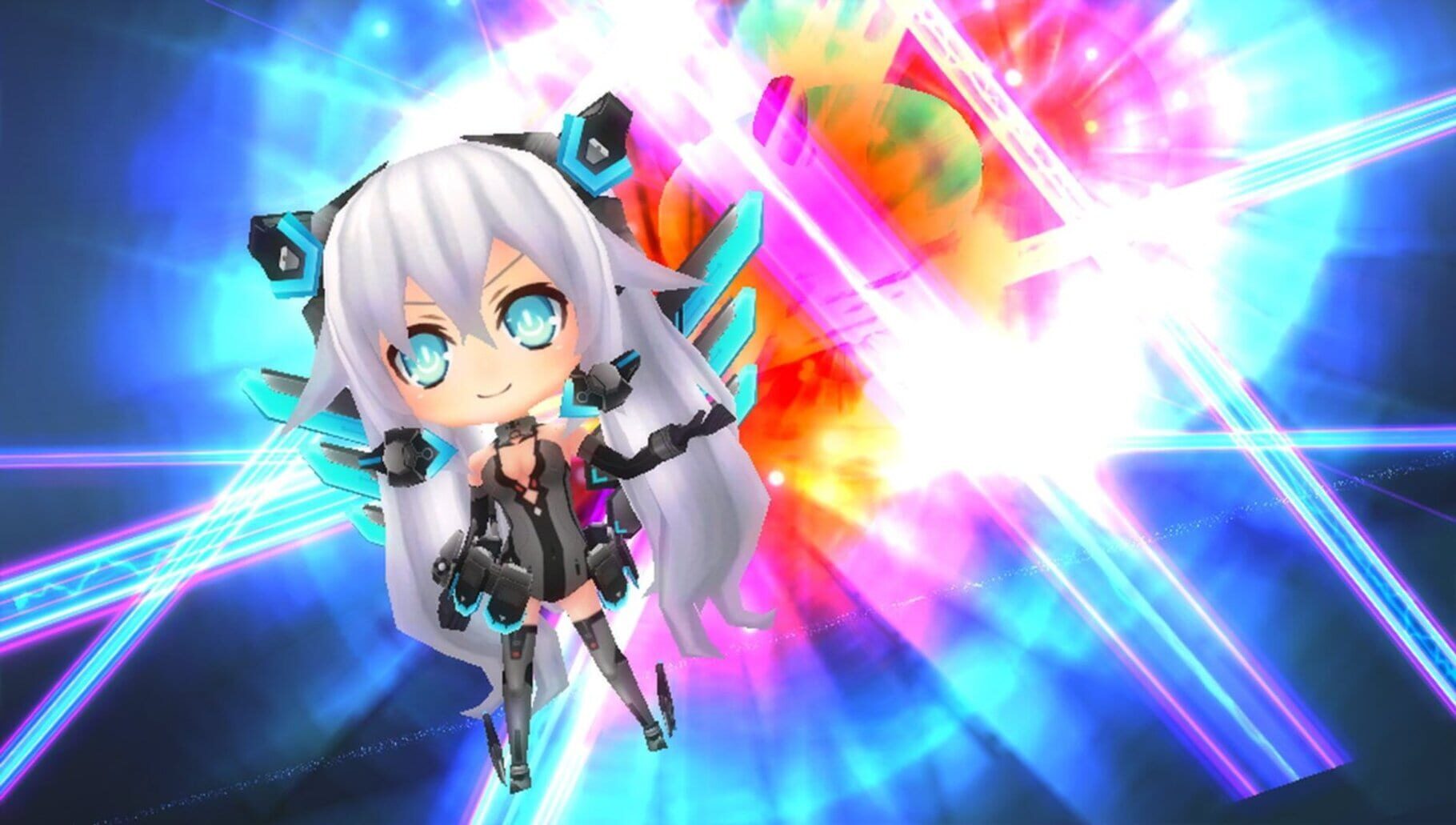
The game features chibi versions of the original Hyperdimension Neptunia characters which battle against enemies on a tactical grid map. The gameplay is turn-based, and map elevation has an effect on characters' abilities and mobility; certain units are more capable of climbing to higher terrain than others, and units take damage from falling. The field maps feature various gimmicks, including rail cars, flaming pits, logs, artillery batteries, laser beams and moving platforms. Each of the playable characters move by traveling along each square of the map grid, however certain enemies are able to take up more than one square on the map grid.
Prior to beginning a mission, the player is able to select characters as participating units, equip them, and designate a mission leader. Akin to various other tactical RPG games, the battle system is separated into player and enemy phases, where each side takes turns in moving characters and executing commands. There is a new mechanic known as "Lily Boost", which involves adjacent units developing special bonds that grant special skills and abilities such as goddess transformations; kissing animations are displayed upon activation. During battle, characters can become affected by a series of status ailments which alter the state of battle, which include zombification, cowardice, turning into tofu, meganekko, becoming 8-bit, and infatuation.
Story
Unlike previous Hyperdimension Neptunia games, Gekishin Black Heart is not set within the world of Gamindustri (ゲイムギョウ界, Geimugyōkai), but instead within a similar but separate world known as Gamarket (ゲイムシジョウ界, Geimushijōkai). The goddesses of each of the four nations battle against one another for hegemony over the world day by day, however just as Noire is one step away from complete domination, the goddesses' powers are robbed by an unknown force. In order to save the world from destruction, the four goddesses cooperate with one another with the aim of unifying Gamarket.
The game features the four main characters from previous games, in addition to a series of 18 new playable characters, each a parody (or an apotheosis) representing a game franchise, genre, or game developer.
Development
The project was initially announced during the Game no Dengeki Kanshasai 2013 festival. The game is produced by series producer Naoko Mizuno, producer Higashiro, and development producer Hikaru Yasui. The opening theme song is "Jet Black Sustain" (漆黒のサステイン, Shikkoku no sasutein) performed by Asami Imai and produced by 5pb., and the ending song is "Hug" by Marina.
Reception
The Vita version received positive reviews in Japan. Famitsu gave it a review score of one seven and three eights for a total of 31 out of 40. Said Vita version sold 28,397 physical retail copies within the first week of release in Japan, placing fourth place amongst the Japanese software sales charts for that particular week.
In the West, the game received "mixed or average reviews" on both platforms according to the review aggregation website Metacritic. Hardcore Gamer said that the Vita version "offers great gameplay with the unfortunate caveat that you’ll need to waste more time than expected waiting on enemies to enjoy it."


