
The articlegameplay, story, development, reception
Gameplay
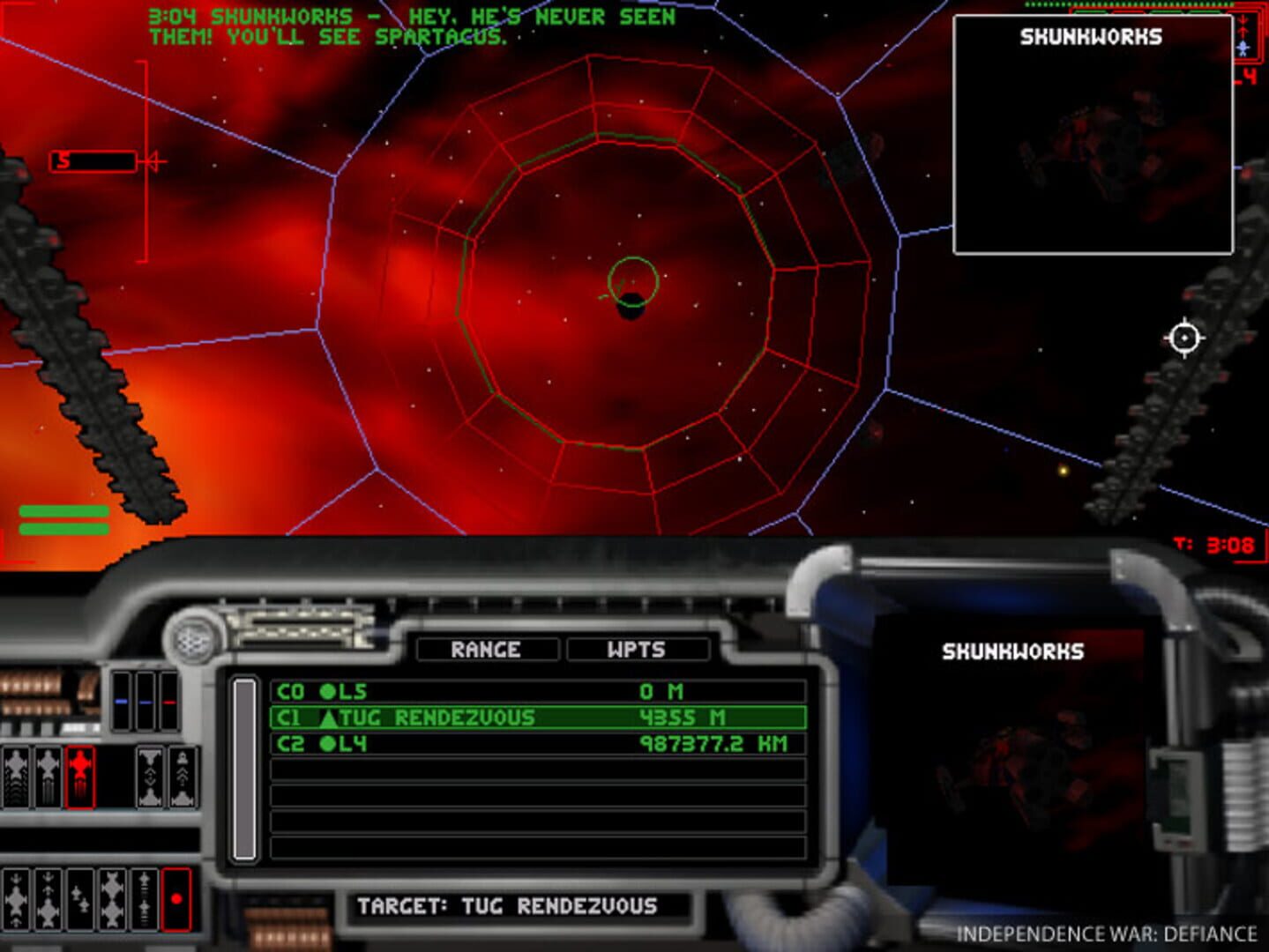
As the captain of Dreadnaught, the player could assume the command of any of the four workstations on the command bridge. From the command station, the player received their mission briefings and could sometimes control other ships through a remote link. The station also had access to an accurate star map. The ship was normally flown from the navigation station.
From the weapons station, the player had an outside view of Dreadnaught's wire frame model. Following a locked target, the angle of view could rotate 360 degrees on all axes. This workstation also had a ripple fire mode which allowed attacking quickly a large group of enemies. The fourth station engineering was for controlling the repairs when the ship was damaged by weapons or a collision with another object.
Development
The development of I-War was led by Particle Systems co-founders Glyn Williams (whose previous games include Warhead for Amiga and Atari ST) and Michael Powell (whose previous games include Subwar 2050 for MS-DOS). With Williams and Powell included, Independence War had a development team of six men, which was the full personnel of Particle Systems at the time.
The games polygon models were created using BRender. The team wrote their own low-level routines for texturing.
Reception
The game won Computer Games Strategy Plus's 1998 "Sci-Fi Simulation of the Year" award. The editors wrote, "With mission-driven play, good graphics, and detailed space combat action, this European import turned out to be quite a hit on this side of the Atlantic."
The Academy of Interactive Arts & Sciences nominated I-War for "PC Simulation Game of the Year" at the 2nd Annual Interactive Achievement Awards, although it lost to Need for Speed III: Hot Pursuit.


