
The articlegameplay, story, development, reception
Gameplay
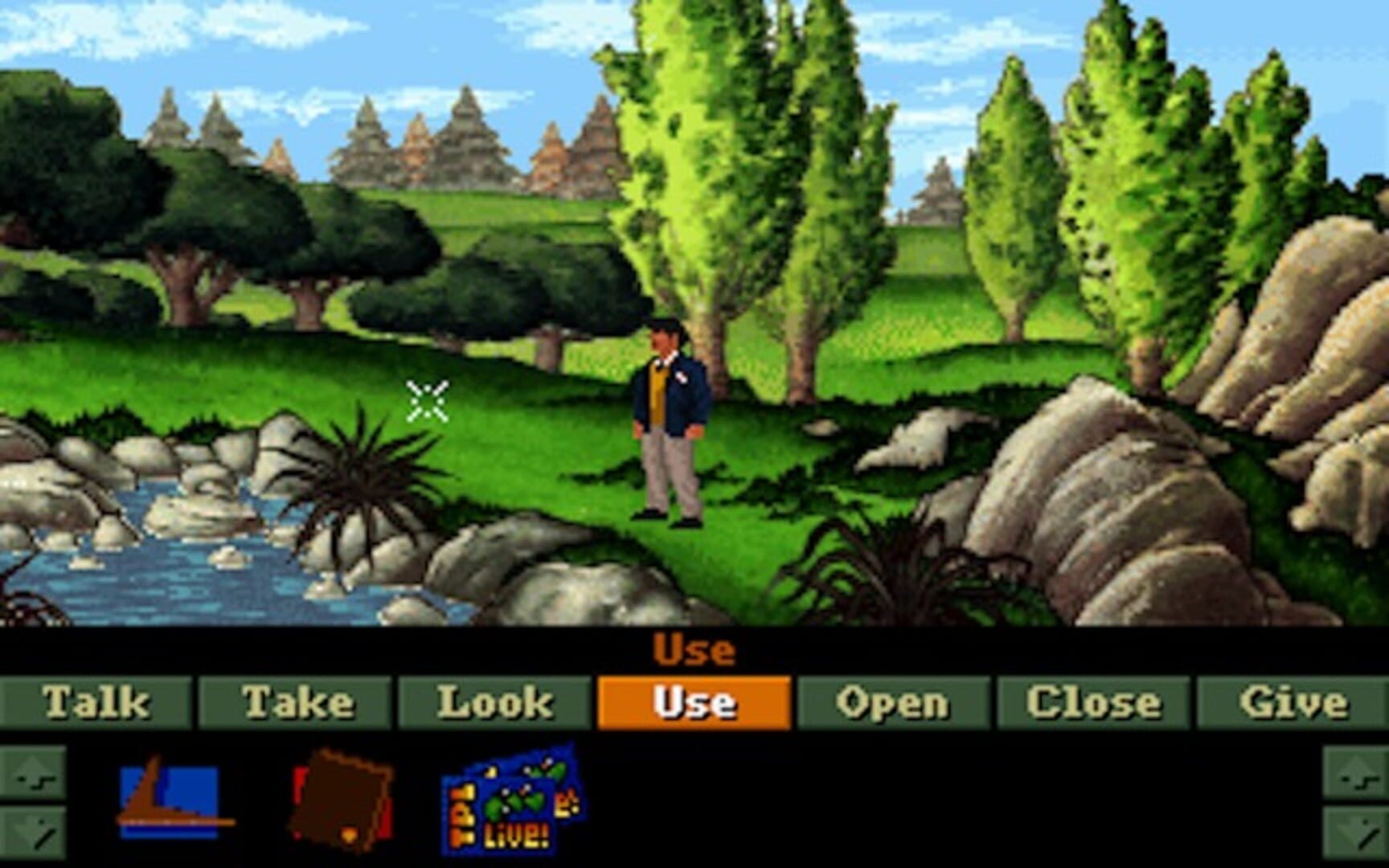
Igor: Objective Uikokahonia is a graphic adventure game controlled with a point-and-click interface, in a style that has been compared to LucasArts adventure games. Gameplay involves navigating the game world, conversing with non-player characters, solving puzzles and gathering and using items. The player interacts via a mouse by selecting actions, such as "Look" or "Take", from a list in the lower part of the screen. These actions may then be performed on hot spots in the game world.
Below the action list is the player's inventory, which stores items for later use. During conversations with other characters, the inventory is replaced by dialogue options. Igor does not contain character death or dead-end states: the player may attempt any action without risking a game over.
Development
Igor: Objective Uikokahonia originated in early 1993 when Ramón Hernáez, a Spanish programmer of business software, became interested in developing his own graphic adventure game. He was joined on the project by his friends Rafael Latiegui, Felipe Gómez Pinilla and Miguel Angel Ramos around the middle of that year. The team's members had been students together in college, and Hernáez and Pinilla—another business software programmer—were childhood friends. According to Latiegui, the team felt that it could create an adventure title of equal quality to others on the market, and intended Igor "[f]rom the very beginning" as a commercial release rather than an amateur project.
The four were encouraged by their belief that "many published things did not have great quality", as Latiegui noted. Everyone on the team was a fan of adventure games, and Hernáez cited Igor's historic significance as further inspiration to pursue the idea. While Spanish developers like Aventuras AD had released interactive fiction games during the 1980s, including those with graphics, a graphic adventure game like Igor had never been made in Spain.
Reception
According to HobbyConsolas, Igor: Objective Uikokahonia was well-received by adventure game players but did not have the sales success as Pendulo Studios expected. In contrast, Rafael Latiegui called it successful enough to inspire the team to pursue game development as a profession. He said in 1998 that the game ultimately "served more than anything to make us known".
Igor's visuals received praise from both Micromanía and PC Manía, while Antonio J. Martinez of Super PC found the characters, screen scrolling and background artwork "quite well achieved". Writers from all three publications cited the soundtrack as a high point. Martinez summarized that "despite its simplicity, there is no doubt that Igor is a good national premiere for this style of game".
Legacy
Shortly after the release of Igor: Objective Uikokahonia, PC Manía cited the game and its developer as part of a positive trend in Spanish games, which saw "more and more companies join[ing] the slow national scene". As the first graphic adventure game developed in Spain, Igor "encouraged other [domestic] companies to devote themselves" to the genre, according to GameLive PC. Alejando Alcolea of HobbyConsolas retrospectively highlighted it as one of the two most important domestic games, alongside Pyro Studios' Commandos: Behind Enemy Lines, to be released in the 1990s after the Spanish game crash. In 2015, academic researchers Manuel Garin and Víctor Manuel Martínez called Igor "the first great achievement of the genre fully produced in Spain" and listed Pendulo as one of the "Five Significant Exceptions within the Decline of the 1990s", along with firms such as Pyro and Gaelco.
With Igor as its first game, Pendulo proceeded to become a major force in Spanish game development. While Spanish studios often worked in multiple genres, the team chose to remain fully focused on adventure games. Vandal's Julio Gómez later highlighted Igor as the beginning of Spain's "most important" adventure game developer; writers for publications such as PC Manía and El Mundo declared Pendulo the Spanish equivalent to LucasArts. Manuel and Martínez characterized Pendulo as one of the companies that "not only defined indigenous production in the 1990s but also shaped its future in the decades that followed".


