The articlegameplay, story, development, reception
Story
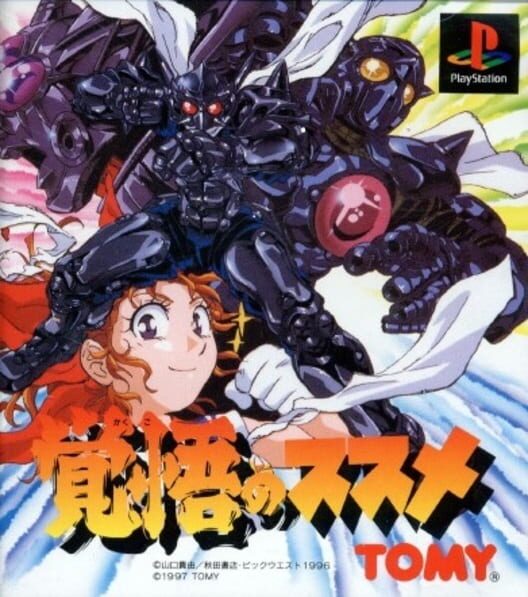
Kakugo and Harara are brothers trained by their father, Oboro, to slay monsters that have begun roaming the streets of a post-apocalyptic, 21st century Tokyo following a devastatingly, powerful earthquake. To aid them in their quest, Oboro entrusts his two sons with Fortified Armor Shells (強化外骨格, Kyōkagaikokkaku), cyborg exoskeletons forged using the souls of deceased warriors by their grandfather, a former scientist of the Imperial Japanese Army during World War II, Shiro Hagakure. However, Harara becomes possessed by a mysterious evil from deep within his armor, mutating his body as well as filling him with a desire to destroy all of mankind to help cleanse the Earth of contamination. Some years later, Kakugo moves to "Reverse Cross High School", located in one of the ruined districts of Tokyo near the castle from which Harara commands their demon army. It is now up to Kakugo to defeat his evil sibling and put a stop to their wicked legions.
Reception
Due to the use of gratuitous violence and repulsive imagery, critical reception to Apocalypse Zero in the west has been largely negative. John Oppliger of AnimeNation called the Apocalypse Zero OVA "the most viscerally violent and gruesome anime" he has seen and "arguably the most grotesque anime ever made". Animerica called Apocalypse Zero the "Best Anime Splattervision" in its "Best of the Best" awards. "When a 45-minute video features a scene where someone's face is sucked off, and that's not even the most shocking thing in the video," the magazine proclaimed, "you know you'll be getting your horror-show money's worth."
Despite this, the manga was well received and popular in Japan. Apocalypse Zero managed to be one of the finalists for the 1997 Tezuka Osamu Cultural Prize, losing out to Doraemon by Fujiko Fujio.
The OVA's entry in The Encyclopedia of Science Fiction notes that the OVA "focuses on the grotesque imagery that dominates the manga, with over-the-top monsters –often sexualized, though in very different ways [...] – and considerable gore. Nonetheless, thanks to the cartoony nature of the monsters and violence, the horror is often overwhelmed by the absurdity. Providing the viewer leaves their finer sensibilities at the door, this is an enjoyable OVA series.". The reviewer also expressed regret that the unanimated parts include an interesting the subplot which explained how the powered armor used by some characters was made through ruthless sacrifices of civilians in a project overseen by Imperial Japan's military, with the participation of Shiro Ishii, the director of the infamous Unit 731.