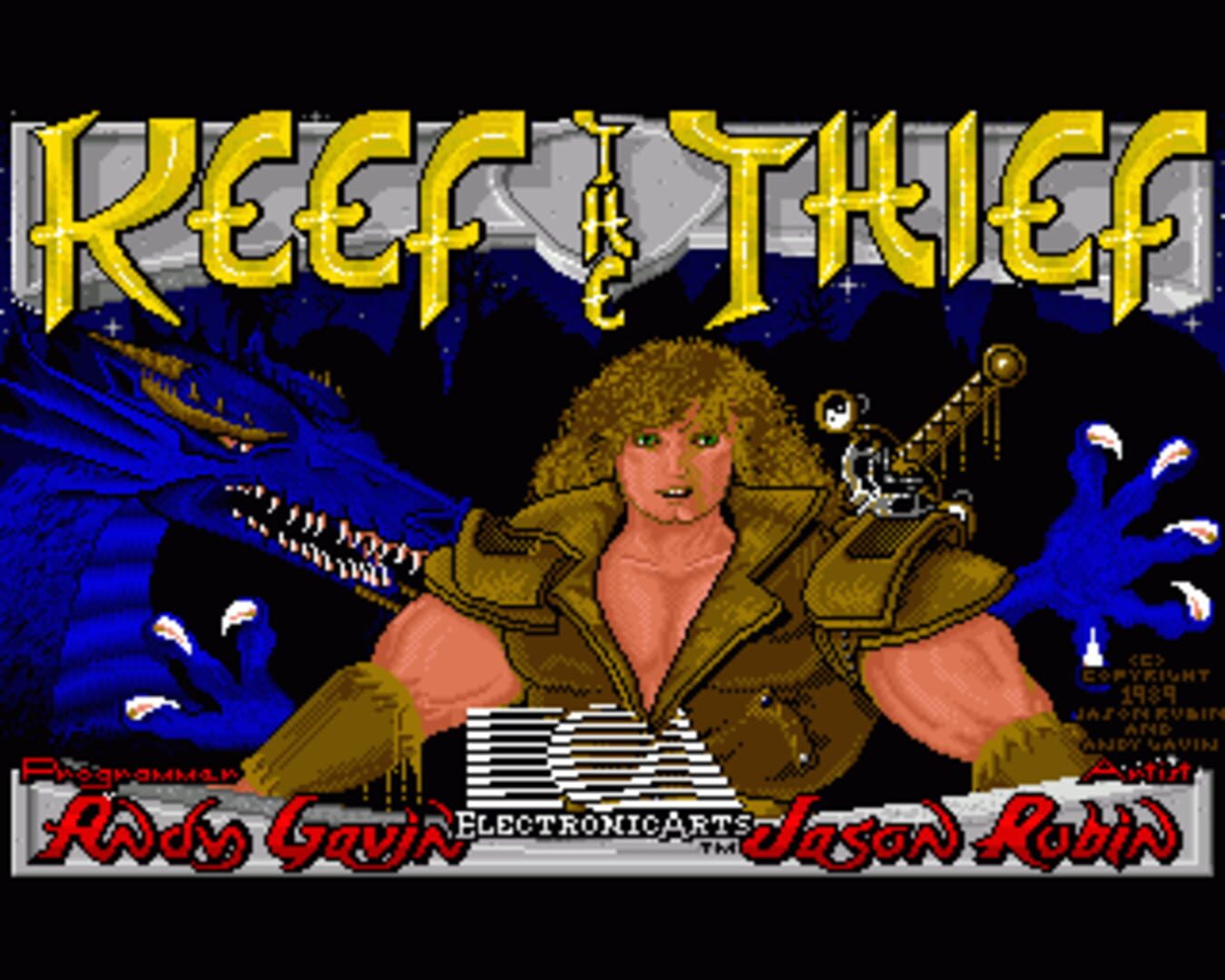

The articlegameplay, story, development, reception
Gameplay
Keef the Thief is a graphic adventure game with role-playing elements. The player controls Keef, a banished thief navigating a continental setting known as the Tri-City Area. His objective is to rise from poverty to become God-King in the Tri-City Area. The game world comprises jungles, cities, dungeons, and historical sites tied to the legacy of Emperor Telloc, who ruled until his disappearance long ago.
Key locations include Same Mercon (a prosperous trade city), Mem Santi (a temple with a maze housing an artifact), Tel Empor (a ruined palace), and Tel Hande (a fortress police state). A prophecy describes scattered powers hidden across the land, which the player must seek to restore balance against evil forces.
Story
Keef, a young man raised in a provincial settlement after being abandoned as an infant at a holy temple, is formally exiled by the town's council for his incessantly disruptive behavior. Despite attempts to train him as a priest, warrior, and mage, Keef alienated all potential mentors and instead mastered thievery. He is escorted to the edge of the jungle and banished from the town, free to explore the broader Tri-City Area. With minimal possessions, Keef begins his journey, recalling fragments of local history and prophecy gathered from tavern conversations and personal notes.
The region's history centers on Emperor Telloc, who rose from humble origins through mastery of magic to become God-King. He conquered Mercon, renaming it Tel Mercon, and constructed grand edifices including the palace of Tel Empor, the fortress of Tel Hande, and other sites. His reign endured for centuries until a catastrophic flood and subsequent famine precipitated unrest. Telloc vanished amid a siege, fulfilling a prophecy by the seer Al Handratta.
Development
Following the release of JAM Software's prior title, Dream Zone (1988), which sold approximately 10,000 copies, 17-year-old developers Andy Gavin and Jason Rubin sought a larger publisher. They contacted Electronic Arts (EA), a leading game publisher at the time, by cold calling its helpline and securing a contract after submitting a copy of Dream Zone. During the signing of their publishing agreement, it was discovered the JAM Software name was trademarked in Australia, requiring the company to change its name. The new name, Naughty Dog, stemmed from a doodle by Rubin depicting a cartoon dog wearing sunglasses on a beach surrounded by women, which Rubin suggested as the company name despite initial reservations from Trip Hawkins about its marketability.
Keef the Thief became the first video game released by Naughty Dog under its current name. EA provided an initial advance of $15,000 plus 10 percent royalties per copy sold, though development costs ultimately reached about $48,000. Chris Wilson served as the game's producer. Originally envisioned as a serious role-playing game, Gavin incorporated sarcastic placeholder text during production.
Reception
Keef the Thief was met with mixed reviews upon release. Hartley, Patricia, and Kirk Lesser of Dragon rated the game an "X" for "Not recommended" because of its antiquated copy-protection system.


