The articlegameplay, story, development, reception
Gameplay
The game is separated into five separate chapters, dealing with the main story in an episodic format. Each chapter contains one or more of the following elements:
The first type of gameplay is common to all Japanese adventure games. The main character, Tendo, explores an area, conversing with other people and furthering the story.
There are many mini-games in LifeSigns, which can in some way affect the course of the story. Most mini-games involve simple tasks, such as catching fruit that's rolling down a hill, or catching fish.
Persuasion - On occasion, the story will split, and can follow a different path. It is up to the player, in this mini game, to convince another person to do something. If the player is successful, then the story will continue along the good path. If not, then the episode may have a bad ending.
When someone is sick or injured, the player may need to diagnose the patient and decide what is wrong with them. Diagnosis commonly involves taking a patient's pulse, listening to their breathing, and examining abrasions, bruises, and swelling.
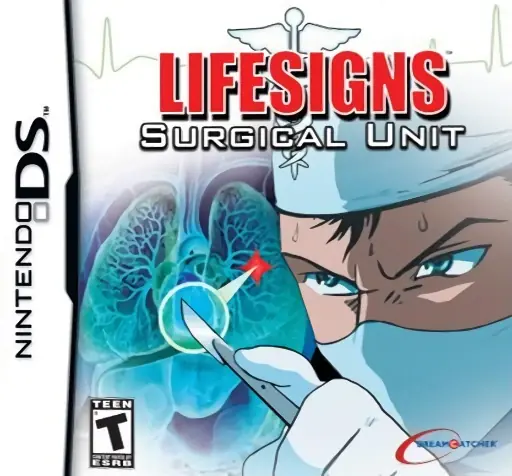
After diagnosing a patient, the player must perform surgery on them. During the surgery phase of the game, the player must perform a series of simple steps, one at a time, from disinfecting an area and making an incision, to the surgery itself, and finally closing the patient up. Unlike Trauma Center, the player is automatically handed the tool they need at each stage. There are a total of nine different operations in LifeSigns (though the number of surgeries the player does depends on the path the player takes).
Reception
LifeSigns received "mixed" reviews according to the review aggregation website Metacritic. Some reviews praised the game for the realistic hospital setting and large amounts of character interaction, while others criticized it for "a heavy dose of conversations", unbalanced gameplay, and its feel being "less like a game." In Japan, Famitsu gave it a score of two eights and two sevens for a total of 30 out of 40.