
The articlegameplay, story, development, reception
Gameplay
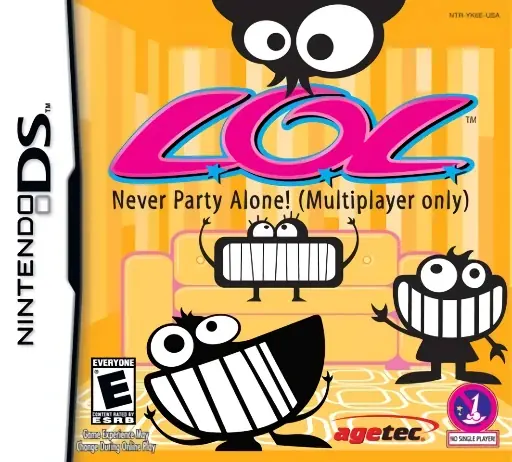
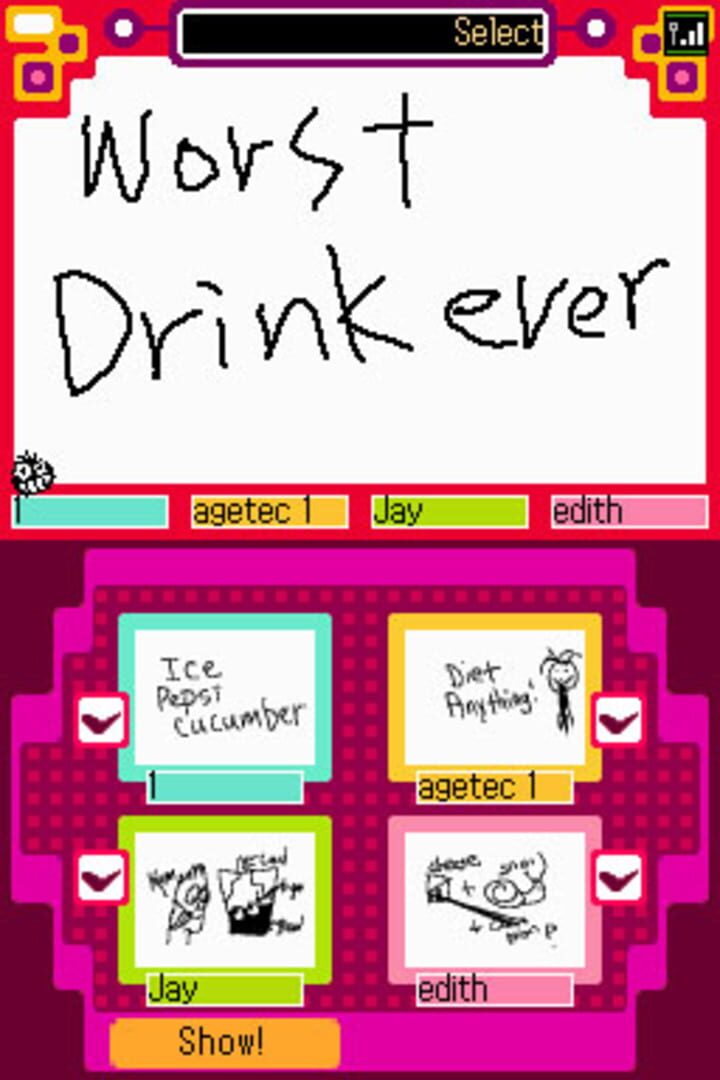
The gameplay of LOL is centered around being as "imaginative, clever and amusing with your friends as possible". The game is multiplayer only, requiring between two and four players to participate. Although each player must have their own Nintendo DS, only one copy of the game is needed. In the game the host asks a question or tell the others to draw something and all the players have to write or draw that which is asked within a time limit.
E. stand for?" or "Why the heck are we playing this game?"
A copy tool can then be used by the host to begin drawing or writing something, allowing the other players to finish the partially drawn image or written word as their answers. After all players have answered, each player votes on which answer or image is the funniest. Each player has three votes and can also vote once for themselves. There is no penalty for voting for oneself.
Development
LOL was developed by a group of five people at Route24. L. Lack of love. LOL was programmed by Fumihiro Kanaya, who worked on two of Skip's bit Generations titles.
The game's artwork was done by hikarin and its music was composed by Hirofumi Taniguchi. The game was made under a very low budget without the staff being paid for it, apart from their regular jobs. Their goal was to make the game as simple as possible.
Nishi announced in 2004 that he and Skip were working on a game for the Nintendo DS, but shortly thereafter retracted the statement. It is unknown if LOL was the project. In April 2006, Nishi announced the game under the working title "LOL DS", which was officially titled Archime DS in Japan one year later. The Japanese title of the game comes from Archimedes, a Greek mathematician.
The localized versions of the game are almost identical to the original Japanese version, with only the menu text and voices of the game's onscreen characters being changed. In North America, the game was initially sold exclusively through Agetec's website.
Reception
LOL received "mixed or average" reviews according to the review aggregation website Metacritic. IGN positively noted, "What LOL offers is very simple, but it has the potential to be very entertaining." GamePro also found the game enjoyable, but admitted that it became somewhat monotonous after a certain amount of time. Official Nintendo Magazine called it "the very definition of a cheap and cheerful game—perfect for those whose wit is as sharp as their stylus."
Other publications were very critical of the game, many of which agreed that the game offered very little despite its budget price. Eurogamer questioned why players would spend money on it when PictoChat exists for free. Game Informer exclaimed, "Congratulations, you just spent $20 on 10 minutes of gameplay!" They also claimed "This game is already available for free on any DS.
It's called PictoChat." The Norwegian newspaper Dagbladet was so disappointed with the game that they gave it the lowest score available and threw the game cartridge into a microwave oven, destroying it.
The game was a nominee for "Best Local Multiplayer Game" by IGN in its 2008 video game awards.