The articlegameplay, story, development, reception
Story
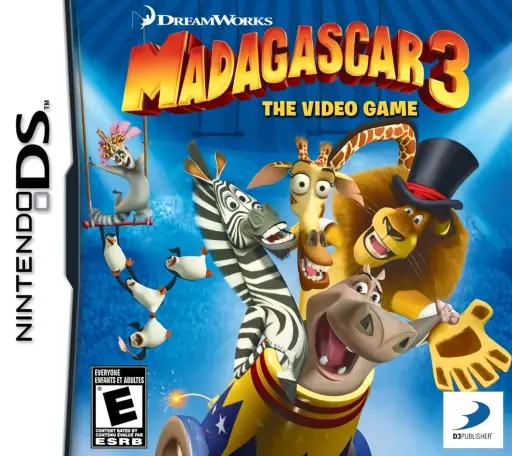
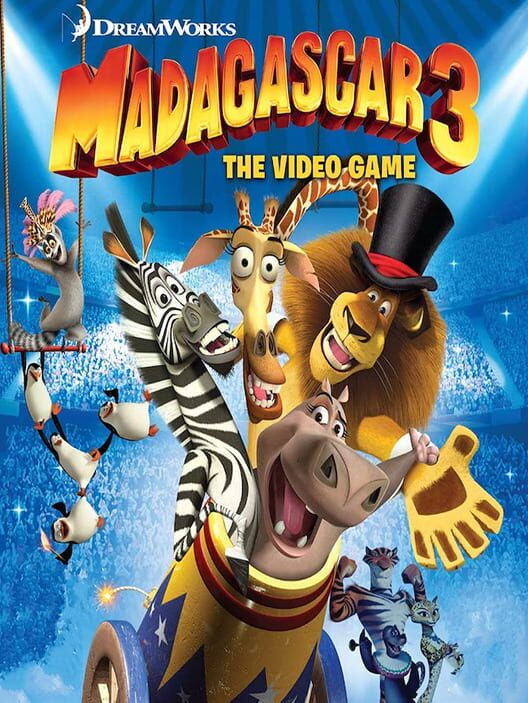
Some time after the penguins Skipper, Kowalski, Rico, and Private, along with chimpanzees Mason and Phil, left Africa for a honeymoon in Monte Carlo aboard their modified airplane, Alex, Marty, Melman, Gloria, and lemurs King Julien, Mort, and Maurice set out to find them so they could all return to the Central Park Zoo in New York City. They eventually track the penguins and chimps to the Monte Carlo Casino, but when their cover is blown, chaos ensues, and they barely escape from Captain Chantel DuBois, Monaco’s relentless animal control chief, who is determined to add Alex’s head to her taxidermy collection.
After their plane crashes beyond repair, the animals catch a ride on a circus train. The Circus Zaragoza crew—New Zealand sea lion Stefano, jaguar Gia, and Siberian tiger Vitaly—are cautious around outsiders, so Alex convinces them they’re American circus performers. The troupe is set for shows in Rome and London, aiming to impress a promoter and score their first American tour. To blend in, the penguins buy the circus from its human ringmaster using the fortune they won in Monte Carlo.
In Rome, Alex begins to fall for Gia, while Julien falls for Sonya, a Eurasian brown bear performer. DuBois chases them through Vatican City but ends up in prison. When the Colosseum show flops, Stefano tells Alex the circus was once famous, with Vitaly as the star leaping through shrinking hoops—until a stunt went wrong, losing his passion and sending the circus into decline. While stopping in the Alps, Alex convinces the circus animals to create a thrilling new act to restore their former glory and impress the promoter.
Marty and Stefano discover a love for being shot out of a cannon, while Melman and Gloria master dancing together on a tightrope. Gia persuades Alex to teach her the “Trapeze Americano,” and romance soon blossoms between them. Meanwhile, DuBois escapes from prison and resumes her pursuit.
In London, Vitaly fears another failure and considers quitting, but Alex reignites his passion. The show becomes a success, prompting the promoter to sign the circus. DuBois arrives with her henchmen, but the penguins foil her plan—until a document DuBois carried exposes the group’s true motives. Feeling betrayed, the circus animals expel the quartet.
After Julien breaks up with Sonya, the zoo and circus animals part ways but meet again in Central Park. When they see their old home, the zoo animals realize their adventures have changed them, and they decide their true place is with the circus. Suddenly, DuBois ambushes them, but before she can harm Alex, the zoo staff arrive, mistakenly believing she is returning the missing animals. Julien returns to the circus with the news, reconciles with Sonya, and the circus animals decide to rescue their friends.
Alex’s group wakes up in their old enclosures, now surrounded by tall fences. DuBois receives praise from the zoo staff but rejects the reward money, instead attempting to kill Alex with a poison dart in public. The circus animals swiftly come to the quartet’s rescue, and together they defeat DuBois. Alex’s group officially joins the circus, finally finding where they belong, while the penguins ship DuBois and her henchmen off to Madagascar as retribution.
Development
DreamWorks Animation's CEO Jeffrey Katzenberg confirmed in 2008 that there would be an additional sequel to Madagascar and Madagascar: Escape 2 Africa. Katzenberg stated, "There is at least one more chapter. We ultimately want to see the characters make it back to New York." At the Television Critics Association press tour in January 2009, Katzenberg was asked if there would be a third film in the series.
He replied, "Yes, we are making a Madagascar 3 now, and it will be out in the summer of 2012." On August 9, 2010, Katzenberg revealed in an e-mail that writer-director Noah Baumbach had done sixty pages of re-writes to the screenplay.
In January 2011, Frances McDormand was hired to provide the voice of the film's main antagonist, making this her first role in an animated film.
A significant amount of the animation and visual effects for the film had been done at DreamWorks Dedicated Unit, an India-based unit at Technicolor.
Reception
Madagascar 3: Europe's Most Wanted earned $216 million in North America and $531 million in other territories for a worldwide total of $747 million. 6 million. Worldwide, it is the highest-grossing film in the series, the fourth-highest-grossing DreamWorks Animation film, the second-highest-grossing animated film of 2012, and the eighth-highest-grossing film of that year. Overall, it is the eleventh-highest-grossing animated film and the 113th-highest-grossing film of all time.
The film took between 66 and 94 days of release, respectively, to out-gross its two predecessors. It surpassed Kung Fu Panda 2 to become DreamWorks' highest-grossing non-Shrek film, and their first non-Shrek film to gross over $700 million.
In North America, the film made $20.7 million on its opening day, which was higher than the opening-day grosses of the original film ($13.9 million) and its sequel ($17.6 million). For its opening weekend, the film ranked at the no. 1 spot, beating Prometheus, with $60.3 million, which was higher than the opening of the original Madagascar ($47.2 million) but was behind the opening weekend of Escape 2 Africa ($63.1 million). It remained at the top spot for two consecutive weekends. In North America, it is the highest-grossing film in the series, the sixth-highest-grossing DreamWorks Animation film, the second-highest-grossing 2012 animated film, and the tenth-highest-grossing film of 2012.
Outside North America, Europe's Most Wanted out-grossed Shrek Forever After to become DreamWorks Animation's highest-grossing film. 3 million from 28 countries. It held that position for three consecutive weekends. 1 million in 5 days).
4 million. 80 million (first surpassed by Ice Age: Continental Drift) and it set opening-weekend records for animated films in Brazil, Venezuela, Trinidad, and the United Arab Emirates.
Based on 132 reviews, the film holds an approval rating of 78% on review aggregator Rotten Tomatoes and an average rating of 6.7/10. The site's critical consensus reads: "Dazzlingly colorful and frenetic, Madagascar 3 is silly enough for young kids, but boasts enough surprising smarts to engage parents along the way." This marks the best general review consensus of the film series that has showed improving critical favor; the original film has a score of 55%, and the sequel scores 64%. On Metacritic, it holds a score of 60 out of 100 based on 26 reviews, indicating "mixed or average" reviews. Audiences polled by CinemaScore gave the film an average grade of "A" on an A+ to F scale (an improvement over the first two film's "A−").
5 out of 4 stars and said, "From time to time the improbable occurs: A sequel outdoes its original." Colin Covert of Star Tribune said that Madagascar 3 set a high standard for cartoon comedy and was almost too good for kids. 5 out of 4 stars. 5 out of 5 stars, Betsy Sharkey of the Los Angeles Times said, "A neon-saturated, high-flying trapeze act with enough frenetic funny business that it's a wonder the folks behind this zillion-dollar franchise about zoo critters on the lam didn't send the animals to the circus sooner."
Andy Webster of The New York Times said, "Where Madagascar 3 soars is in its visuals: A Monte Carlo chase is vertiginously madcap; a Cirque du Soleil-style spectacle dazzles with rich pastels; the 3-D effects have wit and invention. Kids will be stimulated. And, parents, you'll enjoy the sights." Stephen Witty of the Newark Star-Ledger calls the movie "fun and fast family entertainment.
[…] the animals' jazzy circus performance, done in black-light colors and set to a Katy Perry song—may be one of the trippiest scenes in a mainstream kiddie movie since Dumbo saw those pink elephants." Film scholar Timothy Laurie writes that the plot development of Madagascar 3 is "met with large servings of personal growth and side dishes of overcooked romance".