The articlegameplay, story, development, reception
Gameplay
The game is very similar to the Resident Evil series: third-person perspective; fixed camera angle; tank controls; limited ammunition; strategic inventory management; countdown timer at the climax; and obtaining key-type items for progression. The game focuses heavily on puzzle solving and exploration, rather than combat. The game is centered on three playable characters that are separated, but can be swapped between at any time, similar to Day of the Tentacle. Whilst characters can communicate via radio, if they ever meet face-to-face, it will result in a game-over.
Story
Set in 2019, the megacorporation Earth Control has built the Vita-01 research station on Mars, located adjacent to Olympus Mons, and the first human settlement on the planet. The corridors and segments of the base are named after famous street names. The base was established following the discovery of ancient Martian bacteria, found within a meteorite in Antarctica. By the time of the game's main events, the Vita-01 base has been radio silent for ten months; the last transmission to Earth warns all future persons that come into contact with the base to "stay alone, stay alive."
The player assumes the roles of three characters sent to investigate Vita-01: American security officer Martin Karne; British bacteriologist Diane Matlock; and Japanese systems analyst Kenzo Uji. The two non-player characters are MOOD, a sentient artificial intelligence that manages the base, and medical officer John Farr (although often referred to as Ben Gunn), the deranged sole survivor of the base's initial crisis. Whilst deceased by the game's events, base director Judith Harroway is the most prominent voice featured in recovered audio recordings.
Development
Creative Reality's last game shares the same team and same writer as Dreamweb, and as such it relies heavily on writing and puzzles. In an interview with Stephen Marley for Retroaction, he stated that he was unhappy with the final product.
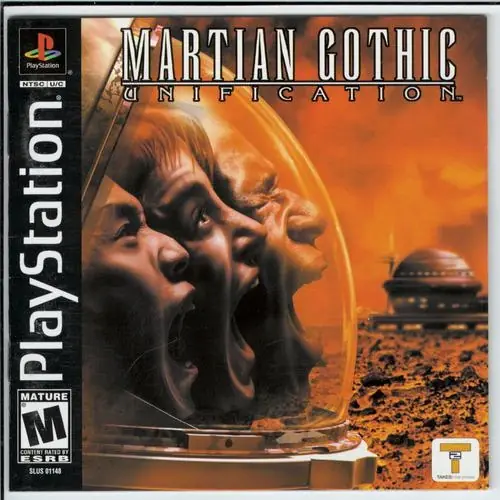
In this interview it was revealed that the game was initially entitled "Martian Gothic" but during the game's development the team referred to it as "Unification" based on one of the development team's favourite Star Trek episode of the same name, as it loosely fitted the theme of a point and click adventure game. This theme was eventually changed to a survival horror game, but it kept many of the item based puzzles from its original concept. As a result of both names a compromise was made to suffix Stephen's title "Martian Gothic" with "Unification" to create Martian Gothic: Unification.
Reception
The PlayStation version of Martian Gothic: Unification received "mixed" reviews according to the review aggregation website Metacritic. Duncan Turner of IGN said that the PC version had "a lot to offer...the story -- though seemingly cobbled together from many different sci-fi plots -- is engaging and keeps you guessing." Steve Smith of GameSpot stated the same console version was a "missed opportunity" as the designers had good ideas but did not mix the game elements into a balanced game." One of more positive reviews came from PlayStation Illustrated.