
The articlegameplay, story, development, reception
Gameplay
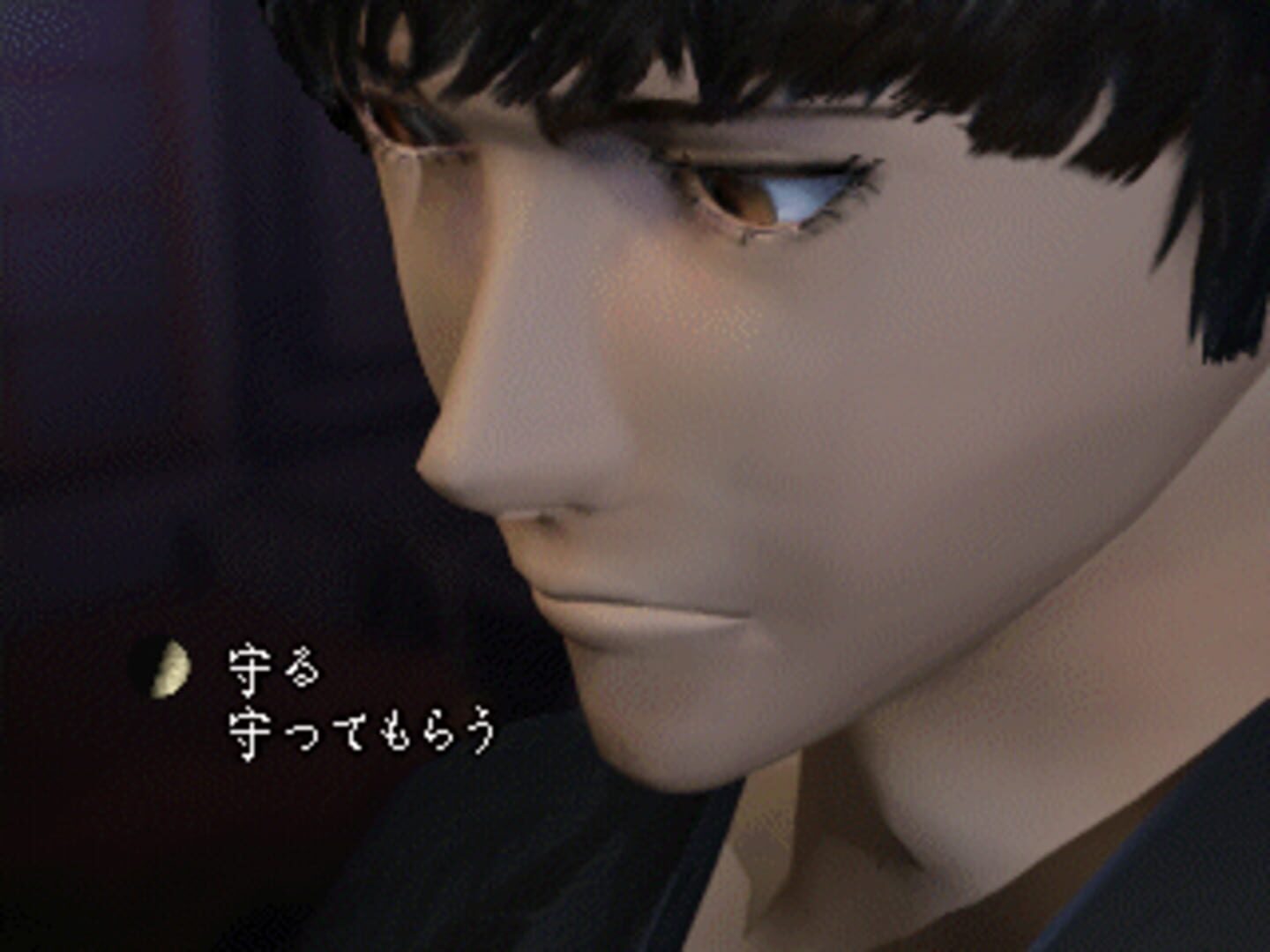
Similar to other titles in the Twilight Syndrome series, Moonlight Syndrome combines elements from adventure games and visual novels in its gameplay. The game contains both exploration in real-time environments and CGI story cutscenes. The player controls multiple characters across ten different chapters, with the main aim being to explore environments from a side-scrolling perspective, interact with objects, and talk with characters to progress the narrative. During certain moments, the player can select different options for the character to perform, producing minor variations in subsequent events; these extend from the solving of puzzles to how characters respond to the player during conversations. Despite these choices, the game's story follows a linear path to the same ending.
Story
Moonlight Syndrome takes place in a parallel reality to that of the main Twilight Syndrome series. One year after the events of Twilight Syndrome: Investigation, series protagonist Mika Kishii is attending high school in the town of Takashi when she begins to sense something very wrong with the people there. Events are brought to the fore when fellow student Kyoko Kazan is killed in an accident. Determining that all of these problems are a result of a psychic phenomena surrounding Takashi, Mika is joined in her investigation by Chisato Itsushima and Yukari Hasegawa.
As Mika tries to balance her investigation and leading a normal life, events being to escalate with violent incidents ranging from a mass suicide near her home to disturbing behavior from several of her close friends. Many of them, herself included, are confronted by a white-haired boy during the incidents.
Development
Moonlight Syndrome is an entry from the Twilight Syndrome series, and the first entry in the series to feature major input from Goichi Suda, who acted as writer and director. Suda had previously served as director of the first two Twilight Syndrome games when the original director had to step down due to scheduling conflicts, but he was unable to have much input. He wanted to create his own take on the series with Moonlight Syndrome, similar to how he had created an unconventional and notoriously dark ending to Super Fire Pro Wrestling Special in reaction to his restricted work on Super Fire Pro Wrestling III. The game began development following the release of the second Twilight Syndrome game.
While the series focused on supernatural horror, Suda wanted to create something more frightening and apart the ghost story elements which genuinely scared him to the point he did not want to be involved with the series. This resulted in the story shifting away from paranormal elements and using psychological horror. The aim was to increase the frightening aspects of the game by making the violent incidents within the story random and caused by people rather than supernatural entities.
Reception
The game was released on 9 October 1997. One reviewer from Famitsu magazine noted that those expecting the "simple school horror" of earlier titles would be shocked by the game's story. Two other reviewers felt uncomfortable with how the characters were portrayed and believed the dialogue segments were lengthy and the CGI was poor in quality. In a 2016 retrospective, Den Faminico Gamer criticized the characters and the lack of branching scenarios, feeling the game was linear and the speech choices had no consequence. They did acknowledge the story was bizarre and recommended those interested simply watch a playthrough.
Legacy
Moonlight Syndrome was the last game Suda worked on at Human Entertainment before leaving. He was unsatisfied with his bonuses, and felt the company would soon be bankrupt. Following his departure, he formed his own company Grasshopper Manufacture. Their debut game, The Silver Case, was released in 1999.
Suda directed, co-wrote and designed the game, while Miyamoto and Takada were brought back as character designer and composer. Suda also brought in Masahi Ooka as co-writer after being impressed with Ooka's work on a supplemental story created for a Moonlight Syndrome strategy guide. Grasshopper Manufacture has borrowed settings and characters from Moonlight Syndrome for The Silver Case and some of their other work including Flower, Sun, and Rain.


