
2002 · Namco · Puzzle
Mr. Driller A
Nintendo console exclusive
2002 video game
- Released
- 2002
- Platforms
- Game Boy AdvanceMobileWii U
- Genres
- Puzzle
- Developers
- Namco
- Publishers
- Namco
- Perspective
- Side view
- Age ratings
- CERO A
- Languages
- Japanese
About
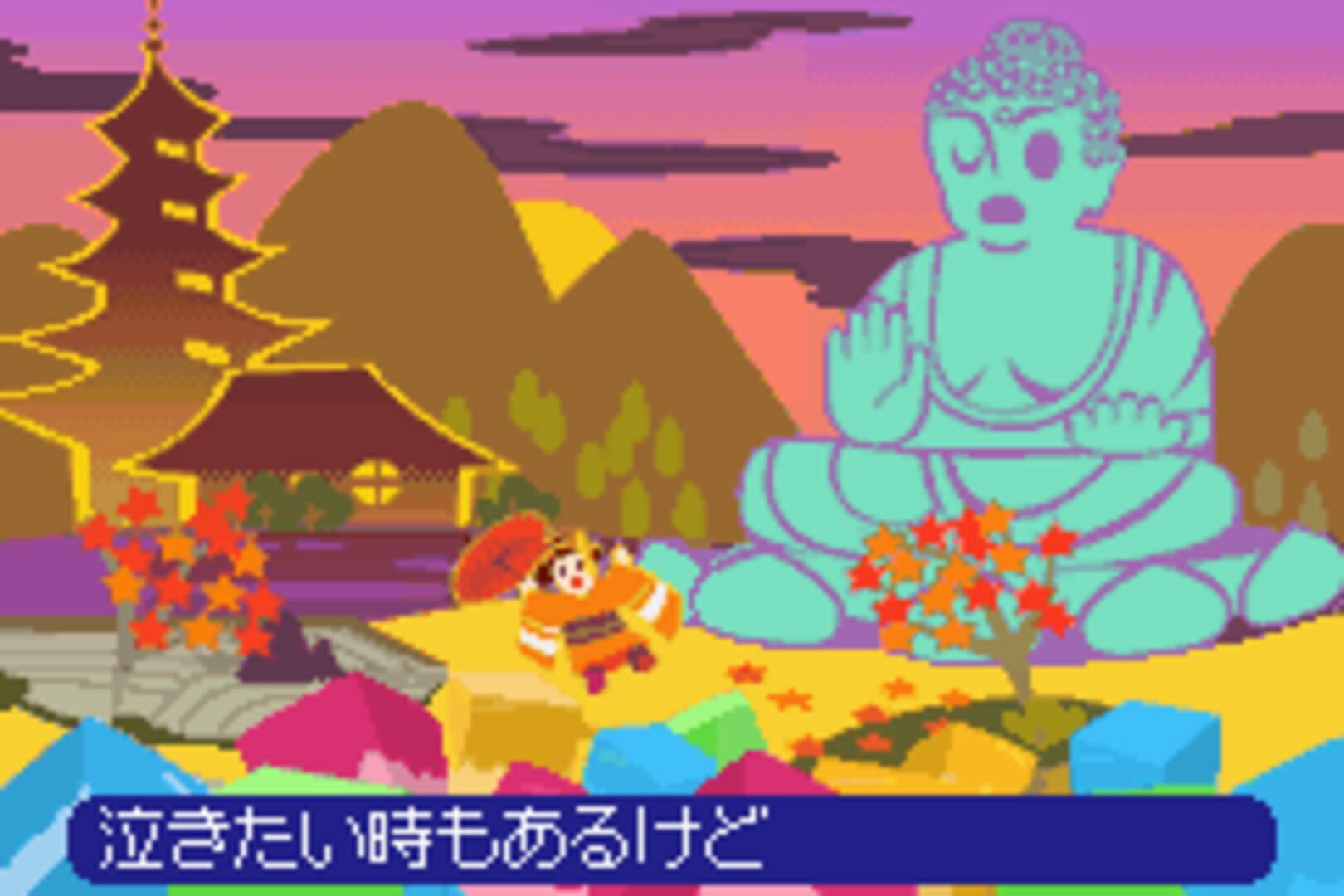
Mr. Driller A is a 2002 puzzle video game developed and published in Japan by Namco for the Game Boy Advance. The fourth installment in its Mr. Driller series, players control one of seven characters and must make it to the bottom of the level by destroying colorful formations of blocks. A adds several new mechanics to the gameplay of its predecessors, such as a virtual pet named the "Pacteria" that players can grow and care for.
Created by series producer Hideo Yoshizawa and Namco's Contents & Technology Creator Group, A was developed as part of a partnership between Namco and Nintendo where the former would create a GameCube game that made use of the GameCube – Game Boy Advance link cable. The game was in development alongside its GameCube counterpart Mr. Driller Drill Land, allowing A to borrow several of Drill Land's concepts and ideas. Though it was well-received for its gameplay and additions to the Mr.
Keywords
- wii u virtual console
Media
The articlegameplay, story, development, reception
Gameplay
Mr. Driller A is a puzzle game similar to Puyo Puyo (1991) and the classic arcade game Dig Dug (1982). Players choose from one of seven characters to play as: Susumu Hori, the protagonist; Ataru Hori, Susumi's self-contained older brother; Taizo Hori, the protagonist of Dig Dug; Puchi, Susumu's dog; Anna Hottenmeyer, a rival driller from Germany; and Holinger-Z, a drilling robot. In each level, players must make it to the bottom of a well by destroying, or "drilling", colorful formations of blocks.
Destroying blocks results in those above it falling and connecting with similarly-colored ones; should four or more matching blocks connect, they will be destroyed, which is useful for creating chain reactions. Blocks will also fall if there is nothing underneath to support them, which can crush players that are underneath them. Players will need to manage their constantly-depleting oxygen, which acts as both a health bar and a timer. Oxygen is replenished by collecting blue air capsules, while oxygen is lost by destroying brown X-marked blocks.
Development
Mr. Driller A was created by Mr. Driller series producer Hideo Yoshizawa and Namco's Contents & Technology Creator Group (Project Driller). The project came into fruition when Namco was approached by Nintendo to create a new Mr.
Driller game for its newly-unveiled GameCube, specifically one that took advantage of the GameCube – Game Boy Advance link cable peripheral. As A was in development alongside its GameCube counterpart, Mr. Driller Drill Land, it borrows several of Drill Land's concepts and mechanics, as well as those from the PlayStation version of Mr. Driller G.
Reception
During its first week of release, Mr. Driller A sold 9,189 copies and received the "Gold Hall of Fame" award from Famitsu. By the end of 2002, it sold 14,799 copies and was ranked in Japan's list top 350 best-selling games of the year. The game has since been considered a commercial failure.
Reception for A, both at release and retrospectively, have been positive. Famitsu staff focused largely on the Pacteria raising and RPG-esc game mode; one wrote they complimented each other well and added to the game's replay value. Another enjoyed the number of game modes for having their own playstyles and difficulty options. Colin Tabi of Nintendo World Report stated A "carries the torch well for the series", and enjoyed its addictive quality and simplicity.
Releases by platformdates and regions as published
Title IDsone per regional release, with its latest update
Games like this
 Timed NEC
Battle Lode Runner
1993 · TurboGrafx-16, Wii +1
Puzzle · Often paired
 Nintendo exclusive81
Big Brain Academy: Brain vs. Brain
2021 · Nintendo Switch, Nintendo Switch 2
Puzzle · Often paired
 Nintendo exclusive
Mr. Driller W
2009 · Wii
Puzzle
 Nintendo exclusive55
Konductra
2006 · Nintendo DS
Puzzle
Gridders
1994 · 3DO, 3DO Interactive Multiplayer
Puzzle

Diggin' Dogs
2012 · iOS
Puzzle
 Sega exclusive75
Baku Baku Animal
1996 · Arcade, Game Gear +3
Puzzle
 Timed Nintendo61
A Boy and His Blob
2009 · Remake · Android, Linux +9
Puzzle
Collections1 collection
Platform libraries
- Virtual Console games for Wii U (Japan)Titles › Game Boy Advance
Description adapted from its source, CC BY-SA 4.0.