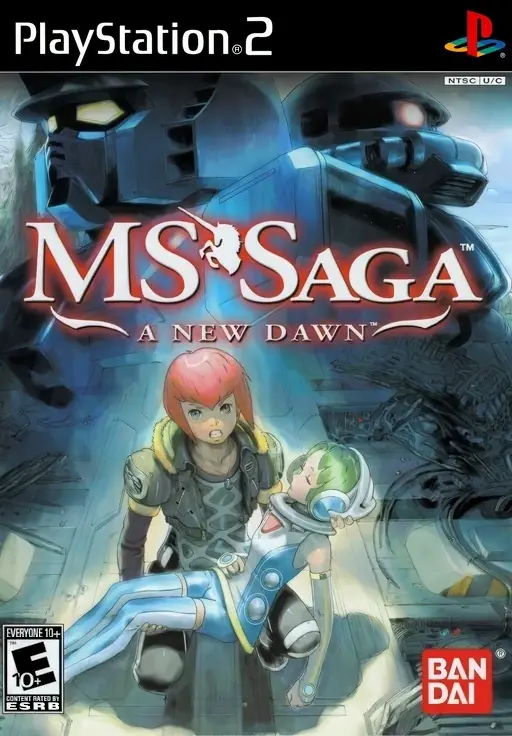
The articlegameplay, story, development, reception
Gameplay
The major focus of the game is the ability to customize their own mobile suits using parts of mecha designs from the early Universal Century Gundam anime series, Mobile Fighter G Gundam, and Mobile Suit Gundam Wing. The units on offer are kept to more basic mecha while more powerful ones (such as the powerful Devil Gundam Corps from G Gundam) are kept as game-controlled bosses. To complete the game, players will need to find which parts and pilots combinations work best.
Battles are carried out similarly to older Final Fantasy titles, with enemies and player characters in turn-based combat. Actions use AP, which can be stored up to allow for the use of more powerful weapons or special attack. Outside of battle, Mobile Suits can be modified by swapping parts, which also usually changes the appearance, altering coloration, which is purely cosmetic, and changing weapons and shield items. Weapons can be hand-held (rifles, sabers) or mounted (Gatling guns, shoulder cannons). Certain special attacks require minimum numbers of weapons, or specific types.
As an example, one could mount Master Gundam's wings on the Zeta Gundam, with shoulder armor from the Gundam Sandrock and the legs of a Dom.
Story
At the peak of society, humanity created a complex machine system the Glory System (Known by all as the G System), an amazing technology which could create any machine so long as there were plans for it. However, tragedy struck soon after an apocalypse gripped Earth. Humanity began to rebuild society as best they could and called the apocalypse the "Great Fall". A young boy named Tristan (Trush in the original Japanese version) lives happily at an orphanage with his best friend, Fritz.
But the happiness is ended when mysterious new weapons known as mobile suits lay siege on the orphanage and kill its occupants. Seeking revenge and answers, Tristan sets out to find out why his home was attacked. Along the way, he will assemble a party of loyal allies and discover a dark conspiracy. They begin the story by obtaining a RGM-79 GM from the G System and end up battling a Zaku I from the get-go.
Tristan and Fritz begin on the quest, after obtaining the RGM-79 GM and Zaku I, to avenge the loss of their orphanage and caretaker. Apparently, the killer, whose name is Vladi Zarth, leads a group called the Dark Alliance, trying to take over the world. They set forth on this quest and meet up with others with the same goal in mind, to kill Vladi Zarth and take down the Dark Alliance.
Development
For the American release of the game certain changes were made. These include name changes, the replacement of the theme song with an instrumental version, and the addition of a full voice cast (the Japanese release used only on-screen text dialogue for the characters).
Reception
The game received mixed reviews according to the review aggregation website Metacritic. In Japan, Famitsu gave it a score of three sevens and one eight for a total of 29 out of 40.
Japanese sales figures listed the game as the poorest-selling PlayStation 2 Gundam game. Existing Gundam fans have generally been responsive to the game.