The articlegameplay, story, development, reception
Gameplay
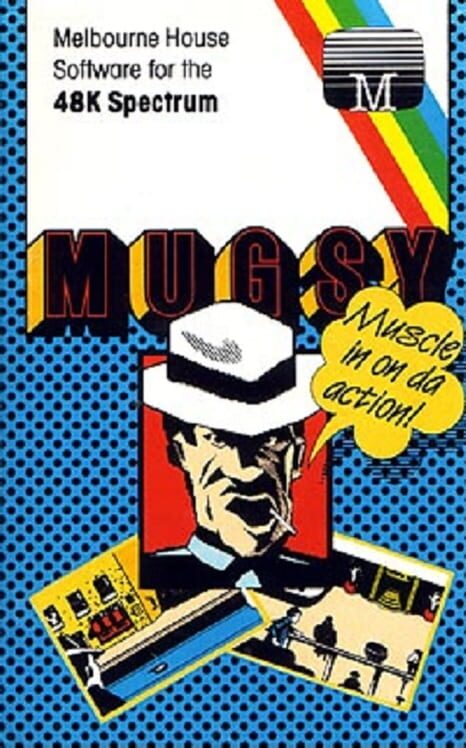
The player takes the role of "Mugsy", an American gangster. The aim of the game is for Mugsy to become "the most powerful gang leader in the city". In each 'turn' of the game, which represents one year, decisions must be made about how much money should be spent on weapons and ammunition to fight other gangs, how many business from which he should attempt to extract protection money, and how much bribery of local law enforcement should take place.
The game was marketed as an "interactive video comic strip"; it was highly visual, with graphics (produced using the software house's own title, Melbourne Draw) intended to be similar to comic book drawings. Information was presented to the player in the form of dialogue between on-screen characters, such as Mugsy himself, and an unnamed assistant. At each decision point, the player enters text into a 'speech bubble' dialogue box.
There is no real plot or narrative arc; each year's activities are essentially the same, with the same decisions to be made by the player. There is a small action element, which is triggered if one of Mugsy's rivals orders a contract killing on him. When this happens, the player controls Mugsy directly, and must shoot the assassins who are sent after him before Mugsy gets shot too many times himself.
Reception
Reviews of the Spectrum edition were very positive; Your Sinclair's "Joystick Jury" rated it a "hit", citing its impressive graphics, and a structure that, while logical, provided a high level of replayability, as each game ended differently. It was also the winner of a Crash Reader's Award for "Best Strategy and Simulation". The magazine commented positively on the graphics, partly because the visual style was "suited to a game set in the roaring twenties"; this was despite "Mugsy" having to take place before 1919, since that is when its sequel, Mugsy's Revenge, begins.
Legacy
A sequel, Mugsy's Revenge, was published for the ZX Spectrum in 1988 and also released for the Commodore 64 and Amstrad CPC.