The articlegameplay, story, development, reception
Gameplay
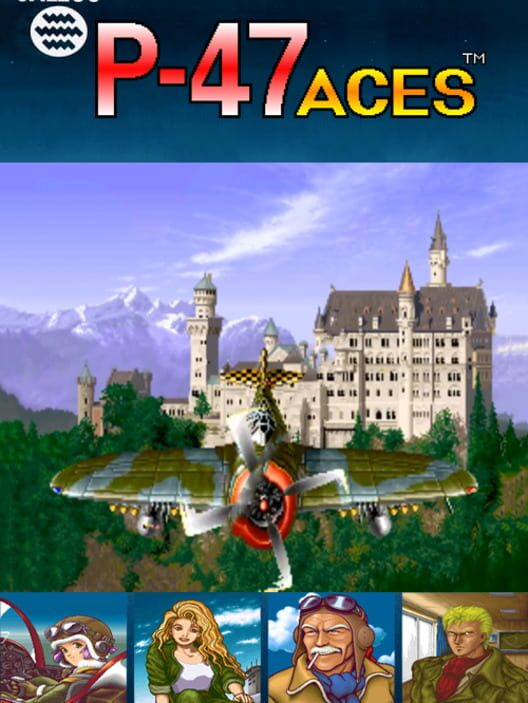
P-47: The Phantom Fighter is a horizontal-scrolling shooter game reminiscent of Silkworm, USAAF Mustang, and Hacha Mecha Fighter. Players control a Republic P-47 Thunderbolt fighter aircraft through eight stages that take place across multiple countries around the world, each with a boss at the end that must be defeated in order to progress further and face against Nazi Germany.
Some enemies carry icon-based power-up items that can be picked to increase the aircraft's firepower such as bombs and missiles as well as a speed booster to increase mobility. Getting hit by enemy fire or colliding against solid stage obstacles will result in losing a live, as well as a penalty of decreasing the aircraft's firepower and once all lives are lost, the game is over unless players insert more credits into the arcade machine to continue playing. After completing the last stage, the game begins again with the second loop increasing in difficulty. In addition to the single-player mode, the game also features a two-player cooperative multiplayer mode.
Development
P-47: The Phantom Fighter's soundtrack was scored by then-NMK member Sizlla Okamura, best known for his work in Viewpoint by Aicom. In a 2017 interview with Red Bull Music Academy, Okamura recounted his experience during development as the project's composer, stating that the team wanted a game that celebrated the fight for freedom instead of war. Okamura did not wanted the music to be about "the horrors of war", leaning towards the concept of freedom being happy and fun, stating that "it might not sound like good “battle music” at first listen, but that's why it ended up the way it is." Okamura first composed the music using a Yamaha MSX computer, which featured the same sound chip Jaleco used for their arcade releases, before being converted into a useful program for his work to be played back and implemented for sound.
Okamura also stated that, depending on the designers, he would be instructed to compose the music in a certain manner or let him handle the music compositions by himself. When asked about hardware limitations during the composition of music for arcade titles at the time, Okamura stated that he had to figure out how to use and work with a limited soundscape, in addition of what could be fit within limitations at the time.
Reception
Japanese magazine Game Machine listed P-47: The Phantom Fighter on their June 15, 1988 issue as being the fourth most popular arcade game at the time. The arcade version of P-47: The Phantom Fighter earned an "Annual Hit Game" award from Gamest magazine.
Commodore User praised the engaging gameplay and the graphics, stating that "this one looks set to be Jaleco's most successful product to date; it's certainly their best.". Computer and Video Games' Clare Edgeley commended the graphics and regarded the game as "well worth playing." The Games Machine's Robin Hogg and Cameron Pound commended the fun gameplay despite the standard graphics and sound. Your Sinclair's Ciarán Brennan regarded the title to be a poor Nemesis variant lacking speed and complexity, criticizing the low difficulty and uninspired sprites, stating that "this is definitely one for the fanatic."
Crash's Philip King and Mark Caswell regarded the presentation to be mediocre and the gameplay to be unoriginal but engaging, stating that "once you start blasting away, you'll find it hard to stop." ACE's Andy Smith stated that "the game's fun but it's not going to get your heart racing too much." Boris Schneider-Johne of German publication Power Play commended the visuals and bosses, though the slowdown when many sprites are on-screen was criticized but noted this was crucial for certain situations, stating that "if you want to let off steam for a few laps, "P-47" is just the thing. But if you are not a real action fan, the blast of air becomes too monotonous after half an hour at the latest."
The PC Engine version was well received by critics. Computer and Video Games' Paul Glancey praised the PC Engine port for its graphics as well as sound and gameplay, regarding it to be a "very tough arcade conversion, but veterans of computer wars past should find P-47's good blasting action both addictive and challenging." The Games Machine's Phil Harrison commended the PC Engine port for its arcade-accurate presentation and music. Readers of the Japanese PC Engine Fan magazine voted to give the PC Engine port a 20.69 out of 30 score, ranking at the number 287 spot.
The Amiga port received mixed reviews from critics. CU Amiga-64's Mike Pattenden criticized the sound and difficulty level of the Amiga port. Amiga Format's Andy Smith praised the Amiga port for its arcade-accurate presentation and co-op play. Max Magenauer of German magazine Amiga Joker gave the Amiga port a mixed outlook, criticizing the graphics as well as sound, controls and gameplay.
When reviewing the Amiga port, Amiga Action's Steve McNally as well as Italian magazine Amiga Byte drew comparisons with Silkworm. 64's Stuart Wynne and Phil King commended the Amiga port for its presentation, visuals, sound and co-op feature but noted the retail price to be high for a conversion. French magazine Joystick and Tilt's Alain Huyghues-Lacour regarded the Amiga port to be superior than the Atari ST version, praising the visuals and playability. Daniel Melin of Swedish magazine Datormagazin praised the visuals but criticized other areas of the Amiga port.
Amiga User International's Tony Horgan criticized the presentation, graphics, design, sound and gameplay of the Amiga port.
As with the Amiga version, the Atari ST iteration was met with mixed reception. Computer and Video Games's Paul Rand regarded the ST port of P-47 to be a playable title as well as a good arcade conversion, but noted the graphics to be "very garish." The One's Brian Nesbitt remarked that the visuals in the ST port were colorful but unremarkable while criticizing other issues, stating that "P-47's fun in a mindless sort of way, and it's tough enough to keep most players on their toes - but not for any great length of time... especially at the price."
ST Action praised its appealing simplicity and playability. As with the Amiga iteration, French magazine Génération 4 as well as Micro News's Marc Lacombe and Zero's Matt Bielby drew comparisons with Silkworm when reviewing the ST port. Aktueller Software Markt's Peter Braun praised the graphics, sound and gameplay of the ST port, stating that "P 47 can be recommended to all those who are fed up with adventure and strategy construction sites and want to hit the wall again with a good action game." Martin Gaksch of German magazine Power Play commended the gameplay speed and co-op feature of the ST port but criticized various in-game issues, regarding the game to be an average shooting game.
Joystick's Jean-Marc Demoly commended the ST port for its realistic-looking graphics, parallax scrolling effects, sound design and playability. Tilt's Alain Huyghues-Lacour commended the visuals and animations, recommending arcade arcade players enough to give the ST port a try.
French magazine Amstar praised the Amstrad CPC port for being "an excellent conversion of the arcade game of the same name", praising the visual presentation and difficulty level. Amstrad Action's Trenton Webb and Rod Lawton praised the CPC port for its visual presentation and addictive gameplay, though Lawton ultimately remarked that the game was "just another shoot-em-up when all's said and done". Alian of French publication Amstrad Cent Pour Cent commended the overall quality of the CPC port. Joystick's Bó TGV drew comparison with Silkworm when reviewing the CPC port but commended the conversion for its presentation and sound. Tilt's Alain Huyghues-Lacour praised the CPC port for being better than the Atari ST iteration, commending the graphics and gameplay but lamented the lack of co-op play.
Zzap!64's Stuart Wynne and Phil King regarded the Commodore 64 port to be not as slick as the Amiga iteration, criticizing the lack of co-op play as well as the visual presentation. Aktueller Software Markt's Torsten Blum regarded the C64 port to be disappointing, criticizing the jerky-scrolling background graphics and lack of music during gameplay, however the sprite animations were praised. Your Commodore