The articlegameplay, story, development, reception
Gameplay
To Heart 2 is a romance "novel-type adventure game" in which the player assumes the role of Takaaki Kouno, who begins his second year of high school after reuniting with a childhood friend. Much of its gameplay is spent on reading the story's narrative and dialogue. The text in the game is accompanied by character sprites, which represent who Takaaki is talking to, appearing over background artwork. Throughout the game, the player encounters CG artwork at certain points in the story, which take the place of the background art and character sprites.
A gallery of the viewed CGs and played background music is available on the game's title screen. To Heart 2 follows a branching plotline with multiple endings, and depending on the decisions that the player makes during the game, the plot will progress in a specific direction.
The game divides each school day of the storyline into four segments. These segments illustrate the events that occur during Takaaki's commute to school, during school, after school, and after he returns home at the end of each day. Depending on the time of the day and the player's actions, he or she may be presented one of three types of events: mandatory events, which occur automatically during certain points in the game's plotline; temporary events, which occur during certain periods of time only if specific conditions are met; or after school events, which occur at the end of each school day.
At the end of each school day, the player will be given the option to navigate to various locations within the game's setting. Each choosable location is accompanied by an image of a heroine in order to allow the choices to be easier to make. Throughout gameplay, the player is given multiple options to choose from. Text progression pauses at these points, and depending on the choices that the player makes, the affection rate of the heroine associated with the event will either increase, decrease, or remain the same. This mechanism determines which direction of the plot the player will progress into, but influences the story only during Konomi's and Karin's plot lines.
In the PlayStation 2 version, there are nine plotlines that the player will have the chance to experience, one for each of the heroines in the story except Sango and Ruri, who share the same plotline. This is expanded to ten plot lines in the Windows and PlayStation Portable versions with the addition of Sasara's scenario, and further expanded to eleven scenarios in the PlayStation 3 version with the addition of Mio's scenario. In order to view all of the plotlines, the player will have to replay the game multiple times and make different decisions to progress the plot in alternate directions. In all versions, the game also contains a bad ending in which the player is unable to pursue the other scenarios. This ending serves as the basis of the Another Days scenario in To Heart 2 Another Days, which allows the player to pursue an additional seven heroines.
To Heart 2 X Rated, the Windows version of the visual novel, includes two additional minigames; these minigames do not affect the main plot in any way. In both minigames, the player controls one of the heroines from To Heart 2's storyline, who is made available upon the completion of her scenario in the main portion of the game. The first of the two minigames, titled "Super Sweets Scramble" (スーパースイーツスクランブル, Sūpaa Suiitsu Sukuranburu), is a scrolling shooter in which the player's goal is to progress through a vertically scrolling level, while attacking enemies that resemble confectioneries and dodging their attacks. The second, titled "Dokidoki Panic Library" (ドキドキぱにっくライブラリー, Dokidoki Panikku Raiburarï), is a puzzle game in which the player competes against an opponent for the highest score, by connecting three or more books of the same color and eliminating them from the screen.
Story
To Heart 2's story revolves around the male protagonist Takaaki Kouno, a high school student who has an aversion to most girls around him, and focuses on his interactions with his schoolmates. The story begins on March 1, 2004, when Takaaki's parents leave for an overseas business trip. That morning, Konomi Yuzuhara, Takaaki's childhood friend, comes to meet Takaaki for their commute to school. Konomi is a cheerful and innocent, but childish girl.
She is one year younger than Takaaki, who often views her as a younger sister. The two are also friends with Yuuji Kousaka, who is in the same class as Takaaki. Despite being the son of a wealthy and prestigious family, Yuuji has a frivolous and carefree personality, and often flirts with the girls at school. Takaaki later reunites with Tamaki Kousaka, another childhood friend, who had promised to return before being enrolled into a boarding school.
Tamaki has a strong and dominant personality, and tends to act as an elder sister figure to those around her. She later transfers into Takaaki's high school upon the beginning of the new school year.
Throughout the story, Takaaki meets several other heroines attending his school. The first is Manaka Komaki, a timid, clumsy, but accommodating girl who is the vice class representative of Takaaki's class. She often spends time in the school library's storage, and helps the library committee with general tasks. Similar to Takaaki, she is inarticulate around the opposite gender.
Manaka is also close friends with Yuma Tonami, an aggressive girl who commutes to school by a mountain bike. Yuma sees Takaaki as a rival after she first met him at school, and often challenges him to various duels. She often laments her grandfather's insistence of having her take over the family business, and attempts to hide her family background from Takaaki. Karin Sasamori is a schoolmate of Takaaki's and the founder of the school's mystery club.
Karin has a cheerful and energetic personality, and has an odd affection towards the occult and objects such as egg sandwiches. She first meets Takaaki early in the story, and later deceives him into joining the mystery club.
Sango Himeyuri is an underclassman who takes a liking to Takaaki. She is lively and innocent, but also intelligent. She is in particular proficient in computer-related subjects, and designed multiple humanoid maid robots as an engineer for Kurusugawa Electronics. Ruri Himeyuri is another underclassman of Takaaki and Sango's younger twin sister.
In contrast to her older sister, Ruri has a bad-mouthed and hostile personality. She is very protective of Sango, and often regards Takaaki's interactions with her in bad faith. Lucy Maria Misora is a girl whom Takaaki meets one day on his way home. She has a calm personality and opens up to very few people except him.
Lucy claims to be an alien, and speaks a unique language she calls the "Rū Language" (るー語, Rūgo). She later attends Takaaki's school under the name Rūko Kireinasora. Yūki Kusakabe is a gentle and well-mannered girl who often lingers in the school building at night. She was one of Takaaki's classmates in elementary school, but has since transferred away because of her parents' divorce.
Two heroines were subsequently added to To Heart 2's story in later versions of the game. Sasara Kusugawa becomes the student council president of Takaaki's school during his second year. She inherits her position from the previous president Ma-ryan, as she is the only remaining student council member after the latter's graduation. Sasara is very diligent, often completing all of the student council's tasks by herself.
She is often feared by students for her strict attitude, but is actually disguising a shy and gentle personality. Mio Hanesaki is Takaaki's classmate. She remains largely unnoticed by other students, most of whom remain oblivious of her name. She originally ties her hair up and wears eyeglasses, but later wears contact lens and her hair untied as an attempt by Takaaki to change the impression she gives to others.
Development
To Heart 2's development originally began as a collaborative effort for the PlayStation 2 between the Osaka and Tokyo studios of Aquaplus. During one of the staff meetings for the partnered project, To Heart 2 was conceived when a staff member jokingly mentioned the possibility of a sequel for the original To Heart. Production began shortly after once the team realized the popularity and success of the forerunner. Naoya Shimokawa, the president of Aquaplus, produced the resulting project, and Tsutomu Washimi served as the game's director.
The work on the game's scenario was split between four writers. Shōsuke Miyake drafted the game's overall storyline as well as the scenarios for Sango, Ruri, and Lucy; Nagare Makura wrote the scenarios for Manaka and Yuma; Takeshi Marui for Karin and Yūki; and Munemitsu for Konomi and Tamaki. Likewise, the game's character designs were split amongst four artists. Misato Mitsumi provided the character designs and illustrations for Konomi and Yuma; Hisashi Kawata for Lucy and Karin; Tatsuki Amazuyu for Tamaki and Manaka; and Takeshi Nakamura for Sango, Ruri, and Yūki. The game's music was composed by Shimokawa, Junya Matsuoka, Shinya Ishikawa, Kazue Nakagami, and Michio Kinugasa.
Since the development staff had an equal number of writers as illustrators, it was originally planned to pair each illustrator with a single scenario writer; Mistumi was also to provide designs for the main heroine. Though this would have simplified the project's workload by easing communications among the staff, the idea was scrapped once the staff realized that the final product might merely be a collection of four distinct pieces. Ultimately, writing and design responsibilities were divided based on the staff members' individual preferences. The staff also commented that the development team faced communication difficulties because of the physical distance between the two Aquaplus studios.
Early in production, members from both studios gathered in a single location to discuss development, but as production progressed, they began to rely on other methods of communication such as telephone calls and instant messaging. Washimi noted that these methods made it complicated for the writers and illustrators to communicate effectively, and during the development of To Heart 2 X Rated, Miyake took a two-month-long business trip to Osaka to rectify the problem.
Rather than creating a new setting for To Heart 2, the development team chose to roll over various inherent features from the original. The majority of the game is set within the same school and town, but instead focuses on the northern side of town, rather than the southern side, which is the primary setting of To Heart. The story is set two years after To Heart, and its lack of mobile phones was an attempt to replicate the technological themes of its predecessor. Despite the story's inclusion of maid robots, the writers stated that the story's setting was influenced by the 1990s, during which To Heart took place.
As the only artist to return from the original's development team, Kawata was consulted by the other illustrators for character designs. He commented that the other artists attempted to create their designs with respect to the previous work, but he decided otherwise by attempting to "shape a new image" for the designs. The illustrators avoided creating a character with green hair as a heroine, because of the overwhelming impression the character Multi had left them in To Heart. Miyake noted that it was difficult for him to write the scenario for To Heart 2 because the game's development began during the time he was writing December When There Is No Angel, and Ruri and Sango's original scenario had to be rewritten because of their overwhelming resemblance to the latter title.
To Heart 2 was first released as an all-ages title for the PlayStation 2 on December 28, 2004 in three versions: a limited edition, a deluxe edition, and a regular edition. The limited edition release contains the game itself, an original soundtrack disc, a visual concept collection, a calendar, and a special casing; the deluxe edition contains the extras included in the limited edition and a version of To Heart playable on the PS2; the regular edition does not contain the aforementioned extras. The original PS2 version was followed by an adult version entitled To Heart 2 X Rated (stylized as ToHeart2 XRATED). It was first released on December 9, 2005 for Microsoft Windows PCs as a limited edition, and was subsequently followed by a regular edition release on December 23.
X Rated is the fifth title in the Leaf Visual Novel Series; it contains additional scenarios and introduces a new heroine named Sasara Kusugawa. , Tears to Tiara, and Kusari. This decision was made due to the inclusion of Xvid derived code and was distributed under the same license. The source code for all four games is distributed upon request in CD-R format.
A source code mirror is hosted on GitHub.
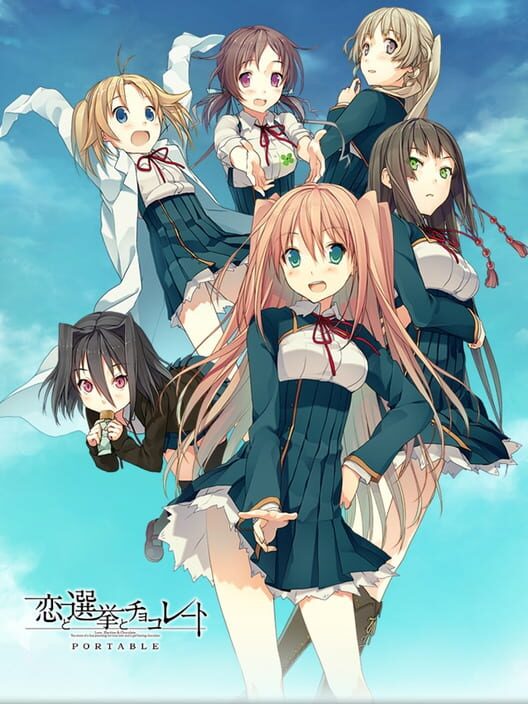
An all-ages version, titled To Heart 2 Portable, was released for the PlayStation Portable on July 30, 2009. Unlike previous releases, the PSP release allowed viewing the game in both the original 4:3 and widescreen 16:9 aspect ratios. It was released in three versions: "W Pack Limited Edition", "W Pack", and a regular edition. W Pack includes a version of To Heart playable on PSP, while the limited edition also includes figurines of characters Sasara and Ma-ryan.
A budget-priced version of Portable was released on April 25, 2013, while a downloadable version for the PlayStation Store followed on May 30. An enhanced re-release for the PlayStation 3, titled To Heart 2 DX Plus, was released on September 22, 2011 in limited and regular editions. DX Plus is a compilation of To Heart 2 and its spin-off To Heart 2 Another Days. It contains new
Reception
According to a weekly sales ranking conducted by Media Create, the original version of To Heart 2 was the fourth best-selling video game for the week ending on January 2, 2005, during which the game sold 86,485 copies. com instead placed this number at 82,949 copies sold. The game subsequently remained on Media Create's sales ranking at thirty-fourth, forty-seventh, and fiftieth until the week ending on January 23, 2005. In a sales ranking of bishōjo games conducted by PCNews, To Heart 2 X Rated's limited edition premiered at first place in the rankings.
It subsequently ranked third, thirty-sixth, sixteenth, and twice at thirty-second, before making its last appearance on the chart at fiftieth place in late March 2006. To Heart 2 Portable, the PSP version, was the ninth best-selling video game and sold 32,521 copies between July 27 and August 2, 2009. To Heart 2 DX Plus, the PS3 compilation, placed eighth in sales and sold 24,429 copies in Japan between September 19 and 25, 2011.
Sales surveys conducted by PCpress indicate that To Heart 2 Another Days was the most pre-ordered bishōjo game in Japan between mid-October 2007 and mid-January 2008. It also ranked first as the most widely sold bishōjo game in Japan in February 2008, and was the fifth most widely sold in March 2008. Manaka de Ikuno!! ranked second in bishōjo game pre-orders in Japan between mid-September and mid-October 2009, and it ranked third between mid-October and mid-November 2009.
Its limited and regular edition releases placed second and forty-second respectively in the sales rankings in January 2010, while the two releases collectively ranked thirty-third and fiftieth in the two following months. The PSP spin-off To Heart 2: Dungeon Travelers was the third best-selling video game and sold 37,396 copies in Japan between June 27 and July 3, 2011.
In the October 2007 issue of Dengeki G's Magazine, poll results for the fifty best bishōjo games were released. Out of 249 titles, To Heart 2 ranked third with seventy-four votes. com Bishōjo Game Ranking" where users vote online for the best games of the previous year in several different categories. For the 2005 ranking, the categories were: overall, scenario, music, visuals, gameplay system, and heroines.
Among the rankings conducted in early 2006, To Heart 2 X Rated placed sixth overall, eighth in scenario, seventh in music, fourth in visuals, and ninth in gameplay system. Two heroines from the game, Sasara and Manaka, ranked as the seventh and ninth most popular heroines respectively.