
The articlegameplay, story, development, reception
Story
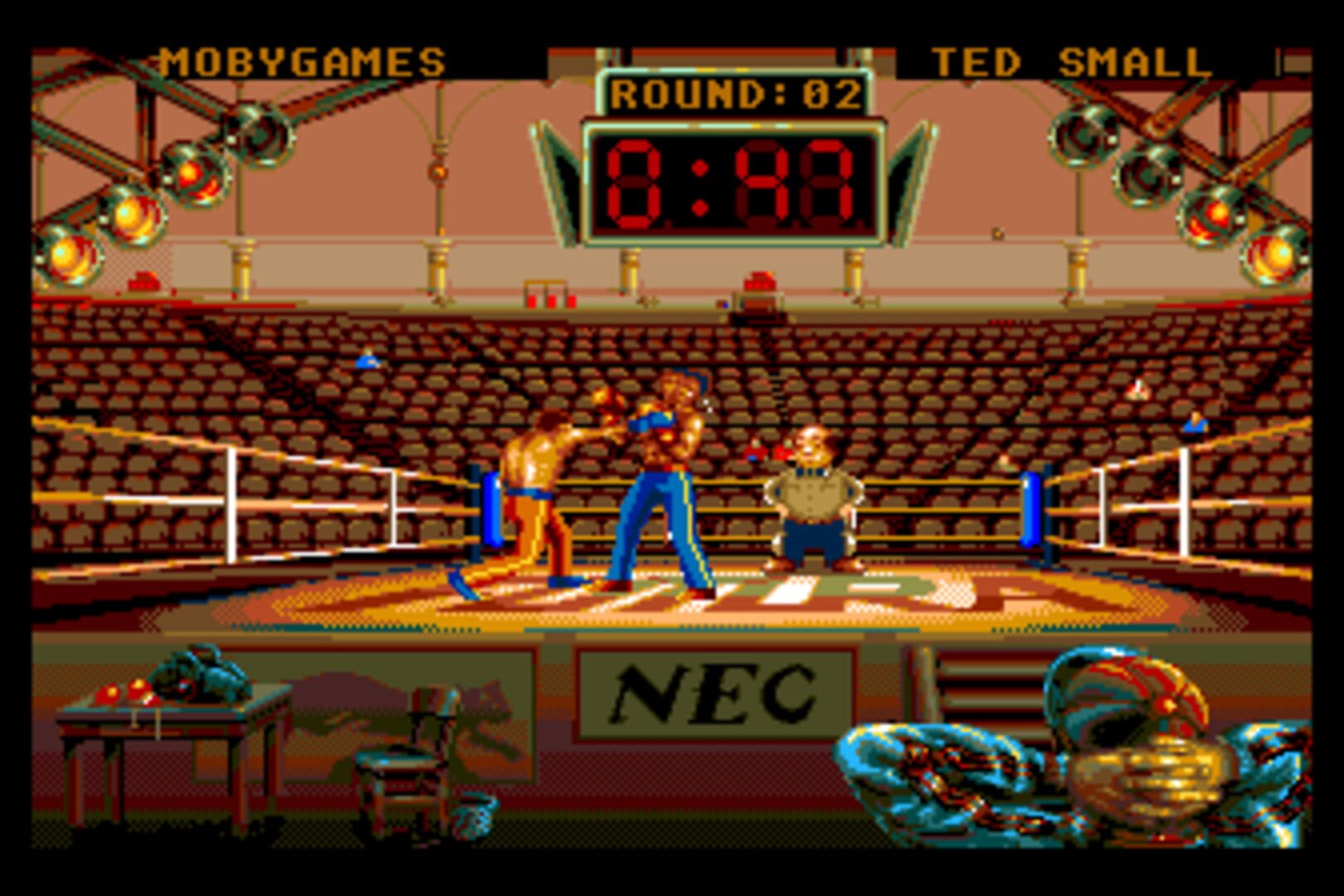
The player controls a kick boxer who fights their way up the league table defeating opponents, while their ultimate goal is to challenge the Champion André Panza and take his title. The Gymnasium section allows the player to train their character to improve one of three skills - strength, resistance, and reflex - which will improve their performance in future fights.
The game contains a total of 56 kicks and punches, which players can assign to one of the 8 joystick movements to customise their boxer's fighting style. Moves inspired by real-life kick boxing include long sweeps, short jabs, and crunching kicks.
Development
The game was developed by Futura. It was endorsed by French kickboxing then-champion André Panza, who also supplied technical advice. It contains realistic attacking and defensive moves, and around 600 frames of animation.
Panza Kick Boxing was originally published by Loriciels in France in 1991, and subsequently by NEC Technologies in the United States and Kixx (the budget range of U.S. Gold) in the United Kingdom, Germany, and Italy. The game was a new venture for NEC, which has previously built a business off their TV Sports series of events. Additionally, the game was published on the TurboGrafx-16 by Turbo Technologies, a joint venture by NEC and Hudson Soft.
Reception
ST Action and TurboPlay described it as "tremendous" and "fantastic" respectively, while Amiga Computing deemed it "extremely good". Adam Smith from Rock Paper Shotgun praised the animations for the referee. Games Village called it "one of the best Kickboxing simulators ever produced in history".
Mixed reviews were offered by reviewers like Tony Horgan of Amiga User International who criticised the game's repetitiveness which he argued is standard for this genre.
Legacy
A 1992 sequel was announced in October 1992 tentatively titled Panza Kick Boxing 2. The game, closer in design to a re-release, was published in Japan as The Kick Boxing (Micro World) and Super Kickboxing (Electro Brain) as Panza was unknown in the country. This updated version was later imported in the United States by Electro Brain as Best of the Best: Championship Karate in July 1993. The game has also been subtitled Panza Gold Edition.
Amiga Joker noted that while the gameplay, graphics, sound and options screen had been updated from the original, "apart from the title there are only a few real innovations", describing it as a "deceptive package". MegaTech suggested the latter title was an effort to tie the game to the 1989 martial arts film Best of the Best. Sega Zone described it as "one of the most differingly-named [sic] games in the history of gaming". The Australian Commodore and Amiga Review noted that while the game is officially a sequel, it's "almost a reproduction".


