The articlegameplay, story, development, reception
Gameplay
Plants vs. Zombies is a tower defense video game in which the player defends their suburban home from zombies. The lawn is divided into a grid, with the player's house to the left. The player places different types of plants on individual squares of the grid.
Each plant has a different style of defense, such as shooting, exploding, blocking. There are also support plants with creative abilities. Different types of zombies have their own special behaviors and their own weaknesses to different plants. For example, the Balloon Zombie can float over the player's plants, but its balloon can be popped by the Cactus.
Other examples of zombies include the Disco Zombie which summons Backup Dancers around himself; and the Dolphin Rider Zombie, which rides on a dolphin in the water to jump over a plant.
The zombies come in waves. With each wave defeated, another wave arrives and the density of zombies increases. At the end of every level, and often in the middle of levels too, there's an extra-large wave of zombies led by a flag-holding zombie.
The player can pick a limited number of types of plants through seed packets at the beginning of each level, and use a resource called "sun" to place them. The player collects sun by either clicking on sun icons that randomly appear over the lawn, or by using certain plants that generate sun, like Sunflowers and Sun-shrooms. Each type of plant recharges between each placement at various speeds. A shovel can be used to dig up and remove plants.
Positioned at the left end of each lane is a single-use lawnmower, pool cleaner, or roof cleaner; if a zombie reaches this end, these will activate and kill all zombies in that lane. If a zombie reaches the end of that lane without any last line of defense, the game ends, which forces the player to restart the level (or streak for Vasebreaker Endless).
There are five stages in the Adventure mode, each comprising ten levels. At the end of nearly every level, the player collects a new type of plant to use in subsequent levels. On the first level of stage two (level 2-1), zombies begin to occasionally drop in-game money when killed. After level 3-4, the player can spend the money at an in-game store called Crazy Dave's Twiddydinkies.
Crazy Dave offers boosts that the player uses to upgrade already-placed plants and gardening tools for the player's Zen Garden, which is unlocked after level 5-4 and allows the player to water and maintain a group of plants, which are obtained as loot from killing zombies or purchasing them through his store; in return, the plants generate money for the player. Every stage's fifth level has a mini-game challenge, often utilizing a conveyor belt that gives various plants to the player. On every stage's tenth level, the player also receives plants from a conveyor belt. Stages one, three, and the first nine levels of stage five occur in daylight, while stages two, four, and the final level of stage five occur at night.
During the nighttime stages, the player should use the lower-cost fungi plants due to the lack of natural sun generation at night. Stages three and four take place in the house's backyard, which has six lanes (unlike the usual five lanes) and features a pool taking up the middle two lanes. On the pool, all plants except Tangle Kelp and Sea-shroom must be placed on top of Lily Pads which, unlike most plants, can be placed directly on pool lanes. Stage four has fog that obscures most of the lawn.
And stage five takes place on the house's roof. This setting has the player use catapult plants, instead of the standard shooting plants, to account for the roof's upward slope. Also, all plants must be planted on top of a Flower Pot, which is the only plant able to be directly planted on the roof.
Adventure mode's last level pits the player against Dr. Edgar George Zomboss, an evil scientist and the zombies' animator. He destroys the player's plants by having his Zombot crush the plants or throw vans at them. He can additionally place fire and ice balls that roll across a lane.
The player must subdue these balls with Ice-shrooms and Jalapeños respectively. After completing the Adventure mode, the player can choose to play it again, this time with plants unlocked from the previous play-through, along with three randomly selected plants to begin each level.
Three additional modes—Mini-Games, Puzzle, and Survival—become available once Adventure mode is completed. In Mini-Games mode, the player selects from a collection of twenty mini-games. These levels pose the player with unique challenges, each using some gimmick—often variants of a conveyor belt that gives the player certain plants.
In Puzzle mode, the player selects from two types of levels: "Vasebreaker" and "I, Zombie". In "Vasebreaker", the player breaks open a set of vases, each containing a plant or a zombie. The level ends when all the vases are smashed and all the zombies are killed by Plants. In "I, Zombie", the player places zombies to get past pre-placed cardboard cut-outs of plants, aiming to eat the brain at the end of each lane.
If there are no zombies present in the lawn and not all 5 brains were eaten while having less than 50 sun (or for the case of its endless version, starting the next streak with sun count below 50), a game over occurs that forces the player to restart the puzzle (finite levels) or streak (endless version). Survival mode offers a selection of levels in which the player chooses plants to defeat increasingly challenging waves of zombies.
Development
Plants vs. Zombies was designed by George Fan. Imagining a more defense-oriented version of one of his previous titles, Insaniquarium (2001), and having played some Warcraft III tower defense mods, he was inspired to make a tower defense game. Fan considered a sequel to Insaniquarium for the Nintendo DS where each screen would represent a separate fish tank—one on top of the other.
Aliens would attack the top fish tank and, if successful, would break into the bottom fish tank. Gameplay in the top tank would focus on defense against the aliens, while in the bottom tank it would revolve around resource generation, akin to Insaniquarium. But inspired by Warcraft III's towers, he felt that plants would make good defensive structures. He wanted to bring new concepts to the genre and believed the fact that enemies in tower defense games would never attack the towers was unintuitive.
To address this, he began designing the five- and six-lane setups that would later be used in the final game. Enemies were at first the aliens from Insaniquarium, but while Fan was sketching concept art, he drew what he considered "the perfect zombie", and the theming was reworked. Fan went with using zombies instead of aliens in order to make the game stand out from other video games using plants.
Insaniquarium substantially influenced the development of Plants vs. Zombies. The games have similar pacing, determined by the "drip-feeding" of pets and plants respectively, and choosing plants at the beginning of each Plants vs. Zombies level is analogous to choosing pets in Insaniquarium.
Fan also took inspiration from the film Swiss Family Robinson, in which a family defends themselves and their home against pirates. Fan included elements from the trading card game Magic: The Gathering, which he had played with his girlfriend, Laura Shigihara. Showing her how to customize their card decks inspired him to design Plants vs. Zombies with seed packets—instead of his original idea of a conveyor belt that gave random plants—due to the seed packet system's greater complexity.
While the conveyor belt was dropped from the more common game mode, it remained a special element in select levels. The use of multitasking between lanes was influenced by and was featured prominently in the old arcade game Tapper.
When the game featured aliens, its working title was Weedlings, but Fan thought the name a poor fit because of how many gardening-themed video games were being released at the time. It was renamed Plants vs. Zombies as a placeholder after the enemies were changed. The planned name for most of development was Lawn of the Dead, a pun on the title of the George A.
Romero zombie film Dawn of the Dead. Romero did not permit usage of the name, even after a plea from Fan, who sent Romero a video of himself dressed as a Zombie Temp Worker grunting and programming on a computer, subtitled with references to runtime errors. There were many other candidate names, including Residential Evil and Bloom & Doom, the latter of which was used as the branding on the in-game seed packets.
Plants vs. Zombies was initially designed by Fan alone. Because Fan was a full-time employee at PopCap Games, the video game company helped build up a small team consisting of a composer (Laura Shigihara), a programmer (Tod Semple), and an artist (Rich Werner). Fan was based in San Francisco, while Werner was in Seattle.
Stephen Notley is credited as being a writer for Plants vs. Zombies. He wrote the plant and zombie descriptions in the in-game guide, the Suburban Almanac. Fan found working in small teams to be easier than working in large teams.
According to an interview with Edge, while searching for an artist, Fan discovered Rich Werner, whose work Fan thought matched with his design intentions. Fan attributed the design's intrigue to its animation scheme; Tod Semple suggested using Adobe Flash, which Fan worried would generate an animation "cut out from paper" and too closely resembling South Park, but he was ultimately satisfied, crediting Semple and Werner's talent. Plants vs. Zombies was made using PopCap Games's own engine: PopCap Framework.
Fan consistently posted updates of Plants vs. Zombies every four months in an internal forum within PopCap Games called Burrito, where he accepted feedback from the employees of PopCap.
When the concept of Plants vs. Zombies was first established as a sequel to Insaniquarium, Fan wanted to make a game where the aliens invade the player's garden. Originally, his intent was to make a gardening game where plants are grown as an investment to afford defenses against an alien invasion. After Fan created the "perfect zombie", the enemies were changed from aliens to zombies.
He trimmed the concept of simultaneously defending and maintaining the garden, feeling that the repetitive gardening detracted from the main gameplay. Simplifying the gardening system, Fan restructured the game's main aspects to fit better into the tower defense genre, and later added further elements inspired by other games. Fan enjoyed the idea of plants defending against the zombies, combining two distinct species that were not yet touched by other game developers at the time. Plants playing as the role of towers made sense to him, acting as stationary defense against the recurring waves of zombies.
Zombies were designed to move in the current linear five- and six-lane system in the final game, allowing the enemy zombies to interact with the defensive plants, a refinement in the game that Fan felt worked as a unique gameplay mechanic to make Plants vs. Zombies stand out in the tower defense genre amongst other tower defense games popular at the time.
Plants vs. Zombies took three and a half years to make. Much of the first year of development focused on Adventure mode; Semple afterward suggested brainstorming concepts for Mini-Games mode. "Vasebreaker" and "I, Zombie" originated from those ideas as individual levels before Fan, who enjoyed tweaki
Reception
On May 20, 2009, Plants vs. Zombies was declared the fastest-selling video game created by PopCap Games, quickly becoming their best-selling video game; surpassing their previous popular games: Bejeweled and Peggle. Fan estimated half of sales came from hardcore gamers. Larry Hryb, director of programming for Xbox Live, reported that Plants vs.
Zombies was the thirteenth most purchased 2011 game on Xbox Live Arcade. Plants vs. Zombies was particularly successful on the App Store. According to PopCap, the iOS release of Plants vs.
Zombies sold more than 300,000 copies during its first nine days, generating more than $1 million in gross sales. It rose to number one in sales and money grossed from a mobile video game before losing the spot nine days after release. As of April 2016, nine million copies have been downloaded across all iOS platforms.
According to Metacritic, Plants vs. Zombies received "generally favorable" reviews and "universal acclaim" on all platforms except the DSiWare version, which received "mixed or average" reviews. It has been considered one of the greatest video games of all time. Some reviewers found the core mechanic straightforward, but the game itself challenging.
GamesRadar+'s Tom Francis said that Plants vs. Zombies was only casual in its easiness to understand its premise; he clarified, "There's nothing casual about the 30 goddamn hours we've spent, effectively, gardening." Seth Schisel from The New York Times said kids and adults alike would enjoy Plants vs. Zombies.
Others disagreed: GameSpot editor Chris Watters said, "Tower defense veterans will have to endure a lot of simple, familiar action in order to find a real challenge, and the wait may prove too long for some"; GamePro's Tae Kim said that Plants vs. Zombies was not particularly easy or hard, and that he never had to restart despite being "terrible at these sorts of games." John Walker of Rock Paper Shotgun said the difficulty sometimes felt artificial.
Despite his criticism of the game's difficulty, Watters praised Plants vs. Zombies's constant introduction of new plants, which kept the game fresh. Eurogamer editor Christian Donlan agreed: every zombie challenges the player and each new plant allows for a new strategy. Many critics commended Plants vs.
Zombies for its minimalistic tutorial allowing experimentation; some had believed the entire Adventure mode was a long tutorial, or a warmup, for other game modes. Many critics praised the game for the replay value offered by additional game modes; Francis said that by the time the player finishes Adventure mode; "the obscene wealth of other things to do already outweighs it for entertainment value."
The art style and music of Plants vs. Zombies have also been praised. Susan Arendt from The Escapist said "the music is excellent, [and] the art is charming and adorable." Many reviewers have called the graphics from Plants vs.
Zombies "adorable". Watters praised the unit animation, elaborating that they had a "great sense of personality". Some drew attention to the game's humor. Wired's Earnest Cavalli said that while the idea behind Plants vs.
Zombies sounds macabre, "every level of the game offers something to laugh about". Marc Saltzman from Gamezebo found humor in the game's many killing methods. IGN editor Daemon Hatfield praised the game's music; he called it a "catchy, organic soundtrack that becomes more intense as your yard is flooded with enemies". In contrast, Walker found the soundtrack "disappointing" and stated, "After the promise of the gorgeous music video, the hope of similarly catchy in-game tunes is not kept."
Critics commended the iPhone port of Plants vs. Zombies for being faithful to the PC version and for its Quick Play mode, but many were disappointed by its omission of the other game modes. Many reviewers praised the iPad port's inclusion of the Mini-Games mode and the Survival mode, along with "Buttered Popcorn", the exclusive mini-game. The Xbox 360 port of Plants vs.
Zombies was praised for its addition of exclusive game modes, including a Co-op mode and a Versus mode. The Nintendo DS port was commended for its four new mini-games and its versus mode from the Xbox 360 version, but was considered inferior in its animation and graphics. The port was also criticized for its comparatively high price, for the DS top screen's sole usage as an indicator of level progression, and for unstable frame rate. Many critics found the PS Vita version faithful to the PC version, though unsure about whether or not there enough significant additions in this version to recommend to someone who already has Plants vs.
Zombies on another platform.
Ultima creator and mogul Richard Garriott said in 2011 that Plants vs. Zombies was his favorite game of all time.
Plants vs. Zombies was nominated for various categories in the GameSpot Best of 2009, 2009 Spike Video Game Awards, the 13th and 14th Annual Interactive Achievement Awards, the 10th Annual Game Developers Choice Awards, and the 6th and 7th British Academy Games Awards. It won the categories of "Download Game of the Year" and "Strategy Game of the Year" in the Golden Joysticks Awards 2010, and the category of "Best Casual Game" in the 7th International Mobile Gaming Awards. Electronic Arts (EA) claims that Plants vs. Zombies has won over 30 Game of the Year awards.
Legacy
PopCap Games and its assets were bought by Electronic Arts on July 12, 2011, for $750 million. Fifty employees were laid off from PopCap Games' Seattle studio on August 21, 2012, marking a switch of focus to mobile and social gaming. After a statement by Edmund McMillen, creator of The Binding of Isaac, rumors circulated that Fan was fired by EA because he opposed implementing pay-to-win mechanics in Plants vs. Zombies 2.
Fan confirmed in a 2017 tweet that he had been laid off, and that he opposed the freemium aspects of Plants vs. Zombies 2, but did not link the two events.
Three former PopCap employees have argued against the notion that Fan was fired because of his concerns over the game, including Allen Murray, a former producer of Plants vs. Zombies 2. They said Fan was fired as part of the systematic lay-offs in August 2012, and was not even part of the Plants vs. Zombies 2 team; he was working on other ideas for games at the time, including a game called Full Contact Bingo.
He had lost interest in Plants vs. Zombies when EA began envisioning the game as a huge franchise. Fan worked on the arcade game Octogeddon after being laid off, initially as part of a Ludum Dare contest. The game idea was received positively and Fan formed a company along with Werner, the artist of Plants vs.
Zombies, and Kurt Pfeiffer, the programmer of the Xbox 360 port. They developed Octogeddon for several years, releasing it on February 8, 2018, to generally positive reviews, according to Metacritic.
Since EA's acquisition of PopCap Games, Plants vs. Zombies has expanded into a franchise spanning many consoles and several genres. Plants vs. Zombies Adventures, a spin-off and social game, was released for Facebook on May 20, 2011, and closed on October 12, 2014.
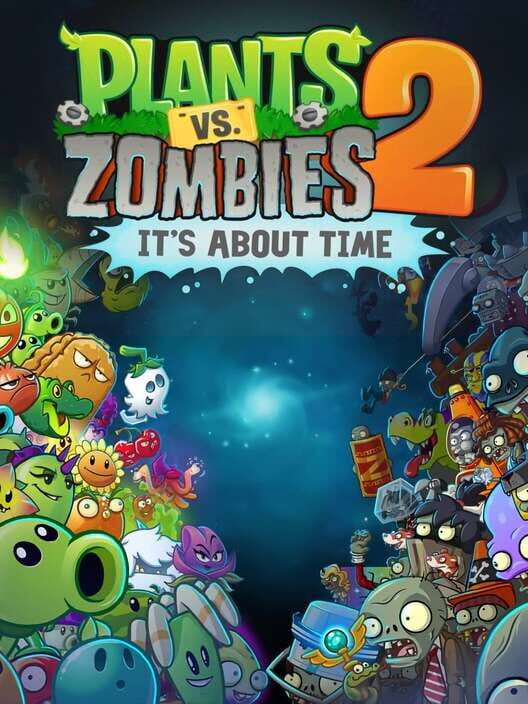
A mainline sequel named Plants vs. Zombies 2 was released for iOS on August 14, 2013. Plants vs. Zombies: Garden Warfare, a multiplayer third-person shooter, was released on February 25, 2014, for the Xbox 360, PlayStation 3, and Xbox One, and its sequel was released on February 23, 2016, for the PlayStation 4 and Xbox One.
A digital collectible card game, Plants vs. Zombies Heroes, was released internationally for the iOS on October 18, 2016. The franchise released its third third-person shooter, Plants vs. Zombies: Battle for Neighborville, on October 18, 2019, for the PlayStation 4 and Xbox One.
A third mainline title is currently in development for Android and iOS as of October 2020.
According to Metacritic, nearly all the sequels and spin-offs of Plants vs. Zombies received generally positive reviews. Despite his opposition to Plants vs. Zombies 2's freemium model, Fan has praised the series for delving into different genres, particularly Plants vs. Zombies Heroes for entering digital card-collecting; he hopes EA will continue the series into more genres while keeping the charm of the original.
In April 2012, PopCap announced that it had licensed Plants vs. Zombies merchandise to multiple distributors, serving as the first merchandising partnerships involving PopCap. During the development of Zen Pinball 2 and Pinball FX 2, Zen Studios and PopCap made a downloadable content (DLC) interactive pinball table based on Plants vs. Zombies and using PopCap assets. The DLC was released on September 4, 2012, in North America and September 5 in Europe.
In July and August 2013, Dark Horse Comics released six issues of a comic book adaptation miniseries onto an iOS app. The miniseries was called Lawnmageddon, written by Paul Tobin and drawn by Ron Chan. Dark Horse Comics continued releasing issues for the next two years. In 2015, Dark Horse Comics started a monthly release of the comic series, in both digital and print; every three issues formed a separate miniseries, with the first called Bully for You.
Characters from the comic series were adapted into Plants vs. Zombies 3.
According to Chris Carter, editor-in-chief of Destructoid, Plants vs. Zombies is frequently referenced in pop culture. Fan said his favorite homage to the game is the Magic: The Gathering card "Grave Bramble", created as part of the Innistrad expansion. A re-creation of Plants vs.
Zombies was added as a mini-game quest known as "Peacebloom vs. Ghouls" to World of Warcraft as part of the World of Warcraft: Cataclysm expansion. Shigihara provided some music for the quest. The song "Bad Guy" (2019) by Billie Eilish was inspired by the theme music for Plants vs.
Zombies.
During a Nintendo Direct presentation in July 2025, a remaster titled Plants vs. Zombies: Replanted was revealed. Described as "the definitive [Plants vs. Zombies] remaster", it includes high-definition video, multiplayer compatibility, additional game modes, and unreleased concept art. Replanted released for Windows, Nintendo Switch, Nintendo Switch 2, PlayStation 4, PlayStation 5, Xbox One, and Xbox Series X/S on October 23, 2025.