
2026 · Mod · Platformer
Project Dream
Mod
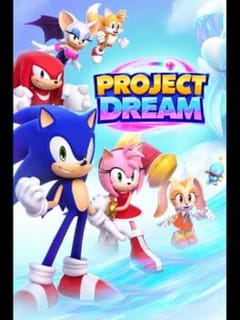
Project Dream is a community-developed native conversion wrapper that allows the macOS version of Sonic Dream Team to run natively on Windows and Android platforms. It utilizes the original game code without emulation or recompilation, including integrated support for the Unity Melon Loader modding framework.
- Released
- 28 October 2026
- Platforms
- AndroidWindows
- Genres
- Platformer
- Developers
- —
- Publishers
- —
- Modes
- Single-player
- Perspective
- Third person
- Themes
- Action
About
Project Dream was the codename of a cancelled role-playing video game (RPG), Dream: Land of Giants, which served as the basis for the 1998 game Banjo-Kazooie. Developed by Rare, it was aimed for release on the Super Nintendo Entertainment System (SNES), and later the Nintendo 64 (N64). The plot followed a young boy, Edson, who caused trouble with pirates. The SNES version of Dream used an isometric perspective and had a fairy tale theme.
After transitioning to the N64, the project became a more complex 3D RPG that had a greater emphasis on the pirate theme. Eventually, Dream was scaled back to a linear platform game in the vein of Donkey Kong Country (1994) that starred Banjo the bear, who became the protagonist of Banjo-Kazooie.
›Story
Dr. Eggman captures Cream the Rabbit and Cheese to use them as conduits for an ancient, dream-manifesting artifact called the Reverie, trapping himself and Sonic's crew inside a twisted dreamscape
Keywords
- unofficial
- sonic
- unofficial port
- fanmade
The articlegameplay, story, development, reception
Story
During most of its development period, Project Dream was a role-playing video game (RPG) that focused on a boy named Edson and his pets Dinger the dog and Billy the parrot. In its story, a band of pirates led by Captain Blackeye searched for "floaty", a substance that would allow their ships to fly. Edson got into trouble with the pirates and set off on a journey with his girlfriend to escape them. The Super Nintendo Entertainment System (SNES) version used an isometric perspective and had a fairy tale theme.
Edson used a wooden sword to fight trolls and Dinger performed actions to assist him, such as going ahead and digging holes to find items. Occasionally, a dinosaur would appear and attempt to crush Edson by stepping on him; falling leaves and the virtual camera system shaking warned the player when it was approaching.
Development
After Nintendo released the SNES, Rare used the profits they made from Nintendo Entertainment System games to invest in Silicon Graphics workstations. Rare used this high-end technology to develop Donkey Kong Country (1994), which was a critical and commercial success, becoming the second best-selling SNES game behind Super Mario World (1990). After finishing Donkey Kong Country, Rare staff decided to apply the technology to a new game that was not a platformer. They settled on developing an RPG, as they were all fans of the genre.
The codename Dream was chosen because they wanted their RPG to have a fantastical, magical feel. Dream used Donkey Kong Country's graphics technology to an advanced level. It was inspired by Japanese RPGs and LucasArts adventure games; the team wanted to combine those games to create one with a "Rare flavour". Dream was developed by Rare's Donkey Kong Country 2: Diddy's Kong Quest (1995) team and was announced in 1995.
Legacy
When Dream staff saw Nintendo's Super Mario 64 (1996), they realized it was going to set the standard for 3D games and ruin their project. They scrapped their work on Dream and began developing a new game inspired by Super Mario 64. Banjo was kept because the team liked the character. The fantasy theme was restored, and within another 16 months, Rare had finished Banjo-Kazooie.
The game was released in 1998 and was a commercial success, topping the United Kingdom all-format charts—a feat a Rare game would not accomplish again until its 30th anniversary game Rare Replay in 2015—and attracted critical acclaim. The antagonist of Dream, Captain Blackeye, has cameo appearances in Banjo-Kazooie and its sequel Banjo-Tooie (2000); in Tooie, he gripes about how a bear stole his glory, referencing the development of Dream. Numerous assets from Dream were also reused in Banjo-Kazooie. Dream's pirate theme was eventually recycled in Rare's 2018 game Sea of Thieves.
Releases by platformdates and regions as published
Editions and related releases
- Part of
- Sonic Dream Team
Games like this
 90
Bugdom 2
2002 · Linux, Windows +2
Platformer · Often paired
 PlayStation exclusive73
The Last Tinker: City of Colors
2014 · Linux, PlayStation 4 +2
Platformer · Often paired
 65
Ice Age: Scrat's Nutty Adventure
2019 · Nintendo Switch, PlayStation 4 +4
Platformer · Often paired
 75
Asterix & Obelix XXL: Romastered
2020 · Remaster · Nintendo Switch, PlayStation 4 +4
Platformer · Often paired
 73
SpongeBob SquarePants: The Cosmic Shake
2023 · Android, Nintendo Switch +6
Platformer
 56
Whiplash
2003 · PlayStation 2, Xbox
Platformer

BurgerTime
2025 · Apple II, Atari 2600 +11
Platformer · Unofficial
 PlayStation exclusive60
Shadwen
2016 · Linux, PlayStation 4 +2
Platformer
Collections1 collection
Development status
Description adapted from its source, CC BY-SA 4.0.