The articlegameplay, story, development, reception
Gameplay
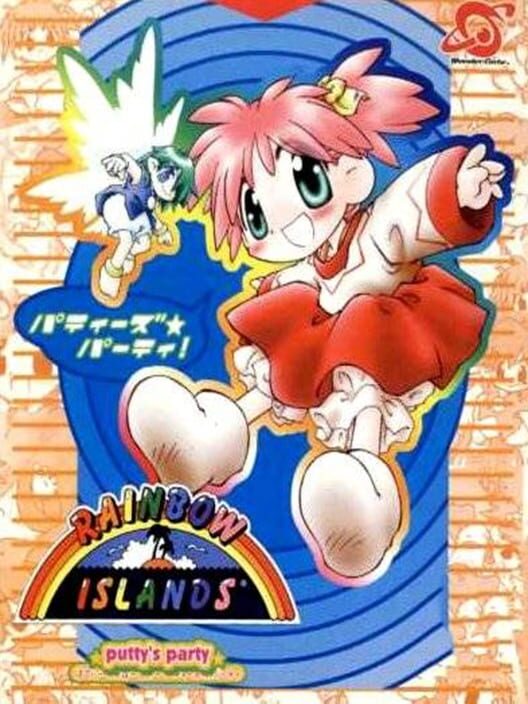
Following the events of Bubble Bobble, Bubby and Bobby set out to defeat the "Dark Shadow" and rescue the Rainbow Islands. The Dark Shadow is the entity responsible for the events in Bubble Bobble. The game is set on a chain of ten islands, each one with a different theme. Each island provides four rounds of game-play, and once these are complete the player moves to the next island in the chain.
In each round the player must get to the top before the sea level rises and kills them. The islands get progressively more difficult, with enemies moving much faster on the later ones. These are depicted on a map screen before the start of each island.
Players can release rainbows that act as weapons, makeshift platforms, and item collectors. Slinging rainbows damages any enemies and acquires any items that the rainbows come in contact with. When jumped upon, they fall down, beating any enemies below them, and releasing a damage field above them. Collecting power-ups increases the player's speed, the speed of the rainbows and how many are spawned. If players take too long in a level, water will start to rise up from the bottom of the stage, and will kill the player character if it rises above his head.
Like its predecessor, the game has multiple endings. To get a big diamond, the player must collect seven different-colored small diamonds on the island and finish the round. The small diamonds are found by destroying enemies by dropping a rainbow on them from above or destroying them with various special items. After collecting the small diamonds, a word "NICE" appears.
If the small diamonds are collected in the correct order, the player will get to a secret room at the end of each island, which contains a permanent power up. The color of the small diamonds depends on where the fallen enemies land, so the player can somewhat determine which diamond colors will drop.
The scoring system also has secrets, which allow vastly higher scores to be achieved than normal.
Reception
In Japan, Game Machine listed Rainbow Island: The Story of Bubble Bobble 2 as the second most successful table arcade unit of November 1987. It went on to become one of the top ten highest-grossing arcade games of 1988 in Japan. The Spectrum version of the game was number one on the UK sales chart from May to June 1990 at the time of release. It was re-released at a budget price, and was number one again from October 1992 to March 1993. It was also the top-selling Amiga budget title of March 1992.
UK magazine C&VG gave the ST version a score of 93%, praising the graphics and calling the game addictive and "tremendous fun". It was awarded 94% in the April 1990 issue of Your Sinclair and was placed at number 8 in the "Your Sinclair official top 100". In issue 93 of the same magazine, the readers voted it the second best game of all time. It was also awarded a 94% score in Crash.
The readers of Crash voted Rainbow Islands the number one game of all time in December 1991. MegaTech magazine said it was "virtually arcade perfect, with only flickery sprites letting the side down".
Edge wrote in 1994 that "Taito's Rainbow Islands has all the ingredients for a superb videogame – incentives, copious rewards and bonuses, and intelligent bosses".
Despite these accomplishments, in his review of the Bubble Bobble Featuring Rainbow Islands pack, Rich Leadbetter of Sega Saturn Magazine said Rainbow Islands was "vastly underrated and over-looked". He added that the gameplay still felt fresh and unique despite the passage of years, and was good enough to make the collection a must-have by itself.
The Amiga version of Rainbow Islands was the first game to reach number one on Amiga Power's annual All Time Top 100 list in 1991, and again in 1992. It held the spot for years until losing to Sensible Soccer, which retained the title for the rest of the magazine's run. In 1992, Mega magazine ranked the Mega Drive version ninth on its "Mega Top 100 Carts" list. In 1993, Commodore Force ranked the game at number five on its list of the top 100 Commodore 64 games. In 1996, GamesMaster ranked the game 79th on its list of the "Top 100 Games of All Time".