
The articlegameplay, story, development, reception
Development
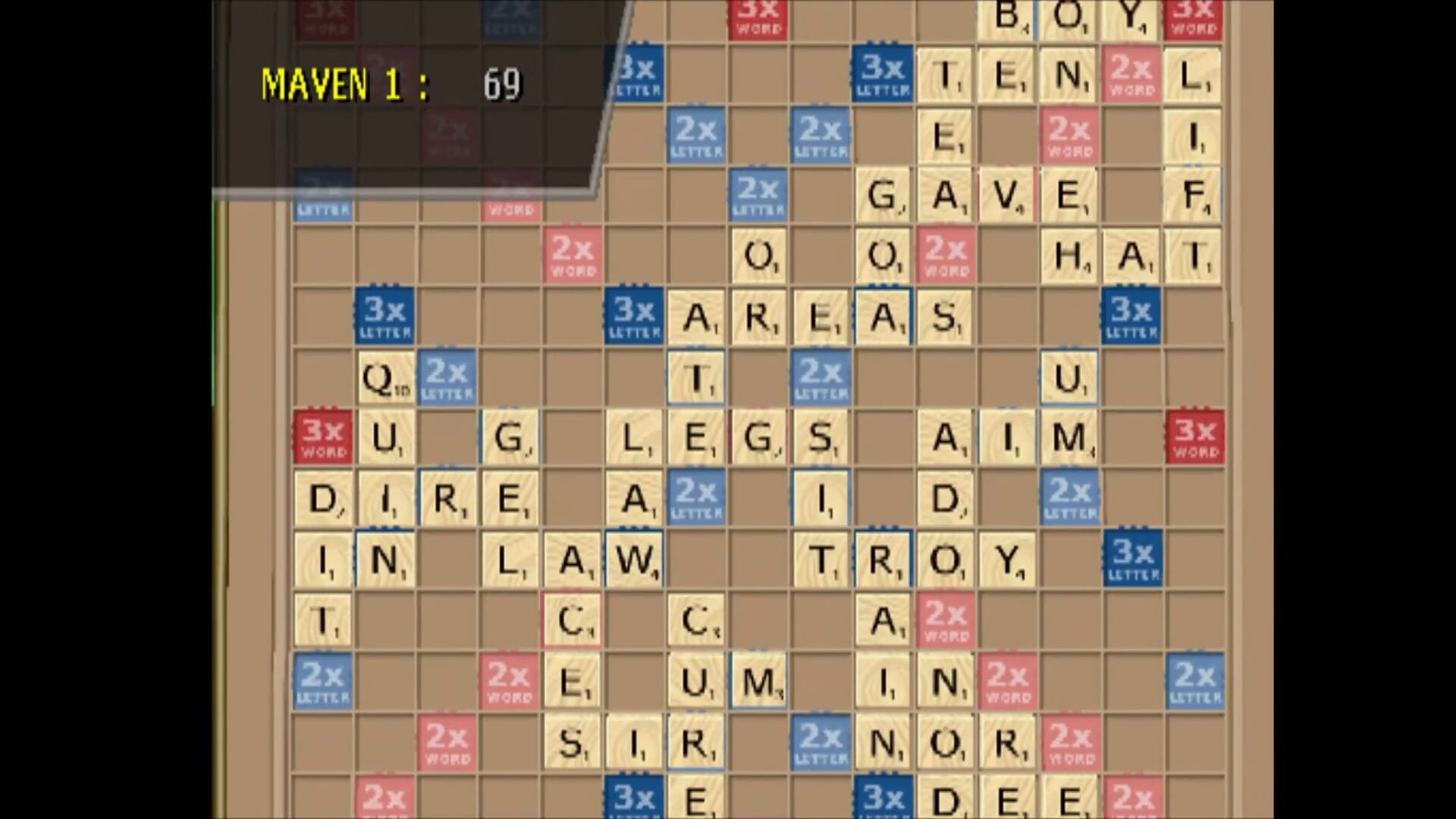
In 1931 in Poughkeepsie, New York, the American architect Alfred Mosher Butts created the game as a variation on an earlier word game he invented, called Lexiko. The two games had the same set of letter tiles, whose distributions and point values Butts worked out by performing a frequency analysis of letters from various sources, including The New York Times. The new game, which he called Criss-Crosswords, added the 15×15 gameboard and the crossword-style gameplay. He manufactured a few sets himself but was not successful in selling the game to any major game manufacturers of the day.
In 1948, James Brunot, a resident of Newtown, Connecticut, and one of the few owners of the original Criss-Crosswords game, bought the rights to manufacture the game in exchange for granting Butts a royalty on every unit sold. Although he left most of the game (including the distribution of letters) unchanged, Brunot slightly rearranged the "premium" squares of the board and simplified the rules; he also renamed the game Scrabble, a real word that means "scratch frantically". In 1949, Brunot and his family made sets in a converted former schoolhouse in Dodgingtown, Connecticut, a section of Newtown. They made 2,400 sets that year but lost money.