The articlegameplay, story, development, reception
Gameplay
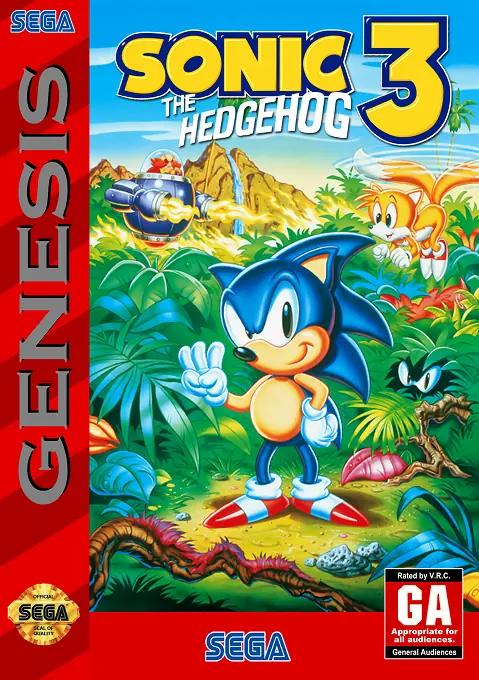
Sonic the Hedgehog 3 is a 2D side-scrolling platformer. As with Sonic the Hedgehog 2, players control Sonic while Tails runs along beside him; a second player can join at any time and control Tails separately. Players may also play as Sonic or Tails alone. Sonic 3 adds the ability for Tails to fly for a short time by spinning his twin tails like a helicopter rotor. Unlike Sonic, Tails can also swim underwater.
Sonic 3 takes place over six zones, each divided into two acts. Levels are populated with "Badniks", robots created by the villain, Dr. Robotnik; Sonic and Tails can defeat them by jumping on them or using the "spin dash" attack, which also gives the character a speed boost. The levels include obstacles and other features such as vertical loops, corkscrews, breakable walls, spikes, water that the player can drown in, and bottomless pits.
Story
After Sonic and Tails defeat Dr. Robotnik in Sonic the Hedgehog 2, Robotnik's space station, the Death Egg, crash-lands on the floating Angel Island. The impact from the Death Egg's crash causes the island to fall into the ocean. There, Robotnik meets Knuckles the Echidna, the last member of an ancient echidna civilization that once inhabited the island.
Knuckles is the guardian of the Master Emerald, which grants the island its levitation power and has an equal power level of the seven Chaos Emeralds. Robotnik dupes Knuckles into believing Sonic is trying to steal the Master Emerald, and that the launch base is Sonic's base, turning the two against each other while he repairs the Death Egg.
Development
Like Sonic the Hedgehog 2, Sonic the Hedgehog 3 was developed in California by Sega Technical Institute (STI). After the completion of Sonic 2, the producer, Yuji Naka, refused to develop another Sonic game with the Americans. STI split into two teams: one composed of Japanese developers, who worked on Sonic 3, and the other Americans, who worked on Sonic Spinball. Naka and Hirokazu Yasuhara were the primary creators of the Sonic 3 design document and project schedule. Naka selected the majority of the team, while the STI director, Roger Hector, oversaw development and Pamela Kelly led the marketing.
Development began in January 1993. The team initially used the Sega Virtua Processor chip, allowing for 3D graphics. They created a prototype with isometric graphics with the working title Sonic 3D. The original special stage featured a polygonal Sonic in a figure eight-shaped stage.
Reception
In the United States, Sonic 3 was the top-selling Sega Genesis game in February 1994. It became one of the best-selling Genesis games, selling at least 1.02 million copies in the United States. Together, Sonic 3 and Sonic & Knuckles sold 4 million cartridges worldwide.
Like its predecessors, Sonic 3 received critical acclaim. Critics generally felt Sonic 3 was the best game in the series so far. Andrew Humphreys of Hyper, who declared himself not a Sonic fan, said it was "undoubtedly" the best of the series, including the acclaimed but obscure Sonic CD, though he said he preferred Sonic 2's special stages by a small margin. Sega Magazine, however, stated that Sonic 3 has better special stages and was not only superior to Sonic 2 as a whole but would be "a serious contender for the Best Platform Game Ever award".
Legacy
Sonic 3 was the first appearance of Knuckles the Echidna, who featured prominently in later Sonic games. Sonic the Comic (UK) and the Archie Sonic the Hedgehog comic (US) published adaptations of Sonic 3. For Sonic's 20th anniversary, Sega released Sonic Generations in 2011, which remakes elements of various Sonic games. The Nintendo 3DS version features a remake of the final boss and a rearranged version of the "Game Over" theme.
The Hydrocity Zone level appears in the 2017 game Sonic Mania. Elements of the 2022 film Sonic the Hedgehog 2 were based on Sonic 3.