
The articlegameplay, story, development, reception
Gameplay
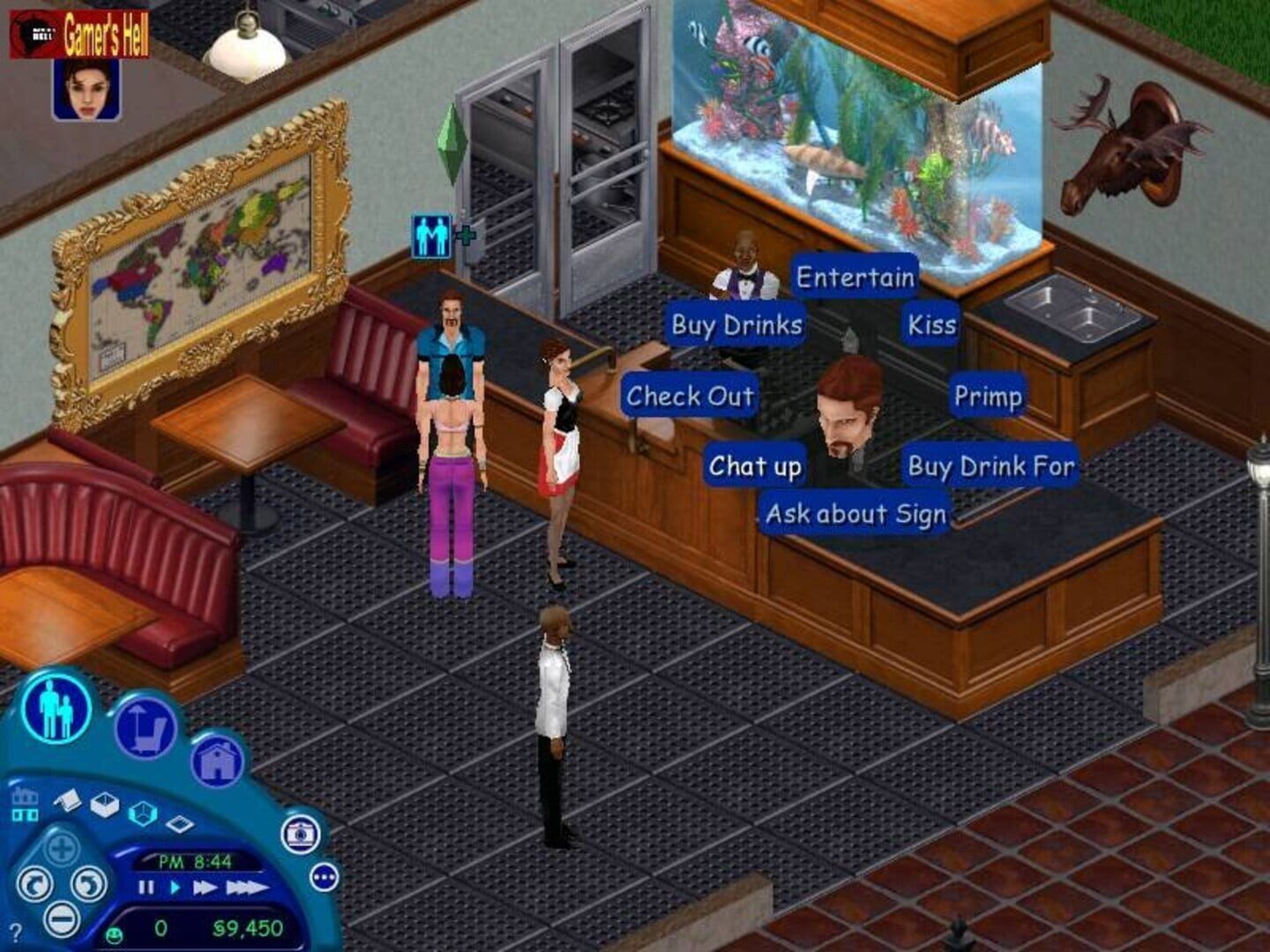
Hot Date was the first expansion pack to allow the player to visit another lot with their Sim. It introduces a new Downtown area for Sims to visit, with ten lots the player can bulldoze or edit outside of play mode. In play mode, Sims can now use their telephones to call a taxi that takes them to downtown SimCity, which has restaurants, shops, parks, and a few beachfront lots. In Downtown, Sims can meet Townies, non-player characters the players Sims can socialize with. Most of the townies are randomly generated based on the skins in the skin folder, but a couple of them are "archetypes" with a preset appearance and personality, like the Flirt, the Partier, or the nerdy Wallflower.
Hot Date revises the relationship mechanics of the game. Instead of one relationship bar to show how a Sim feels about another Sim, there's now two bars, one for short term relationships and one for long term relationship. The long term relationship bar changes based on the short term relationship, but can also be raised by successful romantic interactions. With Hot Date, mood plays a larger role in how a Sim reacts to social interactions.
Development
The core objective of Hot Date for developer Maxis was to "get Sims out of the house", and "creating more interesting places for your Sims to go and giving them a much greater range of interactions". In order to facilitate the overhaul of the interaction system, the developers added a daily and lifetime relationship rating due to it being perceived as "too easy to get high relationships" in the original game. Because of the expanded scope of the project, Maxis expanded an additional team of 12-14 staff to develop the expansion, including contracting studio New Pencil, who created most of the sprite assets for the game. Development of Hot Date was completed on 3 November 2001 and shipped on 14 November.
Reception
Hot Date was a commercial success and one of the highest-selling computer games of 2001 and 2002. According to NPD annual sales charts for computer games, Hot Date ranked as the seventh highest selling game in 2001 and fifth highest in 2002, with the Entertainment Software Association similarly ranking the game sixth in 2002. The game topped monthly ChartTrack and Virgin Megastores sales charts for computer games in January 2002 in the United Kingdom.
According to review aggregator Metacritic, Hot Date received "generally favorable" reviews from critics. Several critics considered the expansion to be more substantial in content than its predecessors, Livin' Large and House Party, with Mark Hill of PC Zone describing the game as a "significant addition", and Cam Shea of Hyper finding the game to be a "breakthrough" that "truly [offers] something more than just extra frills and gimmicks". Elizabeth McAdams wrote that "there's enough going on to actually make it feel like a new Sims game", stating "this is the add-on Maxis should have released long ago". Vincent Lopez of IGN stated the expansion was not a "full-fledged leap", but was "certainly the largest step the game has taken".
Legacy
Producer Tim LeTorneau retrospectively remarked that Hot Date was a "big transition for the franchise" in "[breaking] the barrier of the house". LeTorneau expressed that the expansion was the starting point for the development of future innovations to the scope of the series, drawing comparisons with the setting of the neighborhood in The Sims 2 and the open-world design of The Sims 3. Hot Date also received retrospective praise, with TheGamer noting the expansion provided players with the "highly underrated" aspects of complex relationships and interests "really gave personality to your Sims". The inclusion of downtown areas was later implemented in The Sims 2: Nightlife.


