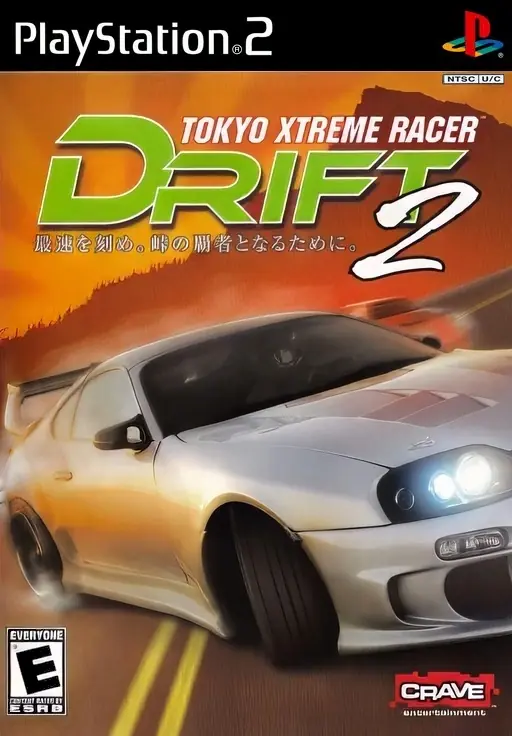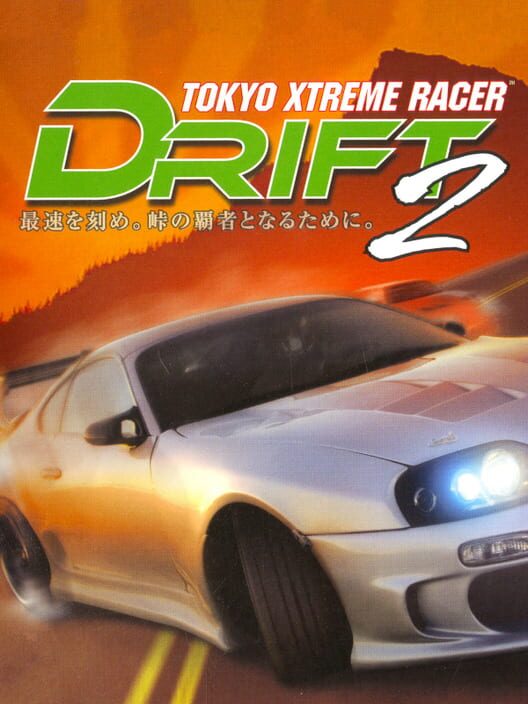
The articlegameplay, story, development, reception
Gameplay
The career mode (or Conquest mode in the game as it is called) features a single driver (with name provided by the player, default name is "k_taro") on their quest to become the best racer in the Osaka Prefecture area. The player, depending on the first three letters of the name they enter, which would correspond to the first three digits, starts with anywhere between 1,700,000 and 2,990,000 CP to buy a car. The Conquest mode has been significantly changed from the first game, with several new real-life locations being added. Hakone and Haruna return from the original game, while several new locations, like Shiga Kusatsu, Hiroshima, Nikko and Mount Rokkō (divided into two roads, Ura and Omote) were added.
With the original tracks in the game, a new option in the game has been added, that being "Short Courses". There are only eight short courses in the game, which, in line with their name, are much shorter than the normal courses. These courses must be unlocked by winning a special invitation event, which is done by beating a significant opponent in the game and winning a number of prizes. Several sponsors and many high-stakes drivers are on short courses, and several drivers from the original Tokyo Xtreme Racer are featured in short courses.
Tuning of the car was significantly changed as well. The sequel features vinyls which can be put on the car, although the sticker scheme has been changed and now only one sticker of the team can be applied to the car. Several body modification changes were made, with the ability to add mudflaps, custom hoods and spoilers, as well as carbon fiber parts. Performance tuning lets the player choose which manufacturer to install a part from, which have varying effects on the car's performance.
Naturally aspirated engines can be turbocharged, and also shifted back to natural aspiration. However, turbocharged cars from the factory cannot have their turbos removed.
As with the original, the goal is to defeat all "Slashers" (bosses) to win the game. Unlike in the first game, a course only has one Slasher, and number of Supporter drivers (more powerful drivers, serving as a prelude to a Slasher) have been added. Slashers drive special vehicles with unique body kits, paint and stickers. In Conquest mode, the player has the ability to unlock some special cars as well to buy them, which have custom body kits, paint jobs, vinyls and rims.
Every driver in the game have their own biography, often with a comedic tone, as well as their own unique car. The player can participate in bets during races, with the ability to win car parts or new vehicles.
Category races have been changed as well, consisting of three types: Standard Races, Advanced Races and Gymkhana. Standard Races allow the player to progress through levels, which in turn allows the player to race in Advanced Races. Advanced Races have special medal prizes, which can unlock some new equipment, new cars and also short courses. Gymkhana features a parking lot with cones, where the player must score the most points to win.
The game's plot revolves around two racing teams, Thirteen Devils and Kingdom Twelve. Thirteen Devils is a team from Tokyo, seeking to dominate the racing scene. They are a group of thirteen drivers with high-performance cars, all of them having a distinctive yellow paint job and custom vinyls. Opposed to them are Kingdom Twelve, a group of twelve professional racers who race to "protect" their courses.
They also bear custom vinyls and high-end performance cars. During the course of the game, the player will have opportunities to race drivers from both groups, and they are regularly mentioned during the game via messaging.
The game's story consists of four stages. Each Stage features a set of locations, and usually only one has to be beaten in order to advance to the next Stage. As Slashers are beaten and new locations are unlocked, new cars, sponsors and car parts are unlocked. Regardless, every event must be beaten to achieve 100% story completion.
The game features a selection of 218 licensed Japanese and European cars. There are also several parodies of cars from anime and manga titles like Initial D, Wangan Midnight and Over Rev!. Unlike past games in the franchise, American manufacturers have been completely omitted.
Reception
The game was met with mixed reception upon release, as GameRankings gave it a score of 52.12%, while Metacritic gave it 46 out of 100.