The articlegameplay, story, development, reception
Gameplay
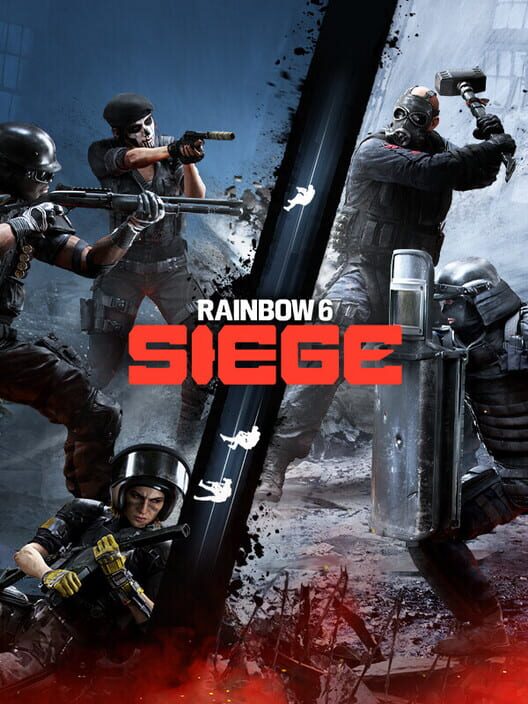
Tom Clancy's Rainbow Six Siege is a first-person shooter game, in which players utilize many different operators from the Rainbow team. Different operators have different nationalities, weapons, and gadgets. The game features an asymmetrical structure whereby the teams are not always balanced in their choices of abilities. The base Counter-Terrorism Units (CTUs) available for play are the American Hostage Rescue Team (referred to in-game as the FBI SWAT), the British SAS, the German GSG-9, the Russian Spetsnaz and the French GIGN, each of which has four operators per unit split between attackers and defenders (other units were later added through downloadable content, see below).
Players also have access to a "Recruit" operator who can choose from a more flexible assortment of equipment at the expense of having a unique gadget. Players can pick any operator from any unit that is defending or attacking before a round starts, choosing spawn points as well as attachments on their guns but are not allowed to change their choices once the round has started. An in-game shop allows players to purchase operators or cosmetics using the in-game currency, "Renown", which is earned at the end of matches from actions performed in-game. Different gameplay modes award renown at different rates, with ranked matches offering the largest renown multiplier potential per match.
Players can also complete in-game "challenges" to get a small amount of renown. Renown gain rate can also be affected by the using in-game "boosters" which gives the player an increase in all renown earned for various duration, starting with 24 hours. A premium currency known as "R6 credits" can also be purchased using real-world currency to get operators quicker in-game, or other cosmetic items, such as weapon or operator skins .
When the round begins in an online match, the attackers choose one of several spawn points from which to launch their attack while defenders do the same from which to defend from. A 45-second preparatory period will then commence wherein the attackers are then given control over mecanum-wheeled drones to scout the map in search of enemy operators, traps and defensive set-ups in addition to the target objective(s), while the defenders establish their defences and are encouraged to do so without having the defensive and target objective(s) details being discovered, chiefly through destroying the drones. If a player dies, they cannot respawn until the end of a round. Players who were killed by opponents can enter "Support Mode", which allows them to gain access to drone's cameras and security cameras so that they can continue to contribute to their team by informing them of opponent locations and activities.
Matches last only 3 minutes and 30 seconds for a casual and three minutes for a ranked. Teamwork and cooperation are encouraged in Siege, and players need to take advantage of their different abilities in order to complete the objective and defeat the enemy team. Communication between players is also heavily encouraged. The game also has a spectator mode, which allows players to observe a match from different angles.
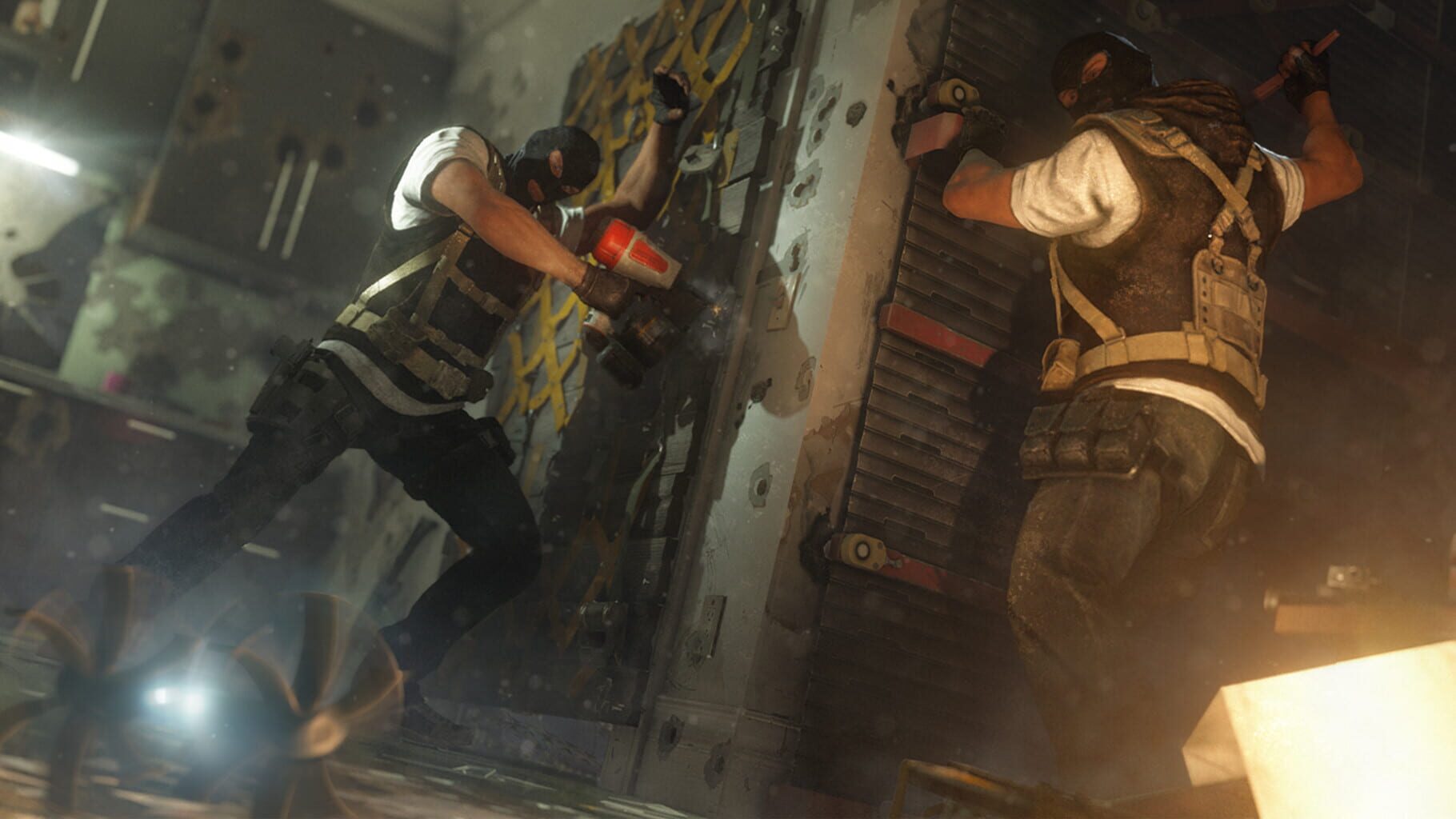
The game features a heavy emphasis on environmental destruction using a procedural destruction system. Players can break structures by planting explosives on them, or shoot walls with a shotgun to make a hole. Players may gain tactical advantages through environmental destruction, and the system aims at encouraging players to utilize creativity and strategy. A bullet-penetration system is featured, in which bullets that pass through structures deal less damage to enemies.
In addition to destruction, players on the defending team can also set up a limited number of heavy-duty fortifications on walls and deployable shields around them for protection; these can be destroyed through breaching devices, explosives, or by utilizing operator specific gadgets in the case of the former. In order to stop attackers' advance, defenders can place traps like barbed-wire and explosive entry denial devices around the maps. Vertical space is a key gameplay element in the game's maps: players can destroy ceilings and floors using breach charges and can ambush enemies by rappelling through windows. Powerful weapons like grenades and breach charges are valuable, as only a limited amount can be used in a round.
At launch, the game featured 11 maps and 5 different gameplay modes spanning both PVE and PVP. With the downloadable content (DLC) released post-launch with an additional four maps from year one and three maps from year two – there are currently 26 playable maps. The gameplay modes featured include:
Hostage: a non-competitive multiplayer mode, in which the attackers must extract the hostage from the defenders, while the defenders must prevent that from happening, either by eliminating all of the attacking team or successfully defending the hostage until the time expires. A secondary manner of winning can occur if the attacking or defending team accidentally damages the hostage, causing the hostage to "down"; if the opposing team can prevent the revival of the hostage, and the hostage bleeds-out and dies, they will win the round.
Bomb: a competitive multiplayer mode, in which the attackers are tasked with locating and defusing one of two bombs. The defenders must stop the attackers by killing all of them or destroying the defuser. If all attackers are killed after the defuser is planted, the defuser must still be destroyed for a defending victory.
Secure Area: a non-competitive multiplayer mode, in which the defenders must protect a room with a biohazard container, while the attackers must fight their way in and secure it. The match ends when all players from one team are killed or the biohazard container is secured by the attackers when there are no defenders in the room.
Tactical Realism: a variation of the standard competitive multiplayer modes, added with the release of the Operation Skull Rain DLC. Th
Story
Three years after the Rainbow Program's deactivation, there is a resurgence of terrorist activities, with the White Mask being the most prominent. The terrorists' goals are unknown, yet they are causing chaos across the world. To counter this rising threat, the program is reactivated by a new leader, Aurelia Arnot (Angela Bassett). Arnot, operating under the codename "Six", assembles a group of special forces operatives from different countries to face and combat the White Masks.
Recruits go through multiple exercises to prepare them for future encounters with the White Masks, training to perform hostage rescue and bomb disposal. Eventually, the White Masks launch a chemical attack on Bartlett University, and the recruits are sent to disarm the bombs and eliminate the enemy presence. The operation is a massive success, though there are casualties. Arnot affirms that the reactivation of Team Rainbow is the best and only choice in a time filled with risks and uncertainties, and that Team Rainbow is ready for their next mission – to hunt down the leader of their enemy – and they stand prepared to protect and defend their nation from terrorists.
Over the next few years, Team Rainbow continues to expand their operations, recruiting more operatives from numerous countries.
In 2019, Arnot resigns from her position to become the Secretary of State and recommends her advisor, Doctor Harishva "Harry" Pandey (Andy McQueen), to take her place as "Six". Harry seeks to improve the synergies of Team Rainbow members; thus he develops The Program, a global training regimen to help Rainbow operators understand each other better, and to expand their operations. To that end, Harry also organizes annual tournaments for Team Rainbow, which are broadcast and viewed globally as public training exercises. Some time later, Harry invites members of a private military company, Nighthaven, to join Team Rainbow, in order to observe their skills and prevent competitors from also hiring them.
Nighthaven operatives regularly clash with those of Team Rainbow, due to their difference in battle tactics; Nighthaven's is considered to be more brutal and reckless, with a notable disregard for their own members' safety. This eventually leads to a public dispute between Rainbow operative Eliza "Ash" Cohen (Patricia Summersett) and Nighthaven's founder, Jaimini "Kali" Shah (Yasmine Aker), after Ash was injured during the 2021 tournament finals due to Kali's action.
By 2022, Kali has successfully recruited several Rainbow operators to join Nighthaven, much to Harry's dismay. With a surge in global criminal activities, Harry begins reorganizing the remaining Rainbow operators into several smaller teams, and has them focus on new operations, while also looks into Nighthaven and their activities. Following the assassination of a high-profile tech company CEO, Masayuki Yahata, Team Rainbow investigates his death and finds evidence implicating Nighthaven's involvement. Rainbow squad Ghosteyes, led by Taina "Caveira" Pereira (Renata Eastlick), conducts multiple strikes against Nighthaven and eventually apprehends Kali, who denies involvement in Yahata's assassination while also claiming Nighthaven's weaponry had been stolen prior, only for Caveira to reveal that Rainbow is aware of Nighthaven's innocence; the strikes were to keep Nighthaven from escalating the situation.
Some time later, Harry is confronted by "Deimos" (Dallas Blake), a former Rainbow operative who orchestrated Yahata's death as well as the conflict between Team Rainbow and Nighthaven. Seeking to eliminate Team Rainbow, Deimos claims that the unit has become a disgrace under Harry's leadership, showing him a video recording of an ambush on Rainbow that leaves Ash in a coma before killing Harry. Following Deimos' trails over the next year, Team Rainbow finally manages to pinpoint his next target, with Rainbow members Gustave "Doc" Kateb (Alex Ivanovici), Elena "Mira" Álvarez (Anahi Bustillos), Julien "Rook" Nizan (Marc-André Brunet) and Sam "Zero" Fisher (Jeff Teravainen) confronting and apprehending Deimos. After awakening from her coma, Ash and the rest of Rainbow uncover Deimos' real identity as Gerald Morris, a rogue Rainbow operative who betrayed and killed his squad mate during an operation in 2012 and was declared killed in action.
With Deimos' group, the Keres Legion, remaining at large, Team Rainbow recruits retired operative Kure "Skopós" Galanos, who previously worked with Deimos in his Rainbow days. Skopós teams up with Rainbow operative Grace "Dokkaebi" Nam (Christine Lee) to assault a Keres safehouse and retrieve intel pertaining to the organization.
During a training exercise at Hereford Base, England, Rainbow operatives are forced to defend the base from Keres Legion troops, who have infiltrated the organization under the guise of new recruits to break Deimos out of prison and destroy the base.
Following the ambush on Hereford Base, the base is ultimately destroyed by the Keres Legion with several staff and recruits killed, including a Global Security Alliance Council (GSAC) observer named Caron, while Dokkaebi, unbeknownst to Rainbow, was also abducted during the attack. It is further revealed that the attack and destruction of Hereford Base was merely Phase One of Deimos' ultimate plan as "Phobos", the Legion's second-in-command, initiates Phase Two. Realizing the scale of the Keres Legion's threat, Nighthaven, who had disassociated themselves from Rainbow following their actions against the PMC, decides to put their difference aside and come to Rainbow's aid in their fight against the Keres Legion.
After learning that the Keres Legion has kidnapped Dokkaebi, Ana "Solis" Valentina Díaz (AJ Simmons) and Hāpai "Rauora" Iwini, one of the surviving recruits from the assault on Hereford Base, head to Detroit to investigate the Legion's relation with a company named "POLARIS". Encountering enemy forces inside the company building, the two are personally a
Development
The game's predecessor was Tom Clancy's Rainbow 6: Patriots, a tactical shooter announced in 2011. It had a focus on narrative, and the story campaign features many cut-scenes and scripted events. However, the game fell into a development hell shortly after its announcement. The game's outdated engine and frequent change of leadership hindered development progress, and game quality was not up to par.
In addition, it was planned to be released on seventh-generation video-game consoles which were not capable of processing certain game mechanics. Seeing the arrival of a new generation of consoles, the team wanted to make use of this opportunity to create a more technologically advanced game. As a result, Ubisoft decided to cancel Patriots and assembled a new team of 25 people to come up with ideas to reboot the series.
To make the new game feel refreshing, only certain multiplayer elements were retained as the small team took the game in a different direction. They evaluated the core of the Rainbow Six series, which they thought was about being a member of a counter-terrorist team travelling around the globe to deal with dangerous terrorist attacks – operations which are usually intense confrontations between attackers and defenders. However, the team wanted to fit these ideas into a multiplayer format which would increase the game's sustainability. These became the basic concept ideas for the game. As the development team hoped that the game can be replayed frequently, the team decided to devote all the resources into developing the game's multiplayer and abandoned the single-player campaign.
Development of the game officially began in January 2013. Ubisoft Montreal, the developer of Patriots, handled the game's development, with Ubisoft's offices in Barcelona, Toronto, Kyiv, Shanghai and Chengdu providing assistance. The game was originally called Rainbow Six Unbreakable, a title that reflected not only the game's destruction mechanic but also the mindset of the development team, who had to deliver a game that was once stuck in development hell. According to Alexandre Remy, the brand director, the team was confident in their new vision for the game but very nervous when they revealed it, realizing the change of direction would likely disappoint some fans.
The 150-person team consisted mainly of first-person shooter veterans or longtime Rainbow Six players. Despite having prior knowledge on how these types of games work, the team decided to study historic examples of counter-terrorist operations, including 1980's London Iranian Embassy siege, 1977's Lufthansa Flight 181 hijacking, and 2002's Moscow theatre hostage crisis to ensure that the portrayal of these operations was accurate and appropriate. The team also consulted counter-terrorism units, such as the National Gendarmerie Intervention Group (GIGN), for their opinions on how they would react during a hostage rescue situation. According to Xavier Marquis, the game's creative director, having a hostage rescue mission in the game helped create an immersive story.
By allowing players to assume control of an operator tasked with saving innocents, it gives them an objective and a priority. They must be careful in dealing with the situation and try their best not to hurt the hostage. This further promotes teamwork between players and prompts them to plan before attacking, and further makes the game more realistic, tense and immersive. , coughing if there is dust in the air or shielding him or herself if there is nearby gunfire.
The environmental destruction mechanic was one of the game's most important elements. When the game's development was begun, the developer's in-house team completed their work on RealBlast Destruction, an engine that "procedurally breaks everything down" and remodels the environment. The development team thought that this technology fitted the game's style and gameplay, and decided to use it. This aspect of the game became increasingly important during development, and the team spent an extended period of time making sure that these destructions were authentic.
As a result, the team implemented a materials-based tearing system, in which environmental objects of different materials show different reactions to players' attacks. To render the game's texture, the team used physically based rendering, even though it was ineffective during the game's early stage of production due to issues with the game's engine. A material bank and substance painter were utilized to create textures for environmental objects when they were damaged or destroyed. The team also implemented subtle visual cues to help players identify whether a structure was destructible or not, as opposed to "distracting" players with more-obvious hints.
The destruction mechanic prompted Ubisoft to change their level-design approach, as they had to ensure that the level was still logical and realistic when parts of the environment were destroyed.
According to Ubisoft, "teamwork, tactics, and tension" were the game's three most important pillars. The team initially worked on a respawn feature, allowing players to rejoin after they are killed in the game. However, following several internal tournaments, the team realized that some of their employees would always win a match. They concluded that the respawn system worked to the benefit of strong players and placed individual skill above teamwork, which did not fit the developer's focus on game tactics.
Removing the respawn feature meant greater consequences for taking risks, and players had to rely on their teammates in order to survive and achieve objectives. According to Chris Lee, the game's designer, the team initially worried that the system would only appeal to hardcore players. However, after several testings, they found that the removal of the respawn system provi
Reception
Tom Clancy's Rainbow Six Siege received "generally favorable" reviews from critics, according to review aggregator website Metacritic.
The game's multiplayer was widely praised by critics. Chris Carter from Destructoid praised the game's open-ended nature, which made each match unpredictable and helped the experience to stay fresh even after an extended period of playing. GameSpot's Scott Butterworth appreciated the title for allowing players to make use of their creativity in approaching a mission. James Davenport from PC Gamer echoed this thought, and he described Siege as a "psychological race" in which players are constantly trying to outwit their opponents.
Ryan McCaffery from IGN also praised the tactical possibilities, which make the game "tense and riveting". The large number of operators available for players to choose were praised by both Carter and Matt Bertz from Game Informer, who commented that they added depths and variety to the game and that players could experiment to see which pairs of operators can complement each other. However, McCaffery was disappointed by the lack of variety of game modes and commented that most players usually neglect the mode's objectives and opted to simply eliminate their opponents. Terrorist Hunt received divisive opinions from critics.
Carter thought that it was more relaxing, and Butterworth thought it was exhilarating. However, Bertz criticized its lack of variety, weak artificial intelligence, and its less-intense nature when compared with the player-versus-player modes. Martin Robinson from Eurogamer also noted that the mode only ran at 30 frames per second, which limited its appeal.
The game's focus on tactics was praised. Bertz applauded the tactical nature of the game, as it fostered communications between players. However, he noted that teamwork may not be possible if players did not have a headphone and microphone. Arthur Gies from Polygon echoed these comments, stating that the game's over-reliance on teamwork meant that when teammates were not communicating, the game would not be fun to play.
The "No Respawn" system was praised by Butterworth for making each match feel intense, as even the best player needs to think tactically in order to win. Jonathon Leack from Game Revolution enjoyed the scouting phase of a multiplayer match, which encouraged players to communicate with each other and coordinate their attacks. However, Gies noted that the placement of game objectives does not vary much, thus making the scouting phase meaningless. Both Bertz and Butterworth agreed that the game's competitive nature increases the game's replay value.
Ben Griffin from GamesRadar praised the destruction mechanic for bringing tactical depth to the game.
The gameplay received mixed reviews. Both Bertz and Griffin criticized the game's incompetent hit detection system, which made the experience unfair. Bertz described the game's gunplay as "serviceable", while Leack noticed a delay in shooting, which drags the game's pace and leads to a steep learning curve. However, Leack appreciated the game's map design, which opened many possibilities.
He also praised its attention to detail and sound design, which can often make a multiplayer match feel like a "great action film". Bertz was disappointed by the lack of customization options, which did not offer long-term progression for the players. Butterworth similarly criticized the progression system for being slow. As players cannot play as the same operator in the same match, he was often forced to play as the generic "recruit" character when he was only at the beginning stage of the game.
He also criticized the limited weapon customization options, which barely affect gameplay. McCaffery described customization as the "least interesting" aspect of the game and claimed that most gameplay features were locked when players started playing. com were annoyed by the microtransactions featured in the game, with Griffin describing it as a greedy attempt by Ubisoft to make more money, though Davenport did not mind these features as they were limited to cosmetic items and could be unlocked through earning Renown. Bertz was annoyed the lack of clan infrastructure, which may cause players troubles when they were finding matches, while Griffin thought that map rotation often felt random and was disappointed that players cannot vote to decide which map they are going to play next.
Single-player was generally considered a disappointment by critics, with Situations receiving mixed reviews. Carter described it as one of his "favorite non-campaign additions" as the mode gave players incentive to return due to its rating system. Butterworth described it as a "surprisingly robust" mode and thought that there were great tutorial missions that help players to understand gameplay before trying multiplayer. However, Bertz criticized it for its lack of replay value, and Griffin noted their short length.
McCaffery thought that it served as a competent tutorial, but its solo play nature meant that players could not practice team play and tactics. Davenport criticized the narrative in Situations, which he thought was not meaningful. Many critics were disappointed with the lack of a single-player campaign or a cooperative campaign, but Butterworth believed that the strong multiplayer components can compensate for this absence. Gies noticed certain network issues would affect the single-player.
Many critics generally had a positive opinion on the package. Bertz thought that the game's multiplayer design had laid a great foundation for the game, but it was not taken advantage of due to the small number of game modes. Leack felt that Siege's tight focus on tactical gameplay had "provided something unlike any other game on the market". Butterworth found the game unique and that there was "nothing else like it" when he put aside the game's minor annoyances. Griffin wrote that the title felt ve