
The articlegameplay, story, development, reception
Gameplay
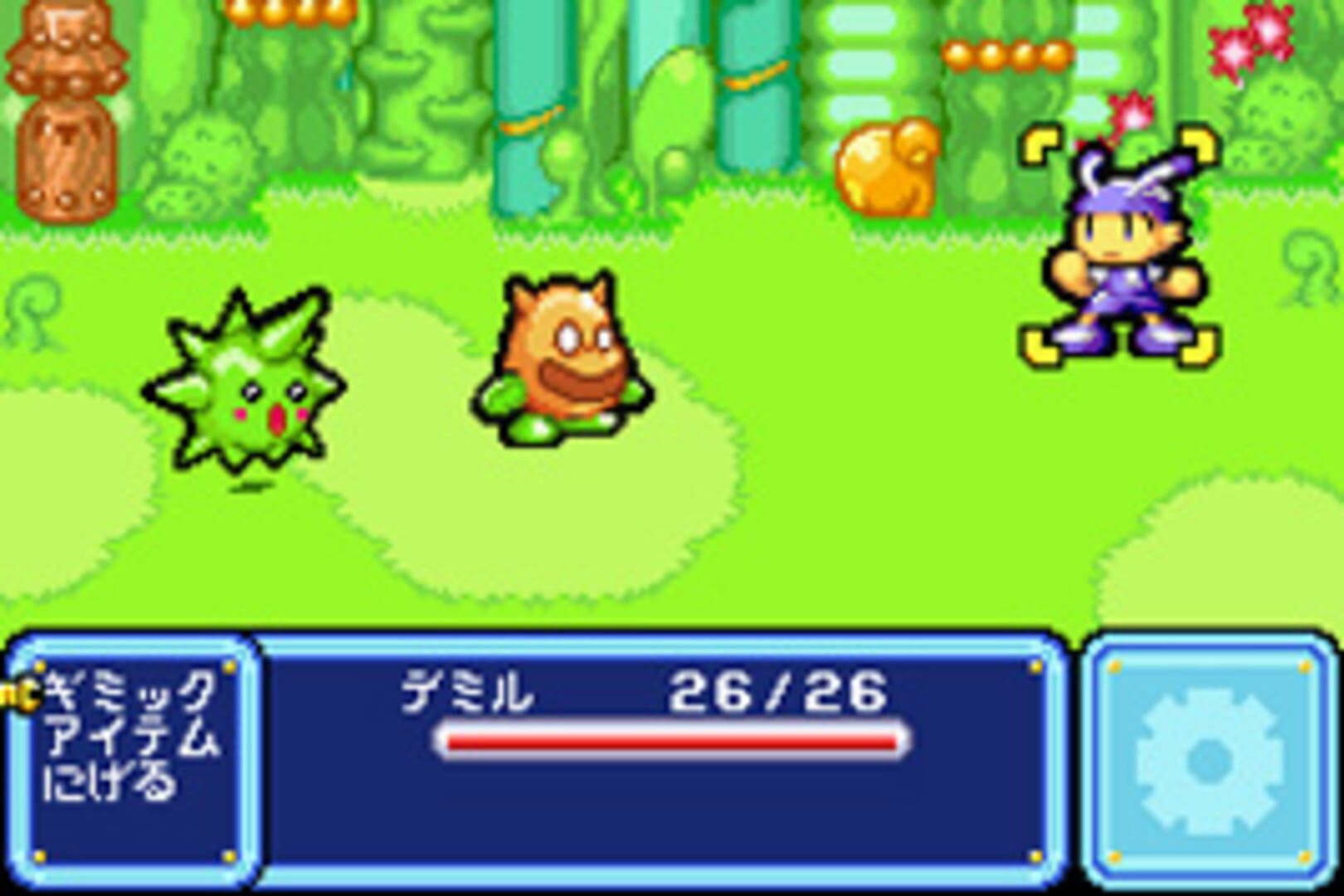
Players control DeMille through the Ketchup Kingdom while talking to people, entering places and collecting items. The objective of the game is to save DeMille's girlfriend, Patharan, and the Ketchup Kingdom from King Abira by going through every village to obtain the missing parts of a robot that can give anyone access into the Gimmick Palace, a tower-like structure with a tomato on it. In lieu of random encounters, Tomato Adventure displays enemies moving around on the overworld, with battles being initiated when DeMille makes contact with them.
Story
In the Ketchup Kingdom, a land ruled by young characters, the protagonist is a hare-like boy in blue clothing named DeMille, who lives in a school bus with no wheels in a village on the outskirts of the Ketchup Kingdom called Cobore Village. DeMille is an outcast because he dislikes tomatoes. As a result, he and other kids in Kobora who dislike tomatoes are looked down upon as "Droppers", banished for heresy, and locked up in Cobore Village until they change their attitudes towards tomatoes. While watching television, DeMille sees that the main antagonist, King Abīra, is celebrating a holiday called Tomato Day, while showing his project he created called the Super Cara-Cooker, a laser-like gun that transforms people, places, and things into dolls, toys, and playgrounds.
After DeMille's television set gets severely damaged, he visits his neighbor and friend Seremo and asks him if he could fix his television set. Seremo says he will and gives DeMille his first Gimmick, called the Gear Yo-Yo.
Development
After AlphaDream developed and released their first video game title, Koto Battle: Tengai no Moribito, Nintendo wanted AlphaDream's permission to develop an entirely new role-playing video game with them, titled Gimmick Land (ギミックランド, Gimikku Rando). They got the name from an idea of a game structure that utilizes gimmicky, toy-like controls that make it an RPG with action elements. It was finished and almost ready to be released for the Game Boy Color in Japan, until Nintendo released the Game Boy Advance to make the Game Boy Color obsolete. After noticing that, Nintendo requested AlphaDream to redevelop and rename Gimmick Land as "Tomato Adventure" for the Game Boy Advance.
Nintendo also requested AlphaDream to add some easily recognizable characters in which reflects the new title, so that the game would have a more marketable image. Those were Nintendo's largest requests. Other changes are the quality of the graphics and audio being enhanced. Only two screenshots of Gimmick Land were released to the public by the developers.
Reception
On release, Weekly Famitsu scored the game a 29 out of 40. 1UP.com scored the game "A".
Legacy
Tomato Adventure is considered as a precursor to AlphaDream's Mario & Luigi series, similarly combining RPG elements and minigames.


