
The articlegameplay, story, development, reception
Gameplay
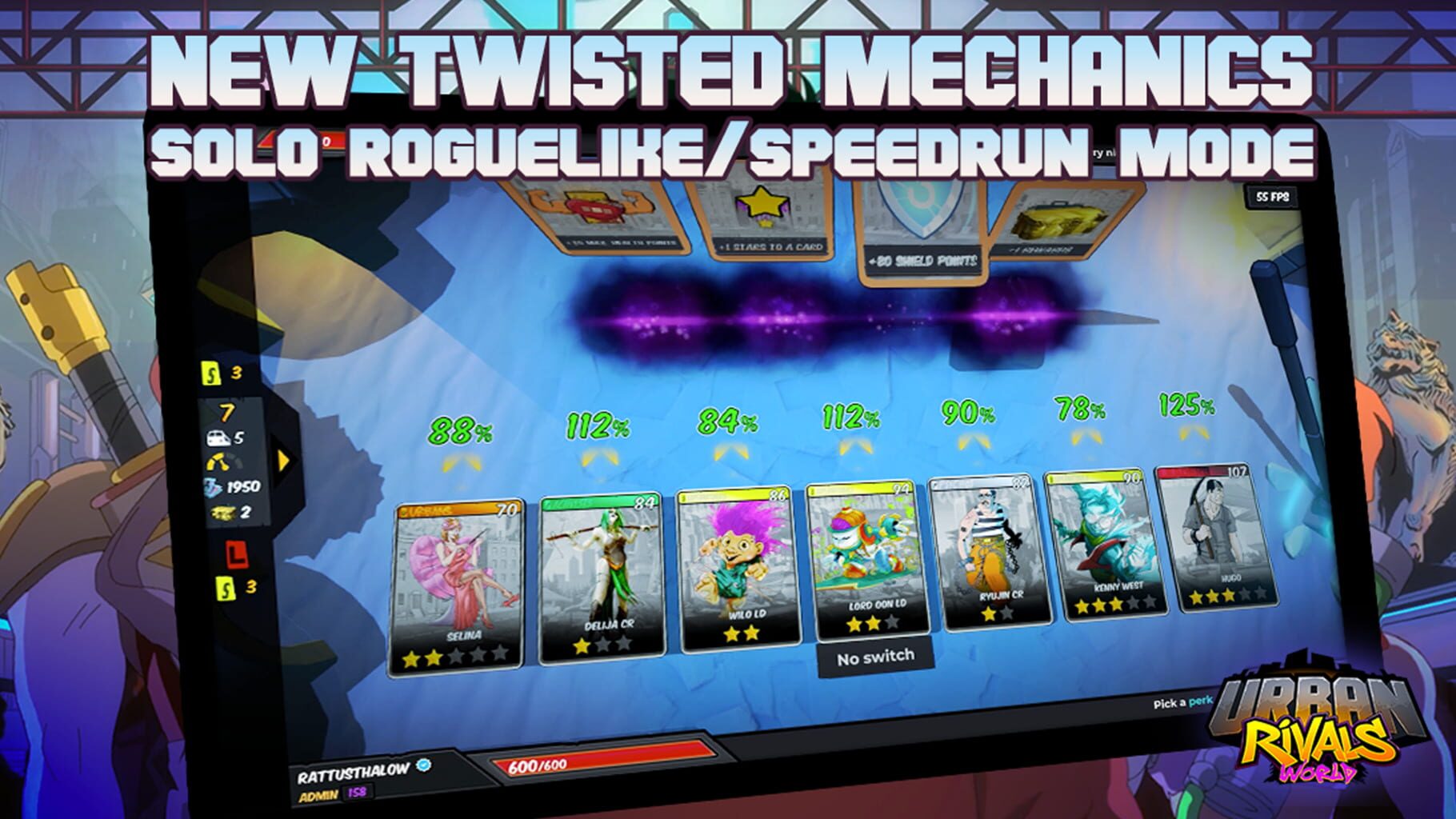
At the start of a battle, 4 cards are randomly dealt from each of the two players' decks, usually made up of 8 cards. The cards in each player's deck are limited by the format's star count. Each card has a star count, from 2 to 5, and the total star count of a deck can be either 25 (called T1) or unlimited (called T2). The player with the higher star count between their 4 cards plays first in the first round, with both players alternating between playing first or second each subsequent round. In addition, each player starts the battle with 12 Pillz, with 1 free Pillz given at the start of each round, and 12 Life, except in ELO Fighting Championship, where each player begins with 14 Life.
Each player, one after the other, chooses one card and plays a number of 'Pillz' (minimum 1), resulting in an Attack value equal to the card's Power value multiplied by the number of Pillz used. The two cards' abilities and bonuses may affect either card's Power, Attack or Damage values, or even cancel their abilities or bonuses. In a random fight, the card with the greater Attack value has a greater chance of winning the round and dealing its Damage value to the opponent's Life Points. In a non-random fight, the card with the greater Attack value always wins the round and deals its Damage value to the opponent's Life Points.
All competitive fights are set to non-random. If there is a tie for Attack value, the card with the lower star count wins. If there is still a tie for star count, whichever was played first wins. The battle ends after 4 rounds, with the winner being the player with the greater number of Life Points remaining.
The battle also ends once either player loses all of their Life Points, called a KO.
After the end of each battle, players receive Battle Points (BP). These points determine the player's level. More points are earned from having a card defeat an opponent's card with more stars, or having one of the characters level up after a fight. A bonus is given for winning a battle by KO and/or with unused Pillz, but a penalty is incurred for losing a battle by timeout or forfeit.
Characters receive experience (XP) after each fight, with which they can level up and become stronger. The character level is represented by stars, with most characters starting at one star and the maximum number of stars ranging from 2 to 5. Characters earn more XP by winning a fight, and even more if they do so against an opponent with more stars. Many characters also receive an ability to help them in battle once they reach their maximum level, though some receive their ability earlier, in which case that ability may improve with each level up.
A player's level is based on their cumulative number of Battle Points (BP). When a player reaches Level 5, they can join a Guild. Upon reaching Level 10, they can create their own Guild. Upon reaching Level 15, they can take part in ELO Fighting Championship. Players also receive a Leader card when they reach certain levels.
Development
Urban Rivals is a multiplayer trading card game which was created by Acute Games (previously known as Boostr). The very first versions of the game were based on iMode and WAP mobile platforms. In 2006, the game was ported onto the internet, integrating major improvements to its gameplay. Mobile versions for iPhone and Android were launched respectively in 2010 and 2011.
Reception
Urban Rivals received 88% from Game Vortex, praising the typical five-minute game length, free access and poker-like element of the gameplay. However, the presentation was seen as functional, with inconsistent artwork quality and lack of sound.
Urban Rivals received 3.75/5 from MMOBomb, where they stated that Urban Rivals had stylish comic book art, fast-paced gameplay and a large playerbase. Though, Urban Rivals was also praised by some, as they stated that the game had 'amazing artwork' and was a 'very addicting' game.


