
- 68/100
- Players18 ratings

1989 · Capcom · Action role-playing · Adventure
Willow (NES)
Nintendo exclusive
The version of Willow released for the Nintendo Entertainment System and the Famicom is an adventure game in the vein of The Legend of Zelda. The game has the player taking on the role of Willow. Unlike the film and arcade game, Willow generally travels alone, only briefly meeting other characters. In the tradition of The Legend of Zelda, Willow wields a sword and shield and many supplementary items along with a wide variety of magic spells. As the game progresses and Willow defeats enemies, he gains experience points and levels as in a role-playing video game.
- Released
- 1989
- Platforms
- NES
- Genres
- Action role-playingAdventureRole-playing
- Developers
- Capcom
- Publishers
- Capcom
- Perspective
- First personBird view / Isometric
- Themes
- ActionFantasyOpen world
- Country
- Japan
- Languages
- English, Japanese
- Composers
- Harumi Fujita
About
Willow is a 1989 2D action role-playing game developed and published by Capcom for the Nintendo Entertainment System. It is loosely inspired by the 1988 film of the same name and is the second title Capcom released based on Willow that year, the first being an unrelated side scrolling arcade game. The version of Willow released for the Nintendo Entertainment System and the Famicom is an adventure game in the vein of The Legend of Zelda.
›Story
Long ago, in a time of magic and sorcery, an evil sorceress named Queen Bavmorda ruled the land under a reign of terror.
A baby has been born who, legend foretells, will destroy the wicked ruler but the Queen vows the slay the child first. Now the villagers of Nelwyn must band together to assist Willow, the child's chosen protector.
As Willow, you must travel through mysterious forests and villages - first evading the Queen and her demons, then plotting to end her reign of terror. You will accumulate an arsenal of swords, shield, and most importantly magic, which are necessary for your final confrontation. Outnumbered by the Nockmaar Army, you must rely on inner strength and determination to destroy the evil Queen - before it's too late!
Keywords
- ghosts
- wizards
- medieval
- magic
- action-adventure
- based on - movie
- good vs evil
- bats
- sword & sorcery
- 8-bit
- trolls
- boss fight
Media

The articlegameplay, story, development, reception
Gameplay
The player assumes the role of Willow Ufgood, who wages a battle against evil, wielding swords, shields, magic spells, and items to defeat enemies. Unlike the film and arcade game, Willow generally travels alone, only briefly meeting several other characters. The game contains some role-playing video game elements, as Willow gains experience and levels up from defeating enemies in real time combat. Rather than battery saving, it uses a password system instead of a save feature. There is no money system, and all items are found throughout the game.
Willow can enter homes and talk to inhabitants of the villages to receive advice as well as items like magic and weapons.
Development
Willow is a 1988 film produced by George Lucas, directed by Ron Howard, and starred Warwick Davis in the title role as Willow Ufgood. Capcom developed two games based on Willow in 1989. The arcade game plays similar to Capcom's previous fantasy action platformer Ghouls n' Ghosts. The version developed for the NES is a role playing game.
Willow is part of a series of games released in the five years after the original The Legend of Zelda, which were described as "zelda clones". Other games like this include Neutopia by Hudson, Golden Axe Warrior by Sega and Crystalis by SNK.
Reception
Famitsu magazine gave it a score of 26 out of 40. 05/30. Brazilian game magazine VideoGame gave it a score of 4 out of 5. Howard H.
Wen, writing in Video Games and Computer Entertainment magazine gave it a score of 7 out of 10, praising the graphics, but was critical of the music and the complex password system which required 18 characters in both upper and lower case. Hobby Consolas magazine gave it a 75 out of 100 score.
Releases by platformdates and regions as published
Games like this
 62
Lord of the Rings: Aragorn's Quest
2010 · Nintendo DS, Wii +2
Adventure · Ghosts
 55
The Lord of the Rings: The Fellowship of the Ring
2002 · Game Boy Advance, PlayStation 2 +2
Adventure · Magic
 PlayStation exclusive81
Tales of Berseria Remastered
2016 · PlayStation 3, PlayStation 4 +1
Action role-playing · Role-playing
 Nintendo exclusive75
Soul Blazer
1992 · SNES, Satellaview
Action role-playing · Adventure
 82
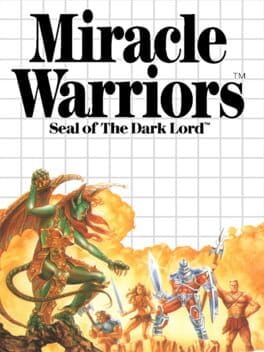
Miracle Warriors: Seal of the Dark Lord
1986 · FM-7, MSX +8
Role-playing · Good vs evil
 67
The Hobbit
2003 · Game Boy Advance, GameCube +3
Adventure · Good vs evil
 74
The Lord of the Rings: The Third Age
2004 · Game Boy Advance, GameCube +2
Role-playing · Wizards
 83
Kingdom Hearts III
2019 · Nintendo Switch, Nintendo Switch 2 +5
Action role-playing · Adventure
Collections1 collection
Licensing
- Games based on filmsGames
Description adapted from its source, CC BY-SA 4.0.