
The articlegameplay, story, development, reception
Gameplay
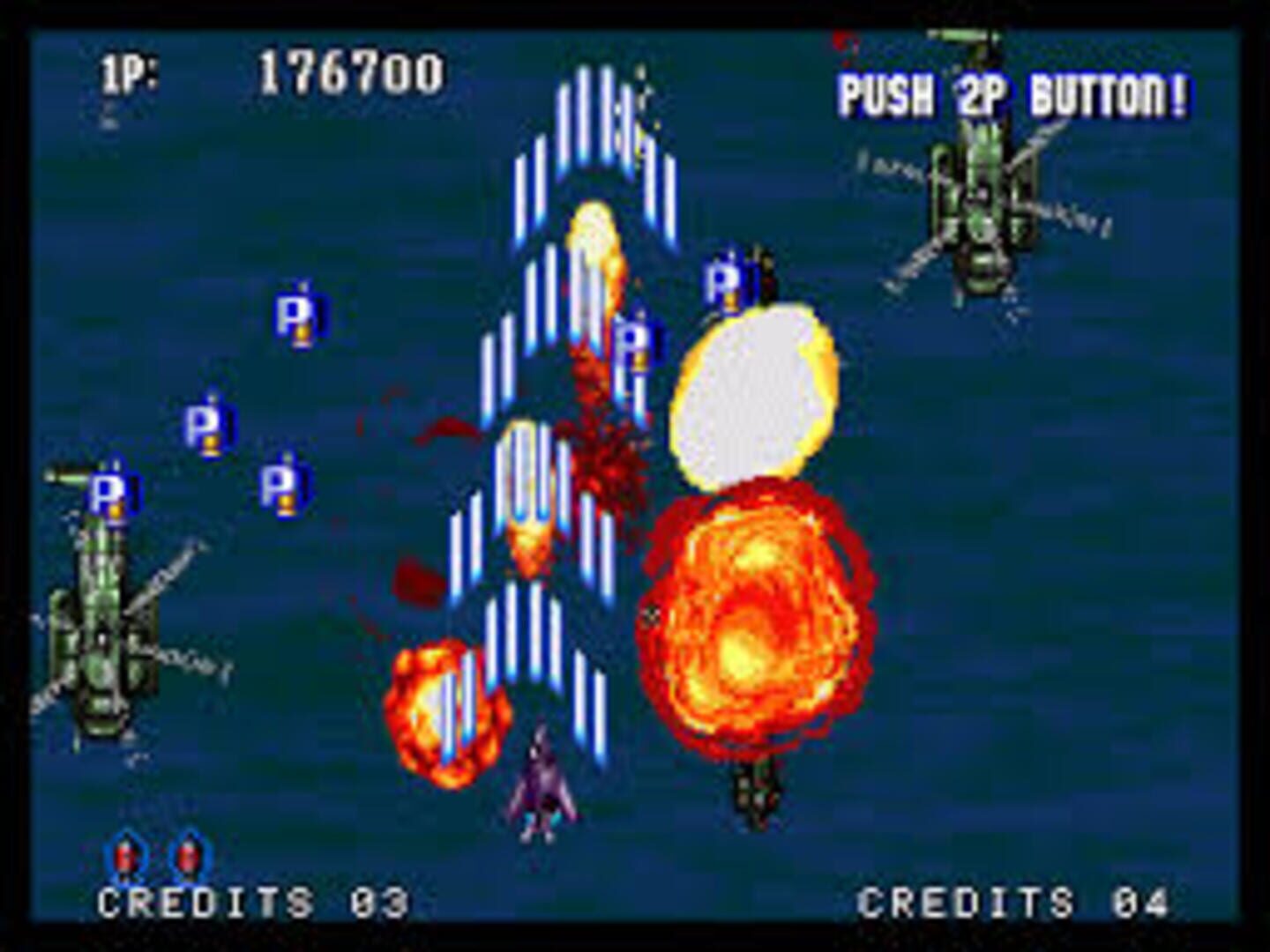
This game uses basic shooter mechanics of the SHMUP genre of video games. Pressing button 1 fires normal weapons; this can be upgraded by collecting P or the rare F items, though the maximum power level has a hidden ammo count, after which the player will return to the previous power level. Pressing button 2 launches a powerful special attack; uses are limited to how many B items the player has collected (every life starts with two). Some ground enemies will drop score items when destroyed; they appear as the currency of the selected character's nation. By default, players start with three lives, and can acquire one more at 200,000 points.
Aero Fighters has a large cast of characters, unheard of in 1992. Each pair of characters represents one of four nations. The two-player sides may only select the four characters given (one for each nation). In a two-player game, only a single nation can be chosen.
Reception
In Japan, Game Machine listed Aero Fighters as the second most successful table arcade unit of April 1992. RePlay also reported it to be the second most popular arcade game at the time. Despite being a solid entry, the arcade version had little to distinguish itself from the competition. One critic wrote: "Aero Fighters is a thoroughly solid game, let's get that out of the way.
It is also a game that is easy to forget. At a time when shooters were a dime a dozen it didn't exactly stand out."
Legacy
The arcade version was released in 2005 for the PlayStation 2 by Hamster Corporation as part of the Japan-exclusive Oretachi Gēsen Zoku series. In 2022, the original arcade version was included as part of the Sega Astro City Mini V, a vertically-oriented variant of the Sega Astro City mini console. Copies of the game are rare, with astronomical prices on auction sites. Hamster Corporation released the game as part of the Arcade Archives series for the Nintendo Switch and PlayStation 4 in December 2023.
Shin Nakamura, the main designer of Aero Fighters and a number of other Video System games, disliked the company's plan to start developing on the Neo Geo. He wanted to make more vertical games like Aero Fighters, but found it difficult to do so on a horizontal monitor. He and other like-minded employees left to found Psikyo, with the similar Samurai Aces being their first game.


