
The articlegameplay, story, development, reception
Gameplay
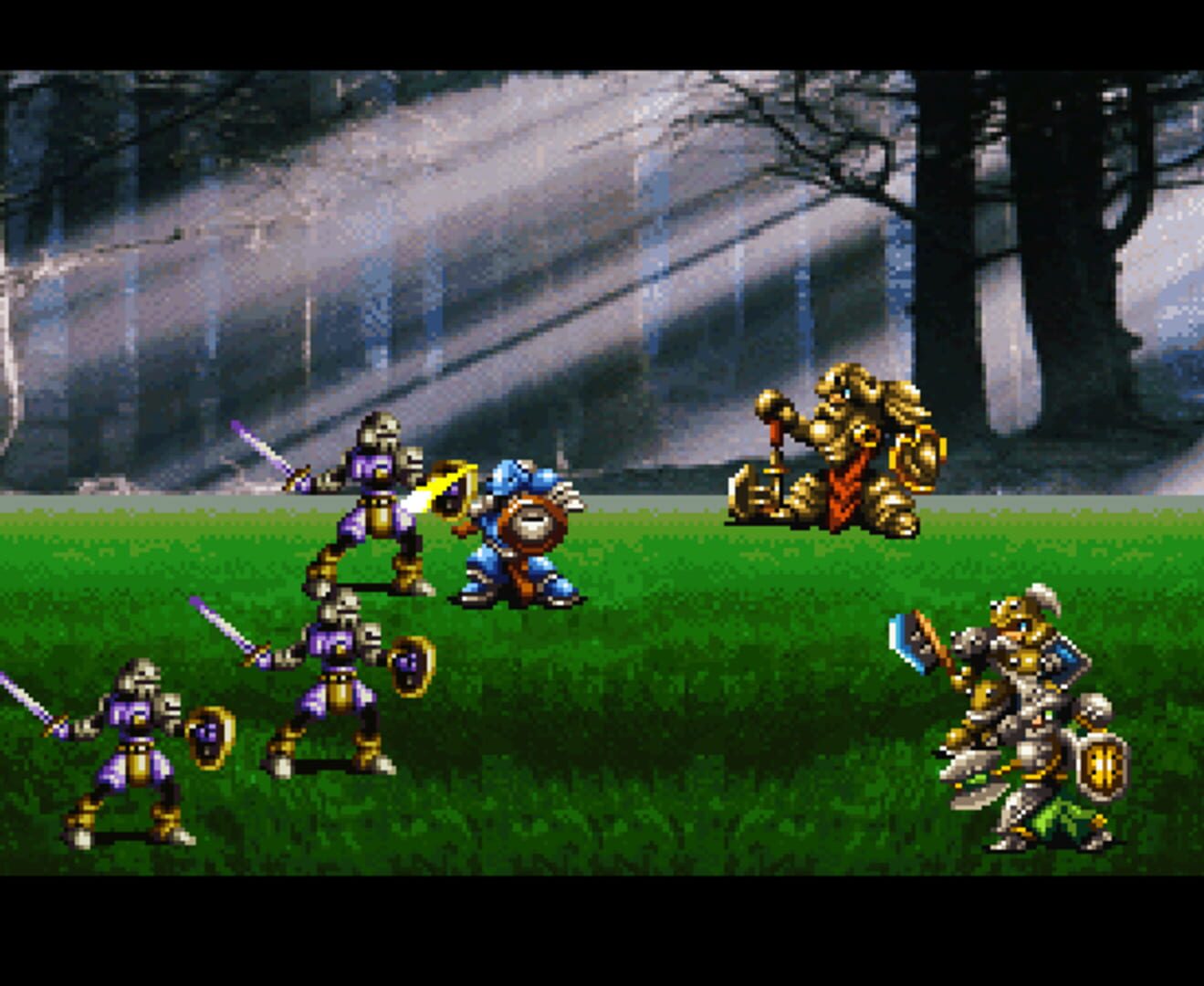
Bahamut Lagoon is a tactical role-playing game in which players take on the role of Byuu, a soldier of the kingdom of Kahna who leads a campaign against Granbelos Empire across the floating lands of Orelus. The gameplay blends 2D RPG grid-based combat with turn-based combat. Players have the ability to raise and battle dragons to fight alongside a player's other characters. A player has a squadron of four characters in combat, and players have six different squadron leaders they can choose from.
Each squad leader has a dragon which can be evolved into different types by feeding it weapons, armor, accessories, and items. Feeding dragons foods they like will increase their loyalty, and food they don't like will decrease loyalty, but players can still use foods dragons do not like to make a dragon more powerful. Dragons are not controlled by the player, but are given general guidelines such as "Go!" ".
Story
In the world of Orelus, continents called "lagoons" float in the sky, and war is threatened when the kingdom of Kahna is invaded by the Granbelos Empire. This leads Captain Byuu of the Dragon Squad to fight to repel this invasion, but after the initial victory, Kahna is overrun, and Byuu, the game's silent protagonist, leads a continued campaign against the Granbelos Empire.
Development
The concept for Bahamut Lagoon was created by Hitoshi Sasaki, known for his graphic design work on Final Fantasy VI, with him describing it as a game he had wanted to make for a long time. Programmer Hiroshi Ono approached Hironobu Sakaguchi with the proposal of a team of new Square developers creating their own project. Beginning development around the concept of a traditional RPG with random encounters, it shifted to its current tactical design. Sakaguchi, who was a fan of the tactical RPG genre, approved the project; it was originally titled "Final Fantasy Tactics".
Production began in 1994 at Square's Development Department 6 and lasted for two years. Sasaki acted as lead designer and lead artist. The game was directed by Kazushige Nojima, who joined the company in 1994 from Data East after working as writer for the Glory of Heracles series. The producer was Tadashi Nomura.
Reception
During 1996, Bahamut Lagoon sold over 474,600 copies, making it the 17th best-selling game of the year and Square's third best-selling title after Super Mario RPG and Tobal No. 1. VideoGames, as part of a feature on upcoming RPGs, described the game as looking "phenomenal", highlighting its graphics and gameplay design.
The narrative saw mixed reactions. Edge praised the narrative as moving away from its initial premise, and lauding the cast as a blending of strengths between Chrono Trigger and Final Fantasy VI. French website Jeuxvideo.com noted that the storyline evolved beyond its opening tropes due to how the characters acted and the plot secrets revealed during the last chapters. RPGamer's Seán Michael Peters noted the use of multiple overused genre tropes, but also praised the story twists and character evolution. Nick Rox of GameFan did not mention the story, but was dismissive of the premise.


