
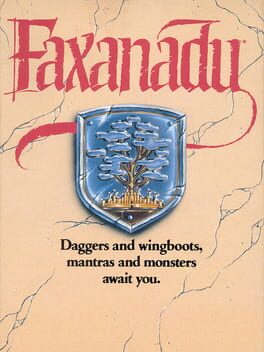
- 80/100
- Players33 ratings
1987 · Hudson Soft · Action role-playing · Adventure
Faxanadu
Nintendo exclusive
Faxandu is for the Famicom and NES. The name was licensed by Falcom and was developed and released in Japan in 1987. Nintendo also released the game to the world market in 1990. It can be considered a side-story of Xanadu, which is the second installment of Falcom's long-running RPG series, Dragon Slayer. The title is a combination of "Famicom" and "Xanadu"
- Released
- 16 November 1987
- Platforms
- NESWii
- Genres
- Action role-playingAdventurePlatformerRole-playing
- Developers
- Hudson Soft
- Publishers
- Hudson Soft
- Series
- Dragon Slayer
- Modes
- Single-player
- Perspective
- Side view
- Themes
- ActionFantasySandbox
- Country
- Japan
- Age ratings
- CLASS_IND LPEGI 7CERO AESRB E
- Languages
- English, Japanese
- Composers
- Jun Chikuma
About
Faxanadu is an action role-playing platform video game for the Nintendo Entertainment System. The name was licensed by computer game developer Falcom and was developed and released in Japan by Hudson Soft in 1987. Nintendo released the game in the United States and Europe as a first-party title under license from Hudson Soft.
Faxanadu is a spin-off or side-story of Xanadu, which is the second installment of Falcom's long-running RPG series, Dragon Slayer. The title Faxanadu is a portmanteau formed from the names Famicom and Xanadu. The game uses side-scrolling and platforming gameplay, while employing role-playing elements with an expansive story and medieval setting. Hudson originally licensed Xanadu after seeing its commercial success on the computer platforms, desiring to port it to the home console.
›Story
The player-controlled protagonist of is an unidentified wanderer. He has no name, though the Japanese version allows the player to choose one. The game begins when he approaches Eolis, his hometown, after an absence to find it in disrepair and virtually abandoned. As the story unfolds, it is revealed that Elves and Dwarfs lived in harmony among the World Tree until The Evil One emerged from a fallen meteorite.
The Evil One then transformed the Dwarves into monsters against their will and set them against the Elves. The Dwarf King, Grieve, swallowed his magical sword before he was transformed, hiding it in his own body to prevent The Evil One from acquiring it. His journey takes him to four overworld areas: The tree's buttress, the inside of the trunk, the tree's branches and finally the Dwarves' mountain stronghold.
Keywords
- magic
- metroidvania
- backtracking
- licensed game
- save point
- spellcaster
- bread
- cheat code
- temporary invincibility
- merchants
- time stopping
- nameless protagonist
Media
The articlegameplay, story, development, reception
Gameplay
Faxanadu is a side scrolling action role playing game (action RPG). The player guides the hero through a screen-by-screen series of fields, towns, and dungeons. The hero can walk, jump, and climb ladders that are all typical characteristics of a platform game. Along the way, he may also purchase usable items with gold, equip and use bladed weapons against enemies, wear armor, and cast magic projectiles. In addition, he can access information regarding the game's events by speaking with townsfolk or by consulting other sources.
The limits of physical damage the hero can sustain from enemies is tracked by a life bar, and the magical power he can exert is tracked by a magic bar. These are listed on the top of the screen along with total experience, gold amount, time (for items with a timed duration), and the currently held item.
Story
The player-controlled protagonist of Faxanadu is a wanderer who returns home. While the Japanese version allows the player to choose the name of this wanderer, in all other versions he is named "Nello". The game begins when he approaches Eolis, his hometown, after an absence to find it in disrepair and virtually abandoned. Worse still, the town is under attack by Dwarves. The Elven king explains that the Elves' fountain water, their life source, has been stopped and all other remaining water has been poisoned and provides the protagonist with 1500 gold, the game's currency, to prepare for his journey to uncover the cause.
As the story unfolds, it is revealed that Elves and Dwarves lived in harmony among the World Tree until The Evil One emerged from a fallen meteorite. The Evil One then transformed the Dwarves into monsters against their will and made them hostile towards the Elves. The Dwarf King, Grieve, swallowed his magical sword before he was transformed, hiding it in his own body to prevent The Evil One from acquiring it. It is only with this sword that The Evil One can be destroyed.
Development
Faxanadu was developed by Hudson Soft. It is a spin-off of Nihon Falcom's computer game Xanadu (1985), part of the Dragon Slayer role-playing video game series. In a testimony by Masayuki Kato, the founder of Nihon Falcom, the game originated from a personal request by Yuji Kudo, the found of Hudson, who gave Kato a kibori kuma and asked him to grant Hudson the rights for the console port of Xanadu, Falcom's most successful game at the time. Namco also contacted Kato for the rights, but they were already sold off to Hudson.
The title is a portmanteau of "fa-" and Xanadu, with the former derived from its releasing platform Family Computer, the Japanese name of the Nintendo Entertainment System (NES). Kato stated the title change was due to trademark issues.
Reception
On release, Japanese critics noted Faxanadu bears little resemblance to the original computer Xanadu. Four reviewers from Famicom Tsūshin all discussed the drastic differences between Faxanadu and Xanadu. One reviewer called Faxanadu an action RPG in style of Zelda II: The Adventure of Link and preferred Xanadu, while another preferred Faxanadu because he found Xanadu too gloomy by comparison. A reviewer from Famicom Hisshoubon said Faxanadu is polished as an action game, but it would have been better if it tried harder to replicate the original Xanadu. Family Computer Magazine argued Faxanadu failed to live up to the computer game because it deviated too much from the original.
The graphical and audio presentation were well-received. VideoGames & Computer Entertainment said the graphics vary "from average to gorgeous", and described the huge hidden castles and the corridors into the World Tree as "highly detailed and colorful". The music was also praised. Famicom Tsūshin's two reviewers said its huge text size and the use of both hiragana and kanji made it easier to read the dialogues.
Releases by platformdates and regions as published
Title IDsone per regional release, with its latest update
In the same series
 Nintendo exclusive60
Dragon Slayer
1984 · FM-7, Game Boy +10
Nihon Falcom
Dragon Slayer II: Xanadu
1985 · FM-7, MSX +7
 Nintendo exclusive
Dragon Slayer Jr.
1986 · MSX, MSX 2 +6
Nihon Falcom
 Nintendo exclusive69
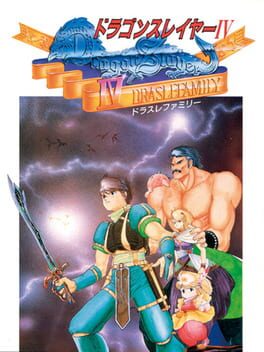
Dragon Slayer IV: Drasle Family
1987 · Binary Runtime Environment for Wireless, MSX +5
Nihon Falcom
 Timed Sega
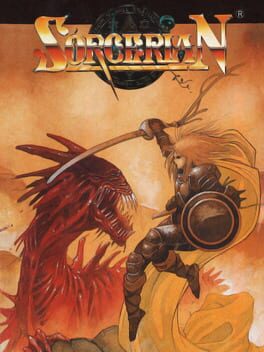
Sorcerian
1987 · Binary Runtime Environment for Wireless, Dreamcast +17
Aeria
 70
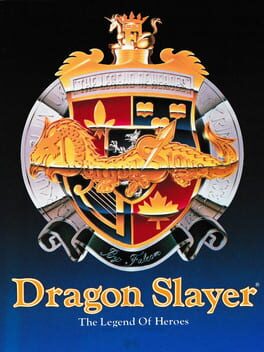
Dragon Slayer: The Legend of Heroes
1989 · FM Towns, MSX +12
Nihon Falcom
 Nintendo exclusive
BS Lord Monarch
1992 · FM Towns, NEC PC-9800 series +3
 Timed NEC
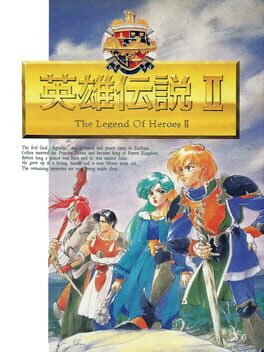
Dragon Slayer: The Legend of Heroes II
1992 · FM Towns, NEC PC-8800 series +6
Epoch
Games like this
 Nintendo exclusive70
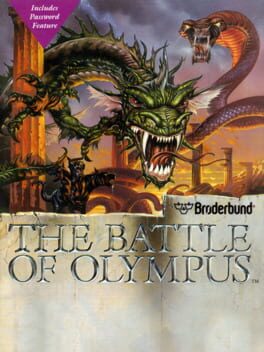
The Battle of Olympus
1988 · Game Boy, NES
Action role-playing · Adventure
 79
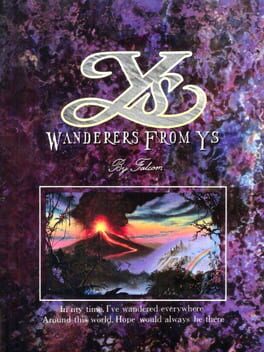
Ys III: Wanderers from Ys
1989 · MSX, NES +7
Action role-playing · Adventure
 Nintendo exclusive80
Shaman King: Master of Spirits 2
2005 · Game Boy Advance
Adventure · Platformer
 Timed Sega80
Wonder Boy III: The Dragon's Trap
1990 · Game Gear, Master System +3
Platformer · Role-playing
 Timed Sega79
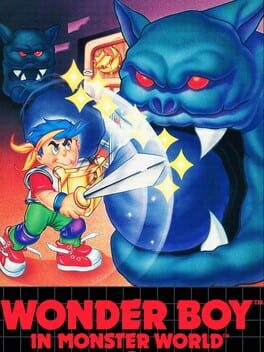
Wonder Boy in Monster World
1991 · Linux, Master System +6
Platformer · Role-playing
 Nintendo exclusive76
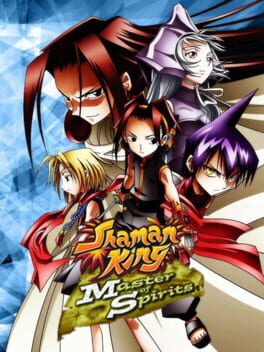
Shaman King: Master of Spirits
2004 · Game Boy Advance
Adventure · Platformer
 Timed Sega61
Light Crusader
1995 · Linux, Sega Genesis +3
Action role-playing · Role-playing
 Nintendo exclusive
Cocoron
1991 · NES
Adventure · Platformer
Collections3 collections
Platform libraries
- Nintendo Entertainment System gamesLicensed games
Publishers
- Virtual Console games for WiiTitles › Nintendo Entertainment System / Family Computer
- Nintendo home gamesNES/Family Computer
Description adapted from its source, CC BY-SA 4.0.