
The articlegameplay, story, development, reception
Gameplay
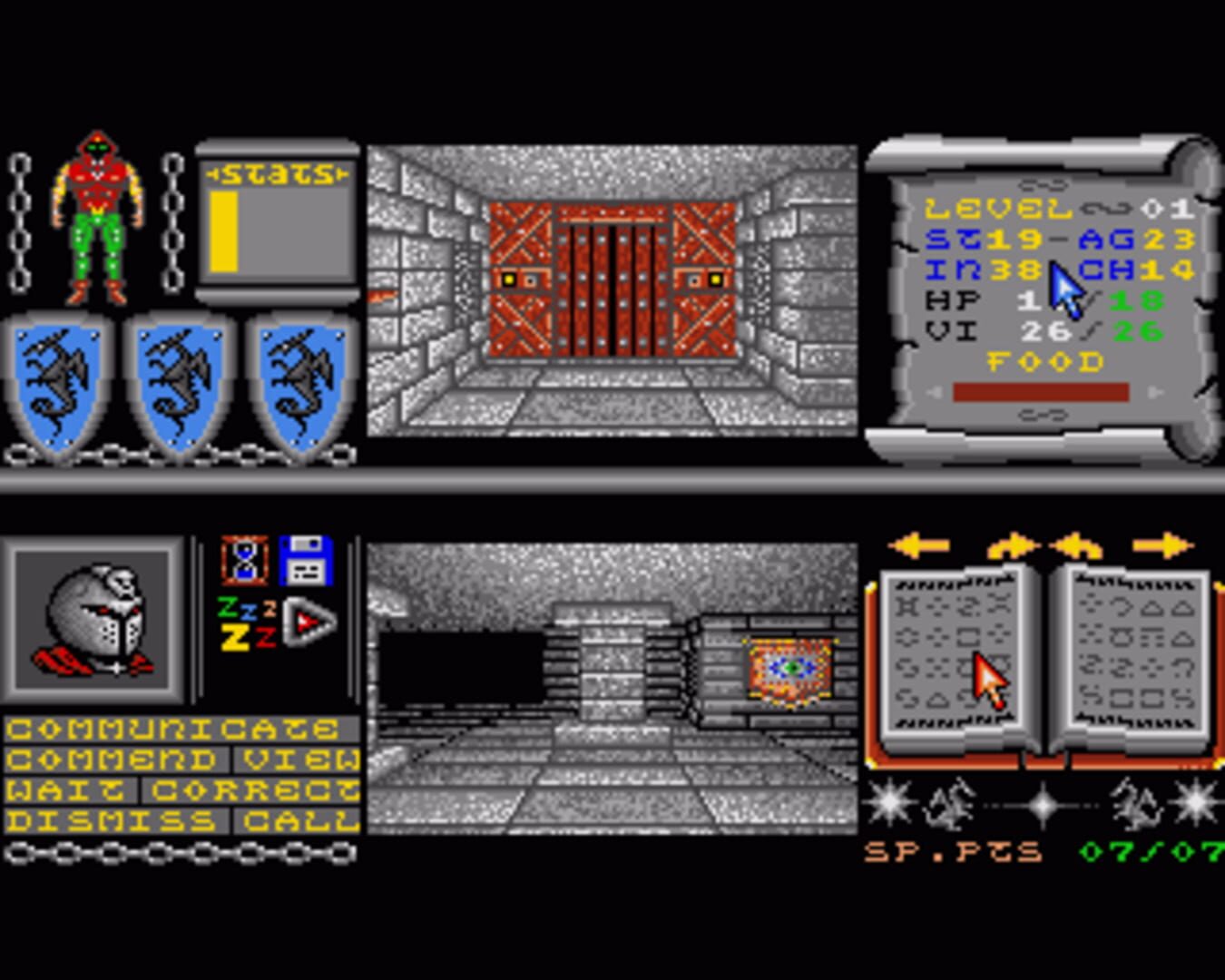
All of the champions fall into the four classes of Warrior, Mage, Adventurer or Thief (referred to as 'cutpurse' in game), each with their own particular capability. Within each class there are four characters available, each with their own colour of Red, Blue, Green or Yellow representing a magical alignment. These colours act as a consistent theme during the game, to the characters they have their own particular advantage, largely with respect to the families of spells the character will be most adept at casting and developing. The green spells are determined for the 'Serpent' (representing the physical), the blue spells are determined for the 'Moon' (representing mind and illusion), the red spells for the 'Dragon' (for fire and energy) and the yellow spells for 'Chaos' (affecting magic itself and entropy).
The four of the Towers navigated by the characters, and the Crystals which are required to be collected from each are also within this theme, and the colours are also important when it comes to matching up coloured wands later in the game to magnify the effects of spell-casting. Other objects such as rings (which allow 'free' spell casting) and certain weapons also align with these colours.
Development
The development of Bloodwych has been well documented by Richard Hewison, who was the project manager for the game at the time at Mirrorsoft, in his article titled "The Trazere Trinity".
Bloodwych began development on the Commodore 64, during Anthony Taglione's time at university in Reading, where he had gained a keen interest in Dungeons & Dragons, and where friend (and eventual Bloodwych artist and designer) Pete James drew initial screens for a first person 'chess-like' game.
Reception
Computer Gaming World criticized the IBM version's "weak graphics", but concluded that "Bloodwych scores very solidly on game-play and deserves serious consideration from dungeon fanatics". CU Amiga-64 gave the game additionally a CU Screen Star, stating that the game had even more varied gameplay than Dungeon Master. It also praised that the puzzles could be solved by pure logic.


